
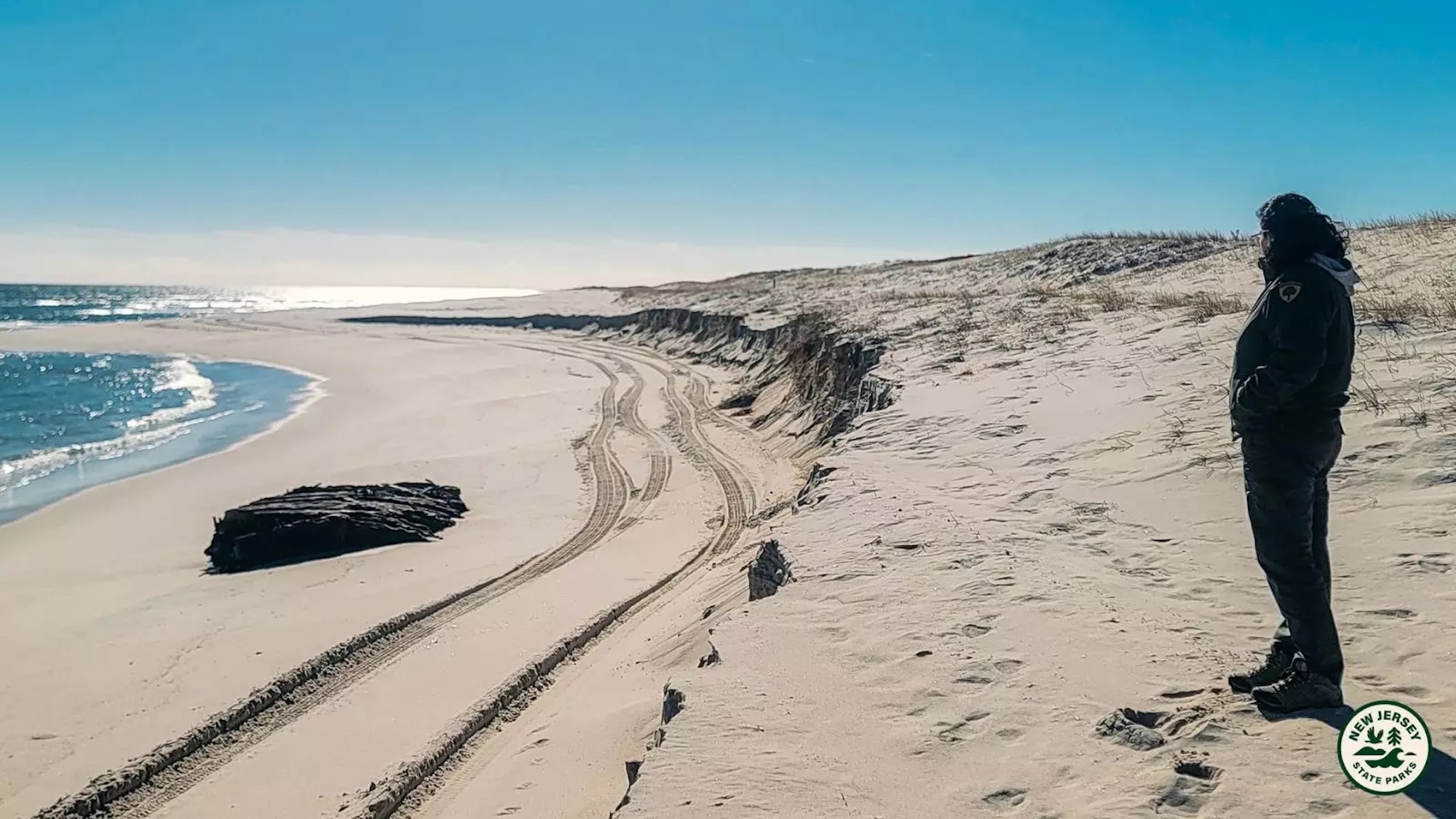
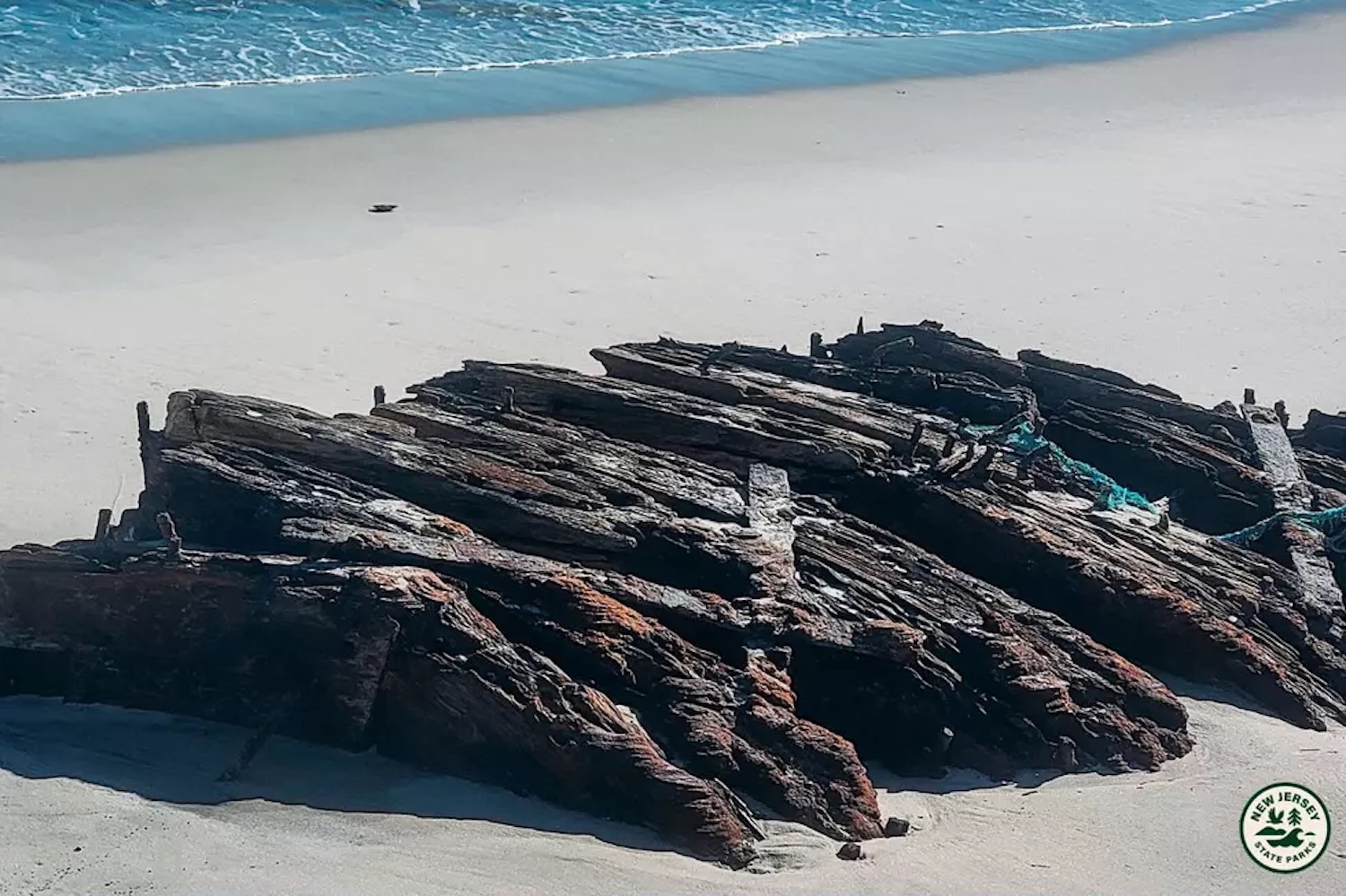
New Jersey beachgoers could be forgiven for mistaking a pile of recently spotted debris for washed up driftwood, but the staff at Island Beach State Park say the find is much more notable. According to park officials, erosion caused by weeks of high winds and intense surf has revealed a portion of a nearly 140-year-old shipwreck.
The wreck of the Lawrence N. McKenzie
On March 21, 1890, a ship named the Lawrence N. McKenzie was nearing the end of an over 1,600 mile journey. The 98-foot-long schooner’s eight crewmembers expected to soon reach New York City with a cargo full of oranges, but they never reached their destination.
Contemporary accounts reported the ship soon became stranded in a heavy fog near Barnegat, New Jersey. Although rescuers successfully saved the entire crew and their captain (who shared the schooner’s name), the vessel wasn’t so lucky. It had already taken on at least six feet of water by the time it was abandoned, and the McKenzie eventually succumbed to the Atlantic Ocean waters.
The McKenzie didn’t have a particularly long career at sea. Constructed in 1883 in Essex, Massachusetts, it spent less than seven years in service. It was valued at around $9,000 at the time, and contained about $2,000 worth of citrus when it sank into the Atlantic in 1890.
Revealed by winter waves and wind
Not a single trace of the McKenzie was seen again for almost 136 years, but seasonal conditions in the area finally made it possible.
“Beach erosion during the winter months is common at Island Beach State Park and is part of a natural, cyclical process. Each year, high-energy waves and seasonal storms remove sand from the shoreline, resulting in narrower beaches and steeper profiles,” Island Beach State Park officials wrote on social media. “Most beaches recover from the erosion during the calmer summer months—but for now, this winter’s erosion has revealed a glimpse into the park’s maritime history.”
Island Beach State Park staff are keeping an eye on the weathered, wooden framework until maritime archaeologists can further examine the discovery. While they’re fine with admiring the unique find at a distance, they also issued a warning to any would-be historical plunderers.
“Touching or removing any part of these resources is prohibited. Violations are subject to summonses issued by the New Jersey State Park Police,” they cautioned.
