
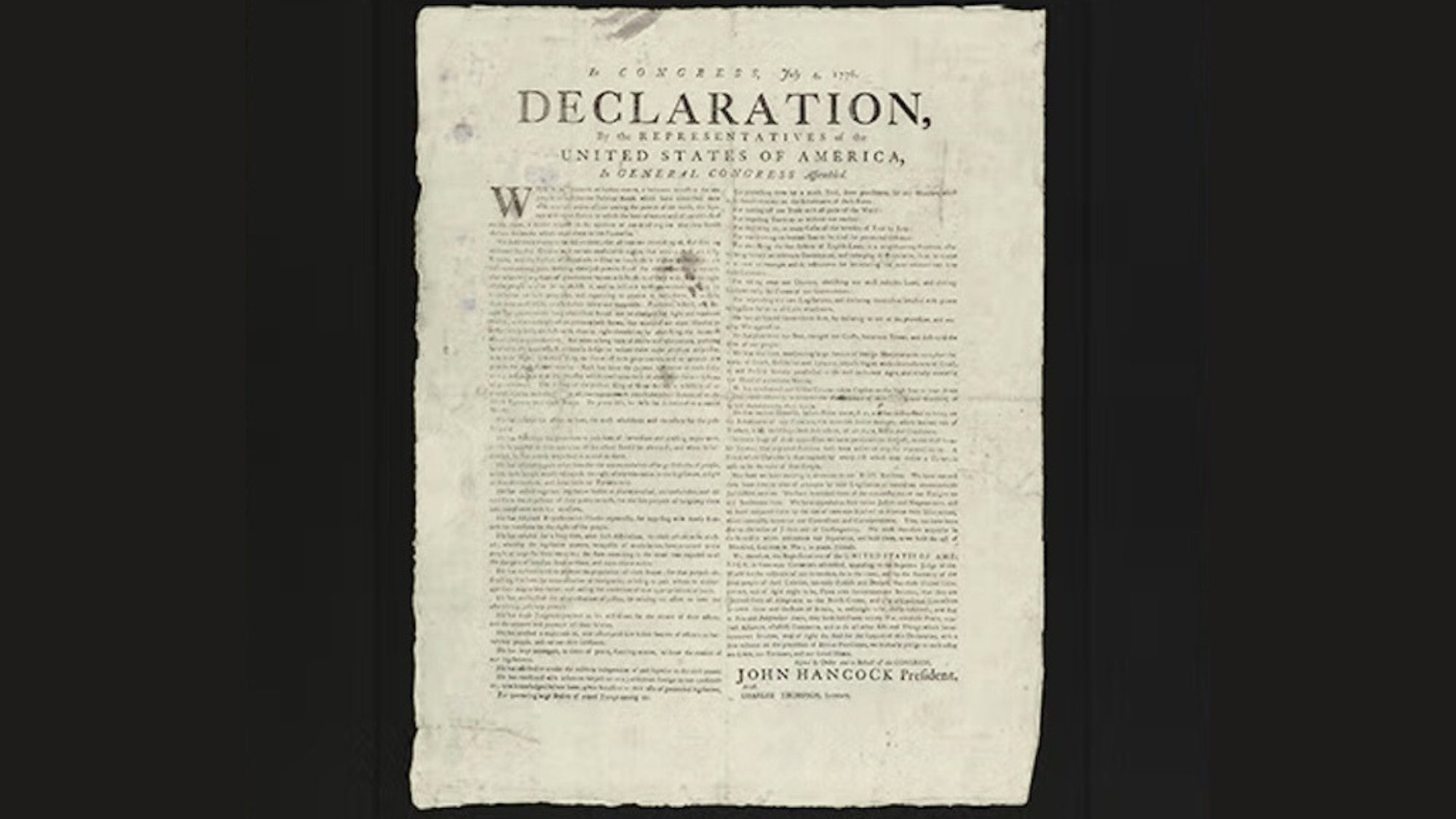
The Declaration of Independence is up for sale, but it will cost more than most of us can afford. Despite this, the edition offered by Goldin Auction was originally printed and distributed so that colonists could read the Second Continental Congress’ argument for separating from Great Britain in July 1776.
The document is part of a collection of over 400 historic items scheduled for auction in May, and is set to coincide with the 250th anniversary of American independence. However, this isn’t necessarily a recognizable version of the Declaration of Independence. Instead of a carefully handwritten piece of parchment (what’s known as an engrossed copy), this variant is one of the few surviving broadside editions. A broadside is a large, single-sided page of printed material, and was one of the easiest and most popular ways to spread public information at the time.
In this case, Declaration of Independence broadsides were distributed throughout the colonies shortly after the original document was signed. The copies were then read at town gatherings and posted in public forums to raise awareness of their cause and win people over to the idea of breaking away from Britain.
Although the broadside headed to auction this year doesn’t include a specific printer’s mark, Goldin appraisers believe additional contextual details trace it back to a publisher in Exeter, New Hampshire. Around 125 July 1776 broadsides are known to still exist today, but only 10 examples remain of this specific edition.
Goldin didn’t offer a valuation estimate, but it will probably sell for a hefty price based on similar, recent auctions. On January 23rd, anExeter broadside in similar condition offered by Christie’s sold for nearly $5.7 million.
The Declaration of Independence is a remarkable historical document not only for its ambitions, but how it justified severing colonial ties with Britain. Its authors included a list of 27 specific grievances citing “repeated injuries and usurpations, all having in direct object the establishment of an absolute Tyranny over these States.” These included obstructing the “Administration of Justice,” and “[keeping] among us, in times of peace, Standing Armies without the Consent of our legislatures.”
