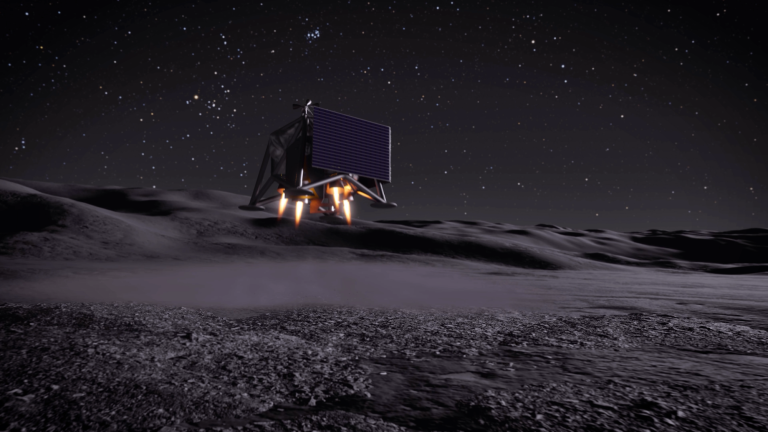
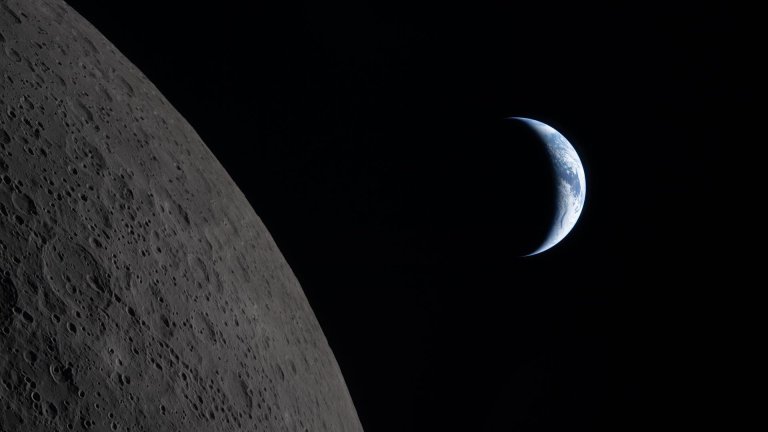
The deployable habitats could house up to 18 astronauts on the lunar surface

Inflatable Moon Base How many astronauts does it take to pump up a lunar base? Bigelow Aerospace

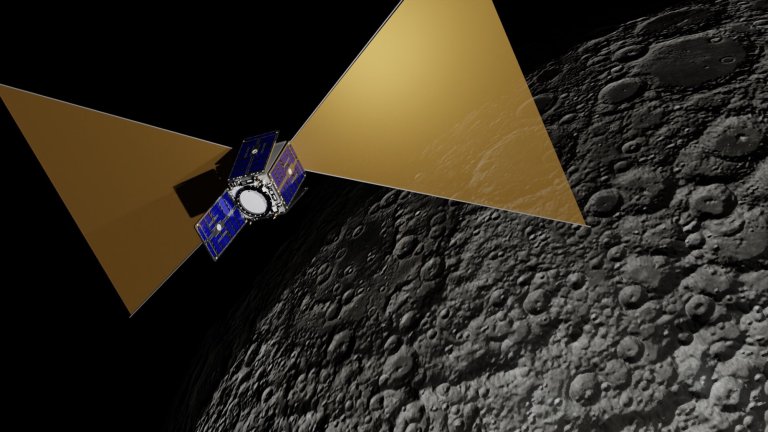
Robert Bigelow's inflatable space stations could get another look from NASA because of the space agency's new direction, but the space hotel visionary has already set his sights on the moon. He has begun planning for inflatable modules that could serve as a lunar base for up to 18 astronauts, SPACE.com reports.

The moon base would consist of three BA-330 inflatable units which each offer 11,653 cubic feet of space and contain their own propulsion and power units. Such units could be joined together in lunar orbit or even farther out before flying down to a selected surface location.

It's not a huge stretch for Bigelow and his company Bigelow Aerospace. The space mogul has drawn up plans for parking inflatable habitats around the Lagrangian point L1 -- a stable orbital point between the moon and the Earth -- as well as orbital depots that could supply outbound Mars missions.

Bigelow Aerospace has also teamed up with Boeing for a commercial transport system that could move astronauts among the International Space Station, Bigelow Aerospace's Orbital Space Complex, and other orbital destinations.

The company even proposed a modified Orion crew capsule for NASA's cancelled Constellation program to carry cargo and crew into space -- though that capsule has since undergone a resurrection as the space station's future escape pod. It seems like inflatable habitats aren't the only space technology getting a second chance under the new N4ASA.

[via SPACE.com]

10 Comments

I'm sure people have taken this into consideration, but it seems to me like small fast moving rock fragments which bombard the moon due to there being no atmosphere to burn them up, would pose a threat to these inflatable habitats. Although, if they are sure that they can hold up to the abuse, then this seams like the most cost effective way to do it.

I saw in some plan somewhere using Luna dirt to cover a Luna dwelling to give it extra protection from incoming rocks. Next to smelly air, hissing air is the last thing that you would want to wake you up at night. Worst would be even smaller than a pea size rock putting you out for good.

The Chinese will bypass the US and Soviets, colonizing the moon, and denying us access to space, using the cheap and dirty modernized Orion technique from Freeman Dyson using nukes as a rocket propulsion system.

Drill a 2 mile hole in a salt formation. Put a small nuke at the bottom in a water tank, put a thick steel plate on top of the tank with a automated payload capsule on top. Light the nuke and let er rip. When the projectile exits slam the door shut and redirect the radioactive steam back underground.

3000 tons at $10 a lb straight to the moon. I'm sure the Chinese are drilling while we twiddle our thumbs.

Seal the hole and drill a new one for the next load.

www.nextbigfuture.com/2010/03/150-kiloton-nuclear-verne-gun.html

With the cargo capacity available, the Chinese will use a simple very efficient spacebased transport with the nuclear engines similar updated NASA Nerva designs. They'll be flitting around the Solar system in no time.

The inflatable dwellings just need to last long enough for the 18 constructionauts to build a more permanent dwelling. We can reduce cost by mining moon rocks and turning them into construction materials so we dont have to send massive supplies. Is the moon still made of cheese, cause that last theory wouldn't work so well for that. On the other hand we don't need to send food. maybe supplies to bake bread. grilled cheese is awesome.

30bcf4e2

I'll take five

Obviously Kit didn't read the nextbigfuture report.

Not compressable are ice, steel,frozen food,fuel tanks, rocket fuel, circuit boards, nuclear fuel, copper wire and a thousand other commodities needed in space.

Humans and flower petals will have to be launched another way.

Al Gore and A pissed off cat with razor sharp claws should be the first residents

"I'm sure people have taken this into consideration, but it seems to me like small fast moving rock fragments which bombard the moon due to there being no atmosphere to burn them up, would pose a threat to these inflatable habitats."

Bigelow's habitats are more accurately described as *expandable*, not inflatable. The walls are >16 inches thick and much of that is multiple layers of Kevlar and Vectran, both used for body armor, along with redundant pressure bladders among other things. Even water jackets for radiation shielding can be added.

When this tech was being developed for NASA's TransHab ISS habitat module (canceled for budget reasons) an experiment was done: a section of aluminum-lithium alloy ISS module metal and a section of the TransHab material were both shot by a hyper-velocity gun, simulating a meteoroid impact.

The ISS metal was totally penetrated and shredded while the TransHab material was just partly penetrated and retained the ability to hold pressure.

After cancellation the TransHab tech was transferred to Bigelow for commercial development, and since then he's made many improvements and patented dozens of them.

Bottom line is that Bigelow's modules are far more advanced, and very likely much cheaper, than the spam-in-a-can tech used to construct ISS. Not only that but Bigelow also has plans for using them as habitats in long duration spacecraft, but that's another story.

Their first manned module, Sundancer, is due to be launched in 3 years (2 unmanned Genesis prototypes have been in orbit for 4 and 3 years respectively).

Inflatable moon bases look pretty good and seems very practical http://www.hotel-bucuresti.com/hoteluri/hotel_nelisse-117.html

@ TerryS; I'm with you on this. NASA should have had at least one of his units up on orbit for continued development because NASA, and the American people; ARE GONNA BE TRUSTING OUR LIVES TO THEM. Just because Bigelow's primary stated interest has always been a space hotel does NOT mean that our national interests in space will be ignored once he gets there. He will be housing OUR astronauts at different times, for differing amounts of time. Whether on orbit, on the moon, or at L1. He should have much more support than he's received thus far.


June 2013: American Energy Independence

Five amazing, clean technologies that will set us free, in this month's energy-focused issue. Also: how to build a better bomb detector, the robotic toys that are raising your children, a human catapult, the world's smallest arcade, and much more.


Online Content Director: Suzanne LaBarre | Email
Senior Editor: Paul Adams | Email
Associate Editor: Dan Nosowitz | Email
Assistant Editor: Colin Lecher | Email
Assistant Editor: Rose Pastore | Email

Contributing Writers:

Kelsey D. Atherton | Email
Francie Diep | Email
Shaunacy Ferro | Email

circ-top-header.gif
circ-cover.gif