It seemed like nothing at first. The red patch that appeared on Roy Brillon's thigh could have been a spider bite. But as the weeks passed, it grew and grew. By December 2004, the innocuous-looking bump had become an open wound the size of the palm of his hand. Brillon's doctor, Randy Wolcott, prescribed just about every antibiotic he could think of to cure the infection, but the lesion just got worse. "It was really bad," says Brillon, a 62-year-old retired housepainter from Lubbock, Texas. "I had to give up work because I couldn't climb ladders anymore."
Brillon felt like he was being eaten away from the inside out. And in a very real sense, he was. Left unchecked, bacteria like the streptococcus and staphylococcus devour soft tissue to keep themselves alive, leaving ragged red edges that expand outward with terrifying aggression. The pain in his leg was so excruciating that Wolcott prescribed morphine. "I was only supposed to take two pills a day, but I was taking three in the morning and three in the afternoon," he says. "The pain is indescribable. You just grit your teeth."
As head of Lubbock's Southwest Regional Wound Care Center, Wolcott knew well the typical prognosis for patients with antibiotic-resistant infections like Brillon's: gangrene, amputation and, for about 100,000 Americans a year, death. " 'Chronic wound' is a code word for 'you can't heal it,' " he says. "The hallmark is, we cut it off or we cut it out. It's pretty barbaric." Wolcott was desperate for an alternative. After putting in 10-hour days at the clinic, he often sat up late at night poring over medical journals for the newest wound-care research—something, anything that might help patients with the most intractable infections.

When Brillon arrived for a follow-up appointment three weeks later, Wolcott entered the room with a dropper in one hand and a vial of liquid that looked suspiciously like pond water in the other. The liquid, it turned out, was Wolcott's "anything": a murky concoction filled with bacteria-eating viruses known as bacteriophages. Physicians in Eastern Europe, Wolcott had explained to Brillon earlier, have been using phages safely since the 1920s to treat conditions that defy conventional antibiotics, from strep and tuberculosis to infected sores like his. Even U.S. drug companies sold them until the early 1940s, when penicillin came along and proved easier to use, generally more effective and, in the end, more lucrative than phages. The viruses might not help, he admitted, but if they didn't hurt, what was the harm in trying?
Brillon didn't need much convincing. The Food and Drug Administration was another story. Since 1963, the agency has mandated a strict approval process for all medications sold in America. Phage therapy has yet to be subjected to it, so Wolcott had to petition his state regulatory board to allow him to administer it only to people who had exhausted all other options. Then, because you can't find phages in U.S. pharmacies, he had to trek all the way to the former Soviet republic of Georgia to get it. There it's sold over the counter like eyedrops. He bought, for $2 each, three clear glass bottles, each filled with a liquid containing hundreds of types of phages.

"That's it?" Brillon asked, after Wolcott dribbled a few drops of the yellowish liquid onto his wound. The stuff was painless. Nothing much happened over the first few days, and Brillon braced himself for another disappointment. But as the week passed, the sore began to fade to a healthier pink, and then a new island of healthy skin emerged, expanding steadily every day. Within three weeks, the wound was completely healed. "You'd better take pictures of this," Brillon told Wolcott, "or nobody is going to believe it."
Brillon's recovery was astonishing, but it wasn't a one-shot deal. Wolcott had also given the phage solution to 10 of his other worst-case patients, and many of them were showing similar results. If phages worked for them, Wolcott reasoned, couldn't they also work for the millions of patients in the U.S. living with infections resistant to antibiotics? His patients, he felt, were proof of it. The real question was whether he could convince the FDA.
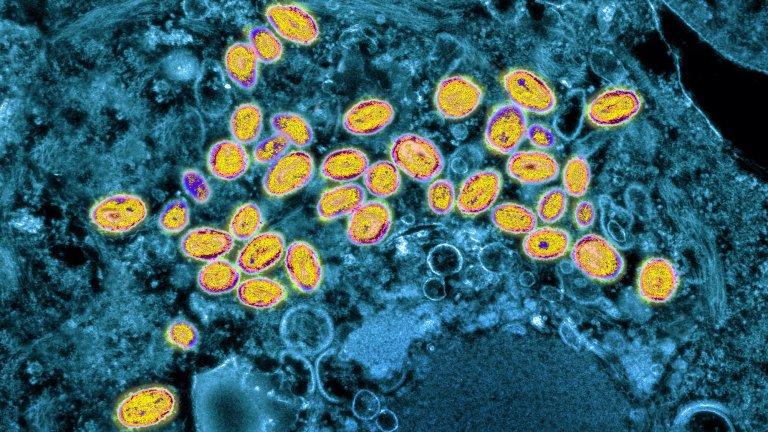
As viruses go, phages are relatively benign. They're the most abundant naturally occurring organisms on Earth. They can be found virtually everywhere—-in soil, drinking water, sewage. In fact, each one of us naturally has billions of them in our bodies. They prey only on bacteria, never human cells, they rarely spread from person to person, and, perhaps most important, bacteria have trouble becoming immune to them. As living organisms, phages are constantly changing and adapting in tandem with their host bacteria to kill them more effectively. Phage therapy could therefore eliminate the vicious cycle in which bacteria evolve resistance to antibiotics, necessitating the development of new, even more powerful drugs, at which point the process begins all over again.

For that reason, among others, says FDA spokesperson Karen Riley, phage therapy used to treat or cure humans must be regulated as a biological product. That means that if the viruses show serious signs of mutating or changing during clinical trials, even if those changes pose no risk to patients, the trials could be scrapped. Which explains why Big Pharma isn't eager to conduct them. "I understand where the FDA is coming from, because each phage poses a certain risk," Sullam says. "When viruses have the ability to exchange genetic material, it makes people nervous on a visceral level."

Wolcott calls Eliava the "mother ship of phage research," a worldwide Mecca for people suffering from antibiotic-resistant infections. Only it doesn't look like the sort of place you'd want to go with a health problem. When Wolcott visited to hunt down alternatives for his patients, the four-story facility bore a closer resemblance to a neglected sanatorium. The walls were unpainted, the rooms were dark, and the equipment looked like museum pieces. "The conditions were abysmal," he says. "Yet the science is amazing."

As inconvenient as the procedure sounds, few people complain about it. The results are spectacular, Wolcott says: "I met a woman with a chronic ear infection who was coming back to the phage clinic for her final appointment. They gave her the therapy, and within a week, she was completely cleared up." In fact, studies published over the past several decades, based on trials conducted at Eliava and elsewhere in Eastern Europe, have shown that phage therapy has an 80 to 90 percent success rate against bacteria likely to show antibiotic resistance, such as Staphylococcus aureus and Escherichia coli. In contrast, many antibiotics fail outright against the evolved forms of these pathogens. In June 2005, a bacterial strain resistant to the first-line antibiotic imipenem ravaged more than 50 patients at New York City hospitals. Among patients whose infections infiltrated their bloodstream, the death rate was 47 percent.
With antibiotic resistance reaching record levels worldwide, phage therapy is no longer the sole province of Eastern European researchers. British biotech firm Biocontrol wrapped up the first Phase II clinical trial of phages in Western Europe last year with dramatic results. Its phage regimen combats the Pseudomonas aeruginosa bacterium, which causes serious lung and ear infections and is highly resistant to antibiotics. Patients with antibiotic-resistant infections who received phage therapy experienced a 50 percent reduction in their symptoms, compared with only a 20 percent decrease in the group that did not receive phages. "Frankly, I was blown away," says Dan Nelson, a biochemist at the University of Maryland who was at the conference where Biocontrol unveiled its results.
For Wolcott, who watches hundreds of patients die every year from seemingly incurable infections, these medicinal viruses can't arrive in the U.S. fast enough. "Phage needs to be fast-tracked. It works. It's completely natural. Why can't you spray this stuff on a kid's throat right now?"

Wolcott met Intralytix CEO John Vazzana at a phage conference in Texas three months after he returned from Europe. The two talked for hours about the frustrating plight of phages in the U.S. By the end of the conference, they had hatched a plan to convince the FDA to let them start a clinical trial. Intralytix would supply the phages; Wolcott, the patients.

Every week, Wolcott's study participants arrived at the clinic and received their phages through a handheld ultrasonic device, a high-tech upgrade to the IV drips common in Eastern Europe. The device simultaneously sprays on saline-based phage solution and destroys blackened or dead tissue, allowing the phages to penetrate deeper into the wound. Like all initial clinical trials, Wolcott's was designed to assess the safety of the therapy, not its outright effectiveness. In this context, the study yielded promising signs for the future. None of the patients in the trial reported severe side effects, but the efficacy was unimpressive. Nearly 70 percent of the volunteers experienced significant healing by the end of the 24-week trial period, as did a similar percentage of trial patients who did not receive the phage. Wolcott anticipated this, and attributes it to the fact that the cocktail was not tailored to combat the particular bacteria in his patients' wounds, as is standard practice in Georgia, limiting the phages' potency.
And this is where Wolcott hits a wall. FDA regulators have told him that if he wants to use phages on his patients, he's going to have to carry out a separate clinical trial for each phage or particular mix of phages he hopes to administer, just as he would if he were shepherding distinct chemical compounds through the regulatory process. But since each of his patients' wounds might contain hundreds of different species of bacteria, he can't reasonably attempt to conduct trials of the thousands of phage combinations required to combat them all, especially considering that the cost of a trial for a single drug can easily run into the millions. "People in this country have a right to be incensed that we have a very different situation here than in Europe with regards to phage," says Betty Kutter, a phage researcher at Evergreen State College. "Our whole regulatory environment has been one major thing that has slowed people down."

A Phase II efficacy trial enrolling 100 to 200 wound patients would cost about $9 million—and if the therapy being tested included only a few types of phages, as the first trial did, there's a good chance it wouldn't pan out for patients whose infections are caused by multiple strains of bacteria. And given the current regulations, Vazzana isn't sure he could even find the capital to fund the trial.
But phage researchers like Ben Burrowes of the Texas Tech University Health Sciences Center are optimistic. "Companies will start coming out with phage products at some point," he says, "and once those first few get through the approval process, the FDA will relax its standards a little."
Rockefeller University biologist Vincent Fischetti, for one, isn't holding his breath. Fischetti has no doubt that there's a gaping hole in the health-care landscape where effective antibacterial drugs should be. He just isn't sure phages are the best way to fill the void. To him, Wolcott and his fellow phage-therapy practitioners are like peacekeepers with no governmental backing: well-intentioned, to be sure, but unlikely to have much success in the end. "I'm not working on phage therapy," he insists, as he guides me through his sixth-floor lab overlooking the institute's Manhattan campus. "I'm working on phage-based therapy."

So he is taking an alternative approach, purifying the phage to extract the lysin, the enzyme it uses to dissolve the bacterial cell wall and kill the bacterium. He enlists his lab staff to serve as biological prospectors, collecting the bacteria-killing viruses from swamps, rivers, anywhere they can find them. He points to a bag of smelly bat excrement on his windowsill. "We can take the phages out of that stuff."

Having observed that lysins were the phages' "active ingredients," Fischetti aims to harvest the lysins from them and turn them into stable antibacterial drugs. If successful, he could accomplish a double feat previously thought impossible: getting the bacteria-fighting benefits of phages to patients, while doing an end run around the regulatory Rube Goldberg machine that researchers like Wolcott face.
Whereas phages must evolve to keep up with bacterial evolution, lysins are like a blunt instrument that can kill entire families of bacteria, eliminating the need to isolate and test thousands of different compounds as phage scientists in Georgia do. But even if the FDA might perceive lysins more favorably than phages alone, Kutter says, the enzymes have drawbacks of their own. Lysins work only on Gram-positive bacteria, like strep and staph, not Gram-negative bacteria like E. coli and salmonella—the Gram-negative bacteria have an outside membrane that the lysins can't get through. Phages, on the other hand, can work against both kinds of bacteria. And unlike traditional phage therapy, lytic enzymes haven't made it to clinical trials yet, so although petri-dish evidence is promising, there's no telling whether it will translate into success in a hospital setting.

What Brillon really needs, Wolcott says, is a phage cocktail custom-mixed to target the particular bacteria colonizing his wounds. But it's back to the same old antibiotics for now. Sometimes, if the bacteria happen to be non-drug-resistant, the antibiotics work; sometimes they yield about the same results as a newt's-eye potion. Brillon keeps his legs wrapped in Ace bandages like a burn victim. "If you don't keep 'em tight," he says, "then the legs swell, and that's when the sores come out."
But he's not dwelling on the obstacles. Instead he imagines the day when he'll be able to put his infections behind him for good and spend more time fishing and playing with his four grandchildren who live nearby. He figures that if anyone can get him there, it will be Wolcott and his army of phages. "It really bothers him if he gets a hold of something he can't handle," Brillon says. "He tells me, 'I'm never going to give up on you.'"
Five amazing, clean technologies that will set us free, in this month's energy-focused issue. Also: how to build a better bomb detector, the robotic toys that are raising your children, a human catapult, the world's smallest arcade, and much more.


Online Content Director: Suzanne LaBarre | Email
Senior Editor: Paul Adams | Email
Associate Editor: Dan Nosowitz | Email
Assistant Editor: Colin Lecher | Email
Assistant Editor: Rose Pastore | Email
Contributing Writers:
Rebecca Boyle | Email
Kelsey D. Atherton | Email
Francie Diep | Email
Shaunacy Ferro | Email
Here is an interesting company that works with Phage as well. www.Phagebiotech.com
Excellent article! There are, however, moral and ethical reasons for making phage therapy available in countries that are members of The World Medical Association which states: "In the treatment of a patient, where proven prophylactic, diagnostic and therapeutic methods do not exist or have been ineffective, the physician, with informed consent from the patient, must be free to use unproven or new prophylactic, diagnostic and therapeutic measures, if in the physician's judgement it offers hope of saving life." A recent paper in English from Poland entitled: "Phage therapy of staphylococcal infections (including MRSA) may be less expensive than antibiotics (2007)" could serve as a model for the introduction of phage therapy in North America since our laws appear similar to those described for Poland.
A discussion of phage therapy is currently very timely, not only because too many patients are dying of superbug infections; but also because of the recent release of the Canadian film: Killer Cure: The Amazing Adventures of Bacteriophage and the June 2006 release of the book by Thomas Haeusler entitled, Viruses vs. Superbugs, a solution to the antibiotics crisis?
Listeria causes an estimated 2,500 cases of mainly food borne infections in the USA annually and as many as 500 deaths; however, the idea that ready-to-eat meat can be treated, if contaminated with Listeria bacteria, while a doctor could not get a pharmaceutical grade phage therapy product when faced with a patient suffering listeriosis strikes this author as absurd. Superbugs should be of interest to everybody because sooner or later everybody will be faced with an infection or know someone who will be suffering or dying with one. Withholding such treatment from patients when antibiotics are failing ought to be a crime!
I feel more comfortable with the idea of a natural cure that mutates to stay effective than a man-made extract which kills ALL bacteria. We have a lot of GOOD bacteria in our bodies. Don't throw the baby out with the bathwater here.
I would focus more on studying if phages could ever be dangerous. If they aren't dangerous, then tell the FDA to stop wasting their time trying to stop them.
So what if it becomes a boutique treatment?
Quite frankly looking at the pictures, Brillon need to lose weight and eat more heathily.
This will do more long term good than any phage treatment.
I don't think the patient pictured is Brillon. His wound was stated as being on his thigh. Just my two cents.
Here is something to think about:
There are roughly 500 deaths each year in North America (USA & Canada) due to foodborne listeriosis. If by approving and using the listeria phages we could prevent 50% of those deaths we could save 250 people. If, on the other hand, we could cure 10% of superbug infection deaths in North America by using phage therapy, that would amount to about 10,000!!!
Here is something to think about:
There are roughly 500 deaths each year in North America due to foodborne listeriosis. If by approving and using the listeria phages we could prevent 50% of those deaths we could save 250 people. If, on the other hand, we could cure 10% of superbug infection deaths in North America by using phage therapy that would amount to about 10,000!!!
It is interesting that at least three religions have passages that can reasonably be explained scientifically as eluding to a recognition of phage therapy. Islam has 'The Hadith of the Fly' and Christianity has 2 Kings 5:14 and, of course, Hinduism has the story of the healing powers of the river, Gagna, which has been shown to teem with bacteriophages active against Vibrio cholerae. It is therefore not surprising that the scientific literature generally starts with the report by Ernest Hankin, a British bacteriologist, who reported in 1896 on the presence of marked antibacterial activity (against Vibrio cholerae) which he observed in the waters of the Ganges and Jumna rivers in India, and he suggested that an unidentified substance (which passed through fine porcelain filters and was heat labile) was responsible for this phenomenon and for limiting the spread of cholera epidemics.
While googling to verify the religious passages, I discovered that a recent play by Gautam Raja, 'The Invisible River' now explores the religious and scientific issues behind bacteriophage therapy and that this play was staged in England, at the Nehru Centre in London on July 16 and at Lillian Baylis Theatre in Sadler's Well on July 18 - this according to an article in The Hindu, June 22, 2008 entitled 'Invisible River' set to enthral U.K. audience'.
Phage therapy is an interesting case study where religion, science, the arts, journalists and in some places medicine, share the same place, while political, bureaucratic, Western medical and religious leaders, who should and could be promoting the reintroduction of phage therapy to medicine seem to be out to lunch between body counting! Perahps if religious institutions showed the film "Killer Cure: The Amazing Adventures of Bacteriophage" and pushed Thomas Haeusler's 2006 book entitled, 'Viruses vs. Superbugs, a solution to the antibiotics crisis?', phage therapy might save many lives even in North America.
What should you do when you read articles about phage therapy? I usually make sure that the politicians that represent me at all levels get a copy of the paper. While I do not expect my political representatives to wake up to the fact that they could be the next superbug victim, they will not be able to say that they did not know when we finally will have data on the effectiveness of phage therapy and it will be possible to retrospectively calculate how many patients have died or been mutilated unnecessarily as a result of withholding phage therapy when antibiotics fail to cure superbug infections.
You can bet that the FDA will use every devious trick in the book to delay an effective, and especially cheap cure for diseases the big pharmaceutical companies deem only "treatable," that is, continuously holding your life hostage to extort their huge profits. There are lots of natural cures for cancer out there, but the medical industry has a legal (FDA) license to extort an average of $350,000 from a cancer patient for the privilege of dying a slow, painful death. Why do I think this virus cure is going to die a silenced death in the USA?
This is a great story that simultaneously left me very angry and sad and really illustrated what is so wrong about big government. The FDA would rather condemn that over 100000 Americas to death and cause hundreds of thousands of needless amputations to protect there precious little fiefdom, than give large and growing patient base suffering antibiotic resistant infections a very viable option the works very well in a third world county of Georgia? WTH!!!!!!!. This story real high lights the moral and ethical bankruptcy of the fda(big out of control government which obama wants to grow god help us), most physicians, and drug companies not willing to implement viable solution (agree not perfect) that could prevent thousands of needless deaths and amputations. Shouldn't the fda put patient well being ahead of there precious fiefdom? The moral and ethical bankruptcy of the fda is so profound they serious need to be disband and replaced with a smaller less bloated agency with allow treatments that work be fast track, Oh wait I guess since these poor souls arent Hollywood celebrities, members of Ivy league mafia , gay (with aids), just average Americans. I guess the fda thinks they deserve to die, I sorry but the stupidity of the fda stance on phages boarders on the inhumane maybe mengele is alive and well at the fda.
Just to put it out there, the ethics behind such a cure would be problematic. If we can make a virus to cure, than it can also be used to destroy as well!
There is no ethical problem with the use of phages or other viruses to cure or prevent disease. It is done every day. You probably have gotten live virus vaccines and there is even research going on to use live viruses to cure certain types of cancer - you should google: Biotherapy; then virus therapy and finally phage therapy. People seem to forget that phage therapy is natural and is going on all the time. All that is done when phage therapy is used to cure infections is to isolate, purify and concentrate the right phage so the outcome of a battle between an infection and phages is in favor of the phage and therefore the patient - not making phage therapy available when antibiotics fail is an ethical failure!
There are some amazing Hubble photos on tampabay.com. Take a look:
http://tinyurl.com/cs5sz4
~ Karen McAllister | Tampabay.com | Politifact.com
Coating of viruses with shoes and gloves, so they can walk on foreign cells, can be very dangerous. So far we are protected, due to the control and instability of these organisms, but they will also adjust and find their place in nature.
Technology is interesting, but there are other approaches to search for new cures.
karen mcallister, wat the heck does the hubble have to do with phases!!??
Cool picture but I do not understand much about it.
----------
http://beearticle.com
It is interesting that some are concerned about possible phage interactions, swapping dna and creating a possible reaction in a human.
Companies are putting animal and bacterial dna into plants and grown all over the world. The possibility for plant viruses to swap dna and create a completely new virus that humans have no immunity to grows every day.
It may be that soon humans will find themselves being attacked by plant viruses, because someone spliced pig dna into a tomato plant and a tomato virus mutated.
It is not far-fetched, there are so many viruses that it is simply a matter of time, as long as we continue to swap animal dna into plants, and visa-versa.
Hubris and greed.
is very nice http://2009halloweencostume.com
Hope that research will success and it will help a lots of people.
http://tinyarticle.com
Excellent!
I just wondering if Phage can be use to treat superbug called Necrotizing fasciitis ?
I would focus more on studying if phages could ever be dangerous. If they aren't dangerous, then tell the FDA to stop wasting their time trying to stop them.
A lot of bacteria be harmful to the human body organs, it was often eye irritation, which is part of a bacterial infection which is why we should try to protect the eyes, where there is a glasses site, are interested friends can go and see
www.firmoo.com/
Projeksiyon www.performans-event.com
Great, I hope you to success in project. www.beststockprices.us
Thank you for sharing this information and
Again thanks for sharing your knowledge with us.
www.bestnetbookpc.com
There is no doubt that the article's subject is important and fascinating, however I would like to focus on part of the problem itself.
Maybe it's not the main issue, but I think that one of the reasons why bacterias developed resistance to antibiotics is because we use antibiotics very easily.
There are some doctors that gave prescriptions for every simple cold, or gave the drug again and again, without trying to find another way to deal with the illness (I know many small children that every time they got sick, and their doctor couldn't find the reason for it, he prescribed antibiotics).
Regards
www.trip4you.co.il
May I ad that We can find even day products, as soap, that contain antibacteirial materials.
Instead of doing a reasonable and cautious use of Penicillin, we made it easy for the bacterias to get stronger, and to make it harder for us to fight against them.
www.nb-nesbad.co.il
Very interesting article and a good look in the future what is possible. And today everything contains antibacteirial materials, so it is quite easy for bacterias to evolve and get resistent against penicillin
www.cizgifilmclub.com çizgi film izle
www.oyun18.tk 18 oyunlar
bayramören www.goynukoren.com
The ethics behind such a cure would be problematic. If we can make a virus to cure, than it can also be used to destroy as well!
www.glowbuzz.com
www.toopbaan.com
www.angelinahotty.com
Quite frankly looking at the pictures, Brillon need to lose weight and eat more heathily. ( www.playarcade4u.com )
Very interesting article and a good look in the future what is possible. And today everything contains antibacteirial materials, so it is quite easy for bacterias to evolve and get resistent against penicillin.
Regards
www.mintpowertool.com
www.astore.amazon.com/rockwell-sonicraft-20
www.astore.amazon.com/rockwell-sonicraft-multimaster-sonic-rafter-sonicraft-tool-20
www.giftpowertools.com
Good job! THANKS! You guys do a great blog, and have some great contents. Keep up the good work.
best regards,
www.xn--l3c1axm3cc2d0d.com
www.f10shop.com/baschi/default.aspx
www.intrends.in.th
Just to put it out there, the ethics behind such a cure would be problematic. If we can make a virus to cure, than it can also be used to destroy as well!
www.agel-bisnis.com
www.agel-jakarta.com
www.haarod.com
Thank you for this information and
Again thanks for sharing your knowledge with us.
www.netdesignrank.com | www.nd.co.th | www.tikanaht.com
So far we are protected, due to the control and instability of these organisms, but they will also adjust and find their place in nature.
www.cheaplaptopstore.us|www.thaicartrick.com
is very nice picture but I do not understand much about it.
www.cici-wedding.blogspot.com
www.ciciwedding.wordpress.com
www.ciciwedding.multiply.com