Feature
A man-made, pure-white compound called Oxycyte carries oxygen 50 times as effectively as our own blood. Researchers are betting that it´s the best way to treat America´s leading cause of accidental death: traumatic brain injury

by John B. Carnett John B. Carnett

Grace LeClair had just finished eating dinner with friends when she got the phone call every parent dreads. The chaplain at the Medical College of Virginia was on the other end. "Your daughter has been in a serious accident. You should come to Richmond right away." LeClair was in Virginia Beach at the time, a two-hour drive from 20-year-old Bess-Lyn, who was now lying in a coma in a Richmond hospital bed.

The friend who was with Bess-Lyn has since filled in the details of that day in March. The two women were bicycling down a steep hill, headed toward a busy intersection, when Bess-Lyn yelled that her brakes weren't working and she couldn't slow down. Her friend screamed for her to turn into an alley just before the intersection. But Bess-Lyn didn't turn sharply enough and crashed, headfirst, into a concrete wall. She wasn't wearing a helmet. By the time the ambulance reached the hospital, Bess-Lyn was officially counted among the 1.5 million Americans who will suffer a traumatic brain injury (TBI) this year.

Bess-Lyn's mom was halfway to Richmond when she received a second call, this time from a doctor. "He was telling me that she had a very serious injury, that she had to have surgery to save her life and that if I would give permission, they would use this experimental, not-approved-by-the-FDA drug," Grace LeClair recalls. "He said that it would increase the oxygen supply to her brain. To me that only made sense, so I said yes."

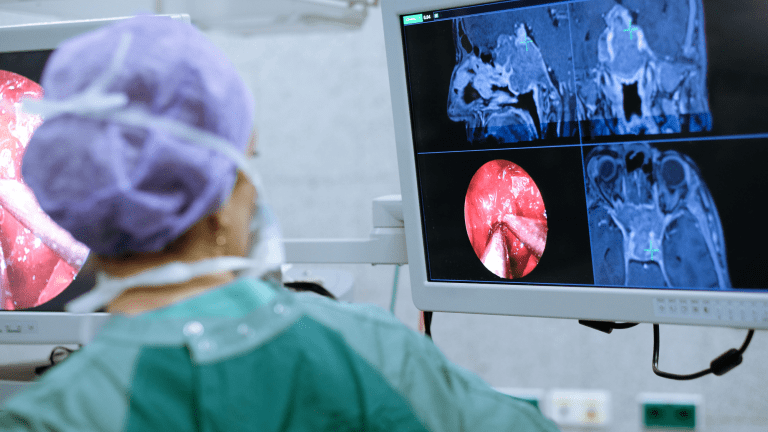
With her mother´s verbal consent, Bess-Lyn was treated with a type of artificial blood called Oxycyte, the subject of a clinical trial led by doctors at the teaching hospital of Virginia Commonwealth University. In animal tests, the compound has been proven to cut the effects of brain damage nearly in half, presumably because its tiny particles can ferry oxygen through swollen, injured vessels our own red blood cells can't squeeze through. (The suffocation of brain cells is a major contributor to brain damage.) The doctors' next step is to get the same result in accident victims like Bess-Lyn, who became the third of eight patients to be enrolled in the hospital's pilot Phase II clinical trial, designed to test the drug's safety and efficacy. If Oxycyte performs well in subsequent trials, it will become the first drug the FDA approves to treat traumatic brain injury in the U.S. and in hot spots like Iraq, where TBI has become horrifyingly common.

THE RED AND THE WHITE

Oxycyte is the newest product in a family of compounds known as artificial blood. The search for a synthetic substitute for human blood began at least as early as the 19th century, when doctors actually tried using milk to replenish blood loss. With the onset of the AIDS crisis in the early 1980s, pharmaceutical companies took on the cause in force, competing to create an artificial substance that could eliminate the problems–including tainted blood and supply shortages–associated with donated blood. The idea was that these substitutes could replace the use of donated blood in transfusions, during surgery, and in patients who had experienced major blood loss through injury.

single page
Page 1 of 5 12345next ›last »
Want to learn more about breakthroughs in electronics, medicine, nanotech, and more?
Subscribe to Popular Science today, for less than $1 per issue!

4 Comments

As I understand it, oxygen, especially in high doses, is quite toxic. Perhaps this therapy is a double-edged sword...

yes oxigen exposure is bad. however this is only long term at high quantities. infact, for many medical problems it is commo practice to administer oxygen in high quantities. ie: scuba dive emergencies (infact even if there is no emergency oxygen is still recomended after diving) and the giude book ruling in the general training is give them as much oxygen as you have on hand for as long as you can. this also says in the artical that it is not a permant solution but a treatment or stand in.

this is very interesting
but as Pariah said that high doses of oxygen can be dangerous, i believe they would extract the oxycyte after its purpose is fulfilled


June 2013: American Energy Independence

Five amazing, clean technologies that will set us free, in this month's energy-focused issue. Also: how to build a better bomb detector, the robotic toys that are raising your children, a human catapult, the world's smallest arcade, and much more.


Online Content Director: Suzanne LaBarre | Email
Senior Editor: Paul Adams | Email
Associate Editor: Dan Nosowitz | Email
Assistant Editor: Colin Lecher | Email
Assistant Editor: Rose Pastore | Email

Contributing Writers:

Kelsey D. Atherton | Email
Francie Diep | Email
Shaunacy Ferro | Email

circ-top-header.gif
circ-cover.gif
bmxmag-ps