Need to get away from it all? Popular Science presents an exclusive tour of CSS Skywalker, an orbital resort that’s a lot closer to reality than you might think

Like the hotels on the Strip, Bigelow Aerospace is wrapped in layers of illusion. Viewed from West Brooks Avenue in North Las Vegas, it resembles most other industrial complexes in the neighborhood, down to the beer distributor right across the street. Such similarity ends, however, as you drive past a reassuringly corporate Bigelow logo and through the gate. Overlooking the Strip 10 miles away, the small parking lot is
bounded by chain-link fencing wrapped with razor wire. As the beefy guards wearing desert fatigues and .45s check your ID, maybe you’ll notice their black shoulder patches, which feature a classically oval-eyed alien face outlined in silver and gold.


Bigelow—who generally shuns media attention and rarely grants interviews—kept his spacefaring efforts largely under wraps for five years after founding Bigelow Aerospace. But he began showing his work last fall, after announcing his
$50-million orbital-vehicle prize amid the positive press surrounding Rutan’s SpaceShipOne. The top-secret, Skunk Worksâ€style aura persists, and visitors are only slowly being admitted to Building B, the semipublic face of Bigelow Aerospace. Built last year, the windowless, 80,000-square-foot
facility houses full-scale mock-ups of Bigelow’s baby: the Nautilus space-station module. Two 45-foot-long, 22-foot-diameter modules, brilliant white and draped with the American flag, loom out of the darkness at the back of the building. A stairway invites visitors to climb on board to see for themselves what it might be like to live in the biggest space-station modules ever built. Their large volume is the result of an unusual design feature—they are inflatable.


Developed at NASA as part of a project called TransHab, inflatable space-station modules have some important advantages over their tin-can counterparts. They weigh significantly less, and they launch in a compressed state, with their fabric hulls wrapped tightly around their rigid cores like a roll of paper towels. This allows them to use less-powerful launch vehicles and makes for roomier space stations. After a rocket fires a Nautilus into space, explosive bolts will release the girdle securing the compressed hull, and then the station’s life support
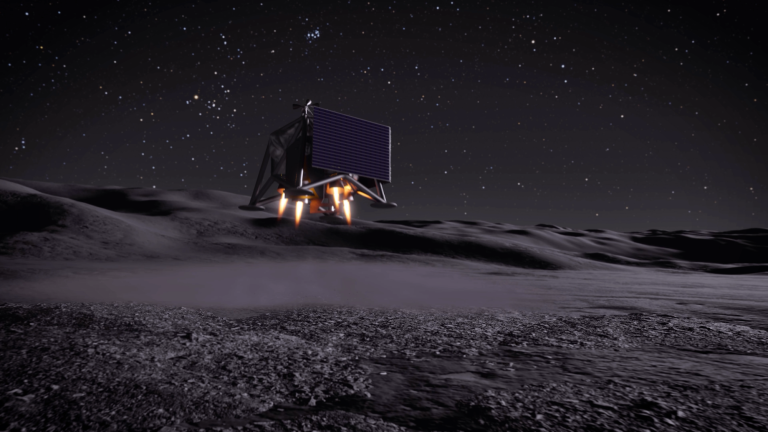
system, housed in the core, will inflate the structure with breathable air, expanding it from 15 feet in diameter to 22 feet. Power comes from solar panels that unfold from the rigid bulkheads at each end of the module. Each bulkhead also houses an airlock and a docking adaptor. Astronauts arriving later enter a shirtsleeve environment in which they can go to work unpacking removable panels, equipment and supplies from the core to create three levels of living and working space. A docked rocket engine called a multi-directional propulsion bus (MDPB) will eventually allow the station—the first one is tentatively called CSS [Commercial Space Station] Skywalker—to maneuver within Earth’s orbit or even leave it, for, say, a trip to the moon.


This basic architecture was created by NASA senior engineer William Schneider, in an effort that began in 1997.
The design won numerous converts at NASA, with then-
administrator Daniel Goldin calling it a major breakthrough. For a while, it was seriously considered as an alternative to the International Space Station (ISS) Habitation Module under development at the time by Boeing. But TransHab was cancelled without explanation in 2000, before it could produce flight-ready hardware. Its demise is an example of what Bigelow sees as NASA’s monumental inefficiency. Here was a perfectly good program to develop a technology that was less expensive and tougher than conventional designs, but, as far as Bigelow could tell, it got axed for purely political reasons.


Bigelow thinks he can do better with a traditional business model. “I’ve put together many, many projects involving a lot of money and a lot of people,” he says, and unlike NASA, “I’m used to doing things pretty darn well on budget and pretty darn well on time.” Although he’s circumspect about just how he will spend his $500-million commitment, it is clear that he budgets carefully. His expenditures so far run only into the tens of millions, mostly for building the Bigelow Aerospace physical plant, for patents obtained from NASA, and for building and testing prototypes of space station modules. His biggest outlays, for building and launching the actual modules into space, have yet to be made. But here again, he plans to spend carefully, hiring rides on relatively low-cost commercial SpaceX and Russian Dneper launch vehicles, and sourcing off-the-shelf components from reasonably priced vendors whenever possible. It’s this careful approach to spending, honed on countless construction projects, that Bigelow feels sets him apart from NASA, which relies on high-priced defense contractors.


After TransHab was cancelled, Bigelow bought the exclusive development rights from NASA and entered into a Space Act Agreement with the agency to allow him to work with former TransHab engineers still employed there. And he tracked down Schneider, by then retired from NASA and teaching at Texas A&M University. Schneider was surprised when he got the call, but he agreed to see for himself what Bigelow was up to. The modules Bigelow has on display, though empty except for floors and structural elements, had their intended effect on Schneider. “And god,” he recalls now, “when I walked in here, boom! It was mind-boggling, because this is the vision that I really wanted. Here’s these things, all sitting there, and of course some of them are mock-ups, but the rest were inflatable, and I said, â€Man, he’s serious. He’s not playing around.’ ” These days Schneider and his former TransHab colleagues visit the plant every few weeks to provide guidance to Bigelow’s engineers. For Schneider, it’s a chance to follow through on some unfinished business. “It’s kind of like you want to see your child grow up to maturity,” he says, “not be stopped in its adolescence.”


Want to learn more about breakthroughs in electronics, medicine, nanotech, and more?
Subscribe to Popular Science and enter to win $5,000!

0 Comments


Download Our iPhone App

Stay up to date on the latest news of the future of science and technology from your iPhone with full articles, images and offline viewing


Follow Us On Twitter

Featuring every article from the magazine and website, plus links from around the Web. Also see our PopSci DIY feed


Become a Fan On Facebook

Share links with friends, comment on stories and more


December 2009: Best of What's New

In our December issue, Popular Science names the 100 best innovations of the year: bombproof wallpaper, self-parking cars, the fastest helicopter, and 97 more. Plus inventor profiles and videos.

Check out the best of what's new here.

Popular Science Photo Pool


Share your photos in the Pop Sci pool at www.flickr.com!
tags_sprite.png
POP_embeddedForm_cover_May09.jpg