The moon's thick ocean may derive energy from chemicals donated by nearby Io.

A Liquid Ocean At Europa's Surface
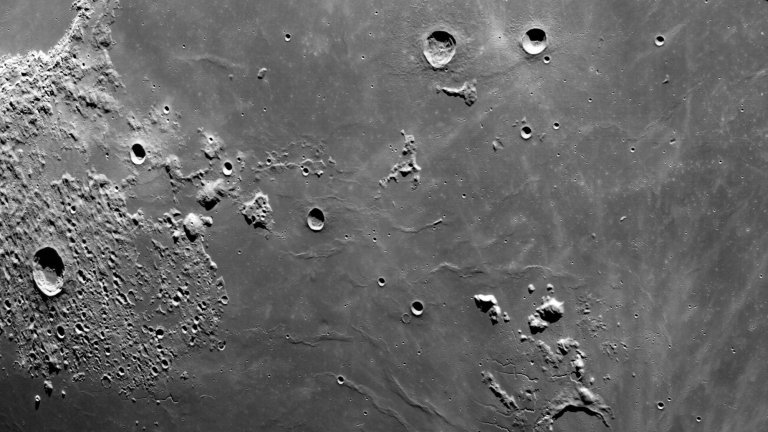
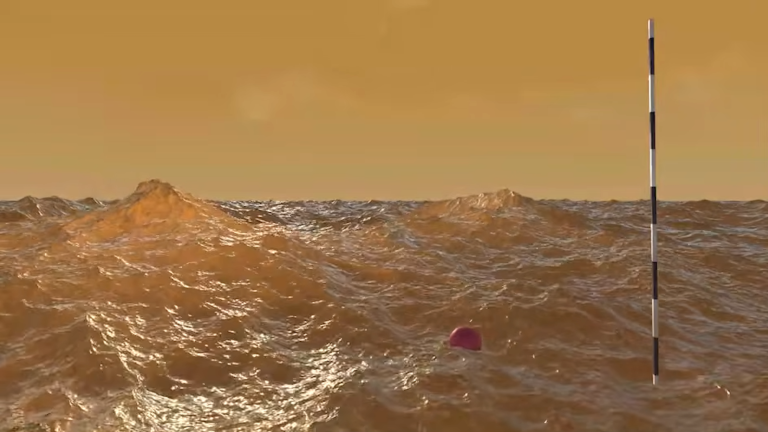
Liquid At Europa's Surface Based on new evidence from Jupiter's moon Europa, astronomers hypothesize that chloride salts bubble up from the icy moon's global liquid ocean and reach the frozen surface, where they are bombarded with sulfur from volcanoes on Jupiter's largest moon, Io. NASA/JPL-Caltech

Scientists are pretty confident Europa is home to a vast subterranean ocean, but could it have any water on its surface? According to a new study, maybe yes. That’s big news for anyone hoping to send a robotic explorer to the icy moon. And it could be big news for anyone interested in the possibility of life on that Jovian satellite.

Salty water from Europa’s 60-mile-thick ocean makes its way to the surface somehow through cracks in its ice sheet, according to new research. Once it’s there, it is exposed to sulfur from the neighboring moon Io, Jupiter’s largest. Magnesium chloride in the water interacts with the sulfur and produces magnesium sulfate, according to an analysis by astronomers Mike Brown of Caltech and Kevin Hand of the Jet Propulsion Laboratory.

Brown and Hand looked at spectrometer data from the Keck II Telescope on Mauna Kea and noticed a signal that looked like a form of magnesium sulfate, called epsomite. Then, in Hand’s lab, they tested various salts and other chemicals to compare signals--they looked at everything from table salt to Drano, according to JPL. The signals matched magnesium sulfate.

This is interesting because it shows that Europa has some kind of chemical activity and energy transfer at its surface, the astronomers note in a new paper. That’s important for life-hunters because any alien creatures living on the frigid moon would need an energy source--the sun is far too dim at that distance to really do anything.

This is also important for possible future visits, because it means scientists could sample Europa’s ocean without having to drill through its ice sheet. The new paper was accepted for publication in the Astronomical Journal.

[NASA]

15 Comments

Why not send a rover to Europa instead of another one to Mars? I'm sure it would reveal some interesting things.

I agree with mike but even more so. Mars is a waste of time--a dead planet unlikely to have ever harbored life as it just never had the soups AND time necessary to bring about life.

But Europa is much more interesting due to the gravitational flux of Jupiter stirring things up so much and creating a long time span for any soup to mix up something such as life.

Hopefully soon will see an end to the Mars exploration when Comet C2013 A1 impacts Mars and literally blasts it to pieces and makes exploration a complete waste of time after dozens of feet of Comet/Mars dust covers up everything and makes ground exploration and colonization talk a moot point.

Mars has no magnetic field so mankind has no business there anymore than we do our own Moon.

NASA is supposed to be smart but to me they are the dumbest people on Earth for not being PRACTICAL. No common sense.

"ALL THESE WORLDS ARE YOURS EXCEPT EUROPA ATTEMPT NO LANDING THERE"

@vanderleun; well said.

@gizmowiz; based on current measurements C/2013 A1 has a 1 in 1,250 chance of hitting Mars. Even if it does hit Mars the impact wold not be devastating as you suggest, however observing such an impact would be a scientific boon.

I do agree there is a slightly better chance of finding some for of life on Europa then there is on Mars, but Europa is far less compatible with human life then Mars is. Baring some magical terraforming tech I do not see humans living cradle to grave on ether body.

"Once it’s there, it is exposed to sulfur from the neighboring moon Io, Jupiter’s largest."

I do hope you meant closest, because Io is far smaller than Ganymede, and Callisto. Io is the closest moon to Jupiter though.

@ vanderleun-Arthur C. Clarke should be proud!

It would be so wonderful if, Europa was swimming with life. From the entire article says, we only need to sample the surface to understand what is under the surface.

On Earth our oceans have different temperature zones and different levels of salinity. In some areas of the ocean it can be void of oxygen and other places complete fresh water.
I wonder what the underground oceans of Europa are like.

I love to be a robot or astronaut and sink my line into that ocean with a remote lighted camera nuclear powered submarine and go exploring!!! Oh yes, and all the other electronic gadgets I can carry too!

And when they find it is dead like every where else besides the earth......then what?

If they spend the money to send a probe, rover, whatever, hopefully it does more than look for life.

Bagpipes100,
Ok, if they find fish, they can have a fish fry too!

my best friend's half-sister makes $80/hr on the computer. She has been fired from work for 7 months but last month her check was $16528 just working on the computer for a few hours. Read more on this site

JUMP30.COM

Its when I hear about things like these that makes me wish there were more ambitious people other than Nasa to create space machines. If more people would get together and start a project like this, we would have less time to wait to get to Europa and Titan. Nasa may not be the only answer to do this. Private investors maybe could. I think a skilled team that uses crowd funding might be able to get it done. If I weren't a business major and were an engineer I would try to. I would back the project for sure.

@Auroria,

Sounds like a plan. But bring some other food with you to Europa too.

Bagpipes100,
Well yea, of course. We need to bring extra food to bait our hooks...... sheesh!

On the Moon and Mars is the future of humanity. These two bodies are the only viable ones for human colonization anytime within the next few hundred years. Europa, however, fascinating is too far and it takes years to get there. What we need direly is faster forms of propulsion. Anything within the reach of a chemical rocket can wait, we need to develop more advanced space faring technologies for our posterity's sake.

If Europa does turn out to be volcanic, which is considered to be the case, life may already exist there beneath the surface of the ice. Just look at the thriving ecosystems that crop up around spewing, hot hydrothermal vents at the bottom of Earth's oceans. No sunlight needed, just volcanoes and chemicals.
---
Always defer to facts rather than philosophy.


140 years of Popular Science at your fingertips.


Popular Science+ For iPad

Each issue has been completely reimagined for your iPad. See our amazing new vision for magazines that goes far beyond the printed page


Download Our App

Stay up to date on the latest news of the future of science and technology from your iPhone or Android phone with full articles, images and offline viewing


Follow Us On Twitter

Featuring every article from the magazine and website, plus links from around the Web. Also see our PopSci DIY feed


April 2013: How It Works

For our annual How It Works issue, we break down everything from the massive Falcon Heavy rocket to a tiny DNA sequencer that connects to a USB port. We also take a look at an ambitious plan for faster-than-light travel and dive into the billion-dollar science of dog food.

Plus the latest Legos, Cadillac's plug-in hybrid, a tractor built for the apocalypse, and more.


Online Content Director: Suzanne LaBarre | Email
Senior Editor: Paul Adams | Email
Associate Editor: Dan Nosowitz | Email
Assistant Editor: Colin Lecher | Email
Assistant Editor:Rose Pastore | Email

Contributing Writers:
Rebecca Boyle | Email
Kelsey D. Atherton | Email
Francie Diep | Email
Shaunacy Ferro | Email

circ-top-header.gif
circ-cover.gif