jupiter

Oceans on Europa Have Enough Oxygen to Support Space Fish

Is Jupiter's moon populated by watery aliens?

Thanks to a surface covered in liquid water, Jupiter's moon Europa serves as the prime suspect for bodies in our solar system harboring extraterrestrial life. For the most part though, speculation has assumed the life on Europa would be microscopic, similar to the chemical and rock-eating microbes found atop undersea volcanic vents on Earth. However, a new study estimates the level of oxygen in Europa's seas may be high enough to support fish-sized life. Hello, alien sushi.

[ Read Full Story ]

Is it Possible for a Spacecraft to Fly Straight Through Jupiter?


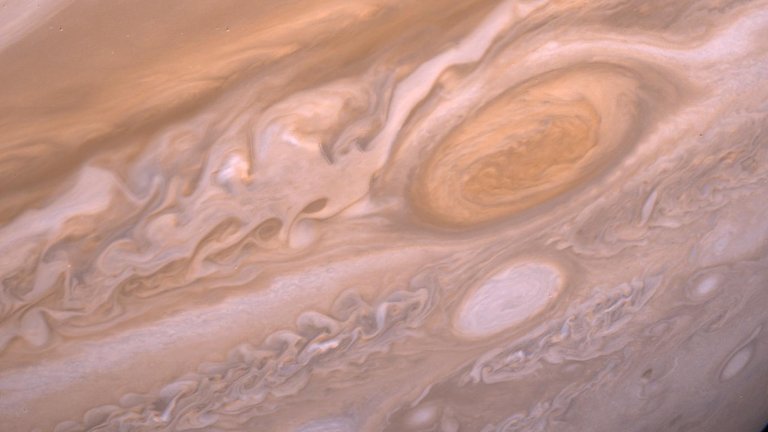
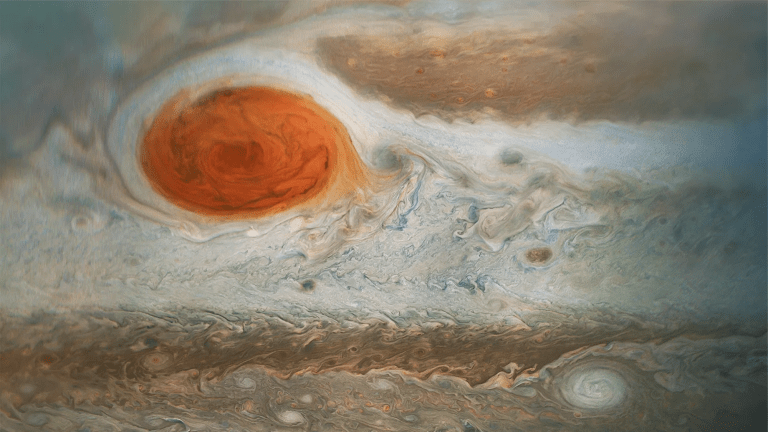
Despite its gusty reputation as a “gas giant,” Jupiter’s blood-red clouds hide a dense, rocky core that’s perhaps 20 times as massive as Earth. That core blocks any spacecraft’s passage through the center of the planet, but even a detour through the clouds would be a disaster.

[ Read Full Story ]

Peering Beneath the Surface of Distant Planets

Radar technology aboard ESA's Mars Express could be used to explore other planets and moons in the solar system

A radar device aboard ESA's Mars Express orbiter has allowed scientists to peek beneath the surface from afar, and the success with this research is now prompting them to think up other spots in the solar system that would be ideal for this sort of examination.

[ Read Full Story ]
READ MORE ABOUT > , , , , , , ,

Robot Subs in Space

PopSci innovator Bill Stone plans to drop one of the world´s most advanced underwater robots into the deepest hole on Earth. If all goes well, this thing just might help get him to the moon

NASA hopes to someday use a robot like Bill Stone's DepthX to explore Europa, a frozen moon of Jupiter and one of the most probably places in our solar system to support life.

[ Read Full Story ]

The Next Space Thruster

Rockets burn for mere minutes. This engine runs for years, sending probes to Neptune at 10,000 miles an hour

NASA's Ion Engine

1. Charge the Fuel
Xenon is an inert gas, seemingly useless for rocketry. Before it´s used as fuel, the engine must convert it into an electrically charged gas, also called a plasma. An electron emitter fires electrons at the xenon gas. When an electron hits a xenon atom, it strips off an additional electron from the atom´s shell to create a positively charged xenon ion.

[ Read Full Story ]


Download Our iPhone App

Stay up to date on the latest news of the future of science and technology from your iPhone with full articles, images and offline viewing


Follow Us On Twitter

Featuring every article from the magazine and website, plus links from around the Web. Also see our PopSci DIY feed


Become a Fan On Facebook

Share links with friends, comment on stories and more


December 2009: Best of What's New

In our December issue, Popular Science names the 100 best innovations of the year: bombproof wallpaper, self-parking cars, the fastest helicopter, and 97 more. Plus inventor profiles and videos.

Check out the best of what's new here.

Popular Science Photo Pool


Share your photos in the Pop Sci pool at www.flickr.com!
tags_sprite.png
POP_embeddedForm_cover_May09.jpg