The rotorcraft of the future will be robotic, and the Army is already working on the technology via an autonomous UH-60 Black Hawk demonstrator.
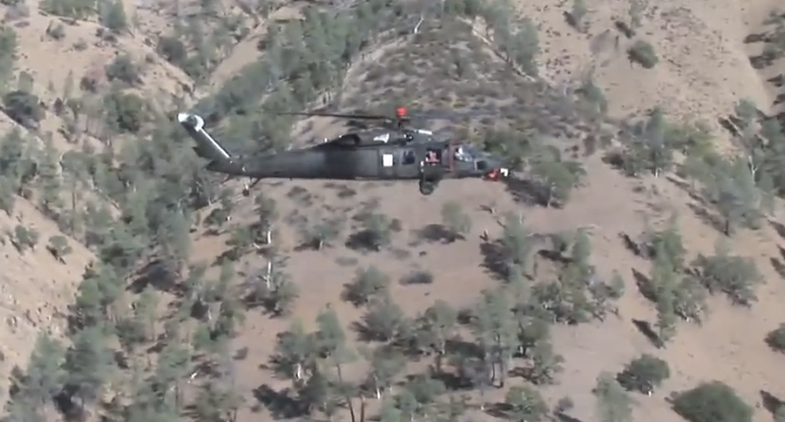
Autonomous Black Hawk

Our brand new drones aren’t the only things becoming increasingly autonomous. This newly-released video of a November 5 flight over the Diablo Range in California shows a U.S. Army Black Hawk helicopter autonomously navigating through hills and valleys at low altitude. While the Army has released no plans to automate its workhorse fleet of Black Hawks, the U.S. Army Aviation and Missile Research, Development, and Engineering Center is using the platform to demonstrate autonomous technologies that will enable the automation of next-generation helos.
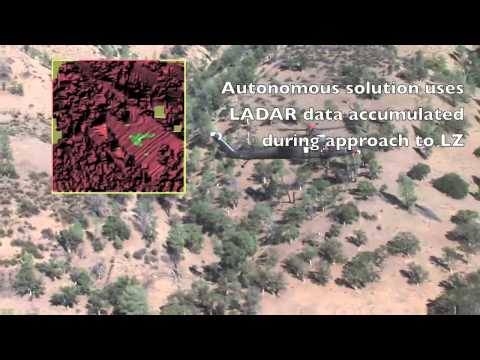
Last month's flight demonstrated two key pieces of this technology: obstacle avoidance and navigation, and determination of safe landing areas. In the video, you can see the terrain map that the helicopter is creating with its optical sensors to make navigation and landing decisions. But the most interesting aspect is the radio chatter between the human pilots onboard and the other mission participants. At several points it is evident that they don’t know exactly what their helicopter is going to do next, but each time it comes up with a satisfactory solution.

8 Comments

Oh fun

Drones are the wave of the future, being autonomous death as we sit home, watching TV on the sofa and eating popcorn.

I still believe battles should be fought with the leaders in front and all fighting would only use swords.

Until a drone flies through your window and kills you, your TV and your sofa.
In its robot mind it thinks "What a waste of popcorn"

It's just a matter of time before the machines rise up! :)

killerT,
As I sat on my sofa, munching my popcorn, the TV program was a projection of the camera on the drone that was about to attack me. I saw my enemy approaching and leaped off the sofa with my popcorn in hand to hurry off the kitchen and get my hidden laser rifle. Later, I sneak back to the living room and snipe\zap the drone from around the corner, walked back to my sofa, sat down, pick up the remote and change the channel, munching on my popcorn...

Autonomous evac flights mean that rescue operation can go on with no further risk to human life.

Thus, at the rish of only materials, the Coast Guard can get help to boats before a storm calms, the Marines can evac the wounded, and the army can move men and supplies over rugged terrain without fearing roadside bombs or needed hundreds of new pilots.

Eventually, this even means commercial applications as pioletless craft increase the availibility of short ranged arial travel.

If the obstacle avoidance and navigation, and determination of safe landing area models are robust then I believe that a faster version of those three technologies would be next...rescue missions would then be highly efficient and of course deadlier.

Imagine a world were no one has to work anymore because robots will do it all for you. Then you won't have a boss to TERMINATE YOU, you can even TERMINATE yourself if you want with your machines.!?<*>&^%#@!


June 2013: American Energy Independence

Five amazing, clean technologies that will set us free, in this month's energy-focused issue. Also: how to build a better bomb detector, the robotic toys that are raising your children, a human catapult, the world's smallest arcade, and much more.


Online Content Director: Suzanne LaBarre | Email
Senior Editor: Paul Adams | Email
Associate Editor: Dan Nosowitz | Email
Assistant Editor: Colin Lecher | Email
Assistant Editor: Rose Pastore | Email

Contributing Writers:
Rebecca Boyle | Email
Kelsey D. Atherton | Email
Francie Diep | Email
Shaunacy Ferro | Email

circ-top-header.gif
circ-cover.gif