Feature
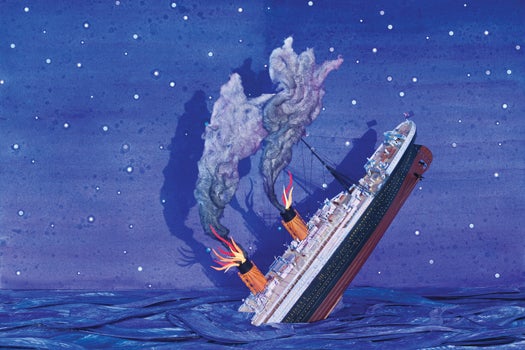
Have engineers learned anything from the loss of the unsinkable Titanic? Will they ever?
Unintended Consequences: Passengers on the Costa Concordia, which ran aground off the coast of Italy in January, learned an old lesson: Disasters will strike despite (or perhaps because of) the best efforts of engineers.  Tullio M. Puglia/Getty Images

The operators of the Costa Concordia appear to have repeated some of the same errors. The cruise-ship industry trumpeted the safety record of its shallow-draft megaships, originating in the 1980s. They became as iconic in the age of mass tourism as the transatlantic liners had been in the heyday of American immigration. With 4,200 passengers and crew, the Costa Concordia was far from the largest of its kind. Its captain was also experienced and well regarded by his peers. But as with the Titanic, the long period of success may have been misinterpreted. Some witnesses claim that the captain was distracted by conversations with passengers on the bridge at the moment of impact. He may have been overly confident because he had navigated the ship successfully on a similar maneuver only months earlier. Like Captain Smith, he has been criticized for delaying evacuation, too—possibly overly confident in the ship’s resilience—thereby losing an hour before the ship began to list, which rendered half the lifeboats useless.

We don’t yet have evidence regarding the Costa Concordia’s hull and whether the construction may have had weaknesses revealed only under unusual stress, as at Beauvais and on the Titanic. But it’s very possible that construction of the hull did not assume that rocks could inflict a gash 160 feet long. We’ll know more when the designers and builders testify.

Finally, the Costa Concordia’s scale, like the Titanic’s, created unforeseen problems. Now as then, the ship’s evacuation routes confused many passengers. The Costa Concordia’s designers may have thought that by using advanced evacuation dynamics software to plan the interior, they could assure an orderly exit even from the most remote quarters. But Dracos Vassalos, a professor of maritime safety at the University of Strathclyde in Scotland, recently noted in USA Today that “the internal architecture of cruise ships is so complex that even with the same effects being accounted for in . . . experiments, computer simulations or, indeed, in real-life accidents, we could potentially see a different outcome every time we simulate the accident.”

Engineers should, of course, continue to develop measures to prevent disasters. Collision-resistant construction, however imperfect, has helped save thousands of lives. On the Titanic, it bought hours of precious time; if evacuation had been ordered earlier and the nearby Californian had responded to distress calls promptly, the death toll might have been much lower. And the great majority of Costa Concordia passengers were rescued without serious injury.

Engineers should remain aware, though, that new designs can bring about new disasters—or, as McNeill concluded, “Both intelligence and catastrophe appear to move in a world of unlimited permutation and combination, provoking an open-ended sequence of challenge and response.” Debates about the Titanic’s end continue, and hearings and legal proceedings regarding the Costa Concordia will probably also take years. But wherever the fault lies, we have already been reminded that there is no substitute for vigilance, imagination and enlightened paranoia. In the words of Lewis Carroll’s Red Queen, we need to run as fast as we can to stay where we are.

Edward Tenner is the author, most recently, of the book Our Own Devices: How Technology Remakes Humanity.

single page
Page 2 of 2 « first‹ previous12

18 Comments

Yes they should have learned to make double hulled ships that have a space between the hulls filled with styrofoam with a volume equal (slightly less actually) to the empty space within the ship filled with water plus the weight of the empty ship and all it's equipment and cargo.

You get a smaller amount of useable ship this way but it's impossible to sink!

Navy ships should do the same then they would be basically invulnerable to small boats laden with plastique to try and blow a hole in them. It won't matter if they do the ship won't sink even if it fills with water so long as the designers take into account the empty weight of the ship fully loaded with men and supplies and equipment plus water to equal (but slightly less than) the water displaced by the styrofoam.

If you don't believe this works I have a working model made of steel to show you! You can't sink it. You can hold it underwater until the ship is full of water and then it rises right back to float--just barely but it won't sink.

I don't think engineers have nearly as much to learn from these disasters as do the owners/managers who have ultimate decision-making power. Here are a few of the decisions that people made which would have averted the disaster altogether or would have saved lives:

-Builders decided to reduce the number of lifeboats so the ship would look better and the deck would look less cluttered.
-Builders billed the ship as unsinkable, leading many crew and passengers later to make decisions based on their assumption that the ship could never sink.
-The ship was sailing too fast through the area for the conditions present, and should have been going slower or been stopped.
-The radio operator was so busy relaying personal messages that he actually told the radioman on the SS Californian to "Shut Up" so he could pass the personal messages along. This is while the radioman from the SS Californian was trying to tell them that the Californian was stopped for the night due to being in an ice field. 10 minutes later the Titanic hit the iceberg.
-The first officer tried to steer the ship around the iceberg, which was very unlikely to work. Had they instead simply hit it head-on (with the engines fully in reverse to slow down), some passengers and crew would have received injuries, and there may have been some damage to the ship, but there would never have been any chance of her sinking.
-After striking the iceberg, and despite knowing very quickly that the ship was doomed (water was filling 5 compartments, with 4 being the maximum survivable number), it took an hour before the order was given to use the lifeboats and abandon ship.
-The lifeboat and evacuation drills had been skipped early in the voyage and the crew were not well trained on what to do in case of an emergency.
-Despite only having enough lifeboats for a third the passengers, most lifeboats were lowered with less than full capacity, due to lack of training and order.
-The crew of the SS Californian saw the flares from Titanic but never headed for the ship and never turned on the radio to listen. Had they done either one immediately, they would have been able to ferry across most of the passengers using the existing lifeboats on either ship.

The list could go on, but the point is made. This wasn't an engineering failure, it was a whole set of decision-making failures along the way. That is the case with most large disasters. A series of decisions and events combine to undermine even the best engineering.

You can't engineer people into making good decisions.

@Gizmowiz: Dude, Styrofoam wasn't invented until 1941. The Titanic sank in 1912. Also, Styrofoam is flammable, so you may be replacing death by drowning with death by immolation.

I was taught back in 1996 in my engineering materials class that ductile-to-brittle transition was the major culprit (other than the iceberg itself). That due to inconstancies in the rolling process, some of the steel plates that the titanic was constructed with became brittle at low temperatures. That with properly treated steel plates and iron rivets, the titanic would not have suffered catastrophic failure, and the Titanic could have limped back to port. Or at the very least, the passengers would have had plenty of time to evacuate (days vs hours).
This technical paper from NIST goes into more detail.

http://203.158.100.100/charud/specialnews/3/titanic/titanic.pdf

Here are some excerpts:

“It is possible that brittle steel contributed to the damage at the bow due to the impact with the iceberg, but much more likely that the brittle steel was a factor in the breakup of the ship at the surface.”

“Steps could have been taken to heat-treat the steel to improve its fracture properties, but this knowledge was simply not available in 1911.”

“The microstructure of the rivets that evolved during their being driven into place, with the slag stringers oriented perpendicular to the tensile axis, may have been a direct contributor to the type and distribution of damage to the hull.”

"Have engineers learned anything from the loss of the unsinkable Titanic?"

So, yes; material science has come a long way since 1911. Not only do we know more about the properties of the materials we are using, we also have the ability to manipulate materials to exhibit more favorable properties for the intended application. Not to mention wide array of advanced materials that not available then.

@marcoreid
could a ship actually survive a direct hit from an iceberg? I don’t have a clue but I’m thinking the iceberg isn’t going to move so the ship will break up badly as it stops “on a dime” ... and then sink fast!

As democedes said, of course engineers learn from every failure but that doesn’t help much when the boundaries are constantly being pushed. I doubt that the engineers of the time thought that the Titanic was unsinkable but if they did, then certainly that was learned too (e.g. why have any lifeboats if your vessel is unsinkable). Typically engineers know they cannot plan for every possibility, nor should they as the costs would skyrocket.

Then you have the business types that are looking to maximize their profits and the general public looking to save whatever they can and you will always have a recipe for disaster which only gets magnified by human error during the event.

That said, there are always ways to significantly improve safety and if the costs can be kept down, they should be looked at.

Gizmowiz’s Styrofoam suggestion sounds interesting and perhaps has been looked at in the past. The potential fire hazard seems significant but perhaps there is now an inexpensive way around that issue with newer materials.

One thing I thought when reading the article is to have a safety ship always travel with any large passenger ship, actually leading the way in hazardous locals. That extra ship would be quite a bit smaller only needing to be able to hold all the passengers if needed and could double as a supply ship freeing up space for more passengers on the main ship. To me it would seem that the additional cost could easily be kept below 10% above the existing cost. A complete guess on my part thinking about how big a ship would be needed, the crew size and how much saving could be had if it doubled as a supply ship (it could dump the supplies if needed in a crisis). Many maritime disasters could have been avoided or minimized if the stricken ship had another ship standing by, dedicated to the safety of the main ship. Wouldn't you feel more comfortable on a cruise ship if there was always some backup close by?

It's so easy to reel off "explanations" on paper, but reconciling them to the real world is something else.
marcoreid, for example, "contrivbutes" what is little more than a rehashing of New World Order Thought Control High Command propaganda. They used fewer lifeboatds becuase they thought it made the ship look cluttered; the seamen were lulled by claims of the ship being "unsinkable" so they made fatal errors; the radio operator told other ships to stop sending ice reports; they tried to steer around the iceberg. Seamen live only inches from drowning always! They define the world as an environment that can kill them separated from them by the tissue of the ship! They don't play around! They never would trust a ship to be "unsinkalble". In fact, no small number considered that to be a show of arrogance almost forcing God's hand! No one would order other ships to stop sending ice reports! They knew, even in "those days" that nine tenths of an iceberg was ubderwater! They wouldn't have gambled to "steer around" the visible portion! Californian would never have sat and watched emergency flares go up and not at least make the effort to ensure that Titanic wasn't in trouble! Titanic knew Californian was there. They could have sent a skiff out to alert them! And the boats could have fit at least 80% of the passengers and crew, but the first one was launched wit only 19 people aboard, not the qat least 65 it could carry! But, then, no shipbuilder or cruise line would risk lawsuits by placing too few lifeboats. Any captain would see that as a sign of arrogance, too, and even refused to sail!
And it's not like no one knew then that cold could make metal brittle! They had been traveling in the Arctic and Antarctic for some time by then, and even wooden ships had exposed metal parts that would have responded!
But consider democedes' purportedly trained assessment of the situation. democedes claims they were "taught" in their "engineering materials class" that, aside from the iceberg, "ductile-to-brittle transition was the major culprit". Yet, the tape democedes quotes says, "It is posible that brittle steel contributed to the damage at the bow"! "Possible" does not mean "definitely". The tape only offers that as one suggestion, yet democedes offers that as abolsultely, indefatigably, unquestionably proved! Those who fashion themselves as "experts" so often show so little understanding of what they proclaim to know!
Notice gizmowiz's supposedly "superior" suggestion for designing a ship, followed up with the same arrogant declaration that that engineering change would necessarily make it "impossible to sink"!
The fact is that the "official story" of the Titanic is non credible to the point of being impossible! What was claimed did not occur. None of it.

Rettah: Sinks are still sinking today that don't have to--the Concordia recently. Styrofoam isn't going to catch fire when it's under water silly. And in those 'commercial' situations most of the time there is no explosion--they just hit an iceberg or reef and tear things open. The 'closed cell' styrofoam will not soak up water.

And yes I know they didn't have it the. The question is what are engineers TODAY supposed to learn fro PAST mistakes. Your certainly a very negative person.

Another way to prevent vessels from sinking is to use the same thing we protect ourselves in car accidents--airbags.

Why not make it mandatory ships have airbags which will inflate rapidly (far faster than rushing water) to fill up large areas that could help keep a boat afloat. They use these same type of airbags to bring ships back to the surface when sunk--so they will keep a ship from sinking in the first place.

It's just that lives are cheap and shipping companies just don't care. They can and should make their ships unsinkable with a variety of methods. They don't because their crude capitalist without a heart.

I actually kind of like your idea. Only downsides are space/weight to hold compressed air tanks or power to run compressors. I would assume the engines are cut off in many emergancies so I'm not sure you could rely on them for power.

I'm just imagining a couple neatly folded package on the walls or something in the lower decks that would be able to inflate and unfold underwater, even with objects in the way like luggage. Might restrict evacuation movements though. hmm ponder ponder.

Ego sank the Titantic.... Ego got people killed....

..........................................
See life in all its beautiful colors, and
from different perspectives too!

A number of times, I've pointed out that a crucial flaw in the "official story" of Titanic is that seamen would not act the way described. Not pay attention to ice reports, ignore the fact that most of an iceberg is underwater, willingly assume that a ship firing off emergency rockets wasn't in trouble. Even here, I mentioned those points but was ignored. It can help to address this from the other way around, too. For those who didn't give credence to my points, what reason exactly led you to believe it was normal for experienced sailors to act that way? What legitimate explanation would there be for people who knew, on the job, that they were always inches away from a medium that could kill them suddenly acting so recklessly? Why is it a normal to think of people suddenly ignoring conditions and imperiling themselves?

@julienpenrod
LOL ... just because you don't get a response does not mean that folks are ignoring your comments! Your thoughts are a bit strongly expressed and although they are very rational, they nevertheless have very little merit. Sorry, it's just a fact. There have been many disasters that have been very well documented (especially air disasters) and time and time again it has been revealed that folks that should have been most concerned about safety and their duties, fully understanding the dangers, turned out to be seemingly the least concerned. Why? My guess would be the same as anyone else ... the more one is close to danger on a regular basis for days, months and years, the less one thinks about it. You end up having veterans scoffing at the worries of the less experienced.

The crew and passengers were abducted by aliens and later return to the ship. As the aliens kept them in captivity, they also wipe them of their memories, prior to returning to the ship. It seems the gizmo gadget required to wipe human memories, was on the fritz.
All the passengers were returned to the ship and talking and remembering their captivity. Well this would not do for the aliens and there was only one thing left to do. Have the Titanic bump an iceberg. The surviving passengers were warned never to speak of their captivity or they be captured again and experimented more on them.
So as the Titanic sank, so did the memories of the alien abductions, mum, the word........ shoosh.

Gee, I really hope everyone pays attention to my comments. Because it all about me and I offer no facts, just verbage. ;)

Far Out Man's "explanation" is utterly inadequate. Far Out Man says, "the more one is close to danger on a regular basis for days, months and years, the less one thinks about it".
The less one concentrates on, fixates on the presence of danger, but not the less one takes precautiuons!
Even when one doesn't think about danger that might be around them, they still do what's necessary to avoid problems!
The other ships didn't stop sending messages about ice because they were so used to danger! The Titanic stopped accepting them! A seaman doesn't forget that there can be unseen portions of an iceberg underwater!
Far Out Man's "explanation" has no more validity than the "argument" for Scott Peterson growing a beard, dying his hair, and heading to the border with his brother's passport and thousands of dollars in cash, namely, "No one knows how they'll react in a time of panic".
Just sophistry, doggerel presented pedagogically for the benefit of the gullible.
And, if StarsShineBright's illiterate, ungrammatical comment is meant to suggest I did not provide proof, they fail miserably, as well.

julianpenrod,
Your hysterically funny in your emotional insistence YOU must be correct, ROFL, thank you. It is all theories at best, as none of us were there. Take care. ;)

I am a retired seaman and despite the eagerness of the media to over dramatise this disaster it will still remain a matter of bad seamanship and an illustration of how the ship owners paid little heed to the lives of passengers.
Probably the main reason that, in days of old, captains elected to go down with their ship in such circumstances was to avoid the findings of a maritime court with the subsequent disgrace, ruin, and misery to their families.
Until the Titanic all vessels very rarely had enough lifeboats or other life saving equipment for everyone and, notoriously penny pinching as they were, the companies opposed any improvements which cut into their profits.
The only shipping companies that were admired by all seamen for their standards were were owned by the two Holt brother's, passenger lines generally came in at the bottom with the transatlantic liners derided as inflated ferry boats!
There is always room for improvement but on the whole standards are now pretty good with the Scandinavians as always leading the field.
It is unfortunate that the very strict standards set by Britain without any balancing encouragement and ever increasing taxation by our politicians have effectively destroyed our Merchant Navy so it is unlikely that we shall ever see another titanic British disaster!

The seeker of knowledge who seeks to reach beyond the stars to go where no mans gone before to see things no man has seen and bring these experiences back for the whole world to hear and see.

Recently they did another study of the wreck and tested all the theories that where listed above and what they found was it was not the rivets or the steel. the ship was simply not equipt to handle the immense collision on its side and if you look at history the titanic is safer than most modern cruise ships some of witch sink so quickly getting everyone to a life is dicey at best and countless others that have listed on their side rendering lifeboats useless the titanic was afloat for over 2hours and 40 minutes witch is longer than almost all the cruise ships that have sunk since then not only that she didn't list and remained buoyant up to the very end only at the when the ship was faced with stress that far exceeded her design did she finally break in two and sink yes their where errors made by officials on the ship. and for her speed. back then it was not uncommon to have a ship at cruising speed until ice is spotted not before and many ship of that time did the same thing yes the radio man failed to do his job yes the ice watch men where not equipped properly for their job had they had their binoculars had the radioman been listening theirs a good chance the titanic would still be with us but as far as her design their were no fault engineers have studied the steel they used for hull as well as the type of rivets all of witch exceeded well passed their threshold


June 2013: American Energy Independence

Five amazing, clean technologies that will set us free, in this month's energy-focused issue. Also: how to build a better bomb detector, the robotic toys that are raising your children, a human catapult, the world's smallest arcade, and much more.


Online Content Director: Suzanne LaBarre | Email
Senior Editor: Paul Adams | Email
Associate Editor: Dan Nosowitz | Email
Assistant Editor: Colin Lecher | Email
Assistant Editor: Rose Pastore | Email

Contributing Writers:
Rebecca Boyle | Email
Kelsey D. Atherton | Email
Francie Diep | Email
Shaunacy Ferro | Email

circ-top-header.gif
circ-cover.gif