Using Heat to Record Information Could Improve Data Storage Speed a Hundred-Fold
We may earn revenue from the products available on this page and participate in affiliate programs. Learn more › An...
We may earn revenue from the products available on this page and participate in affiliate programs. Learn more ›
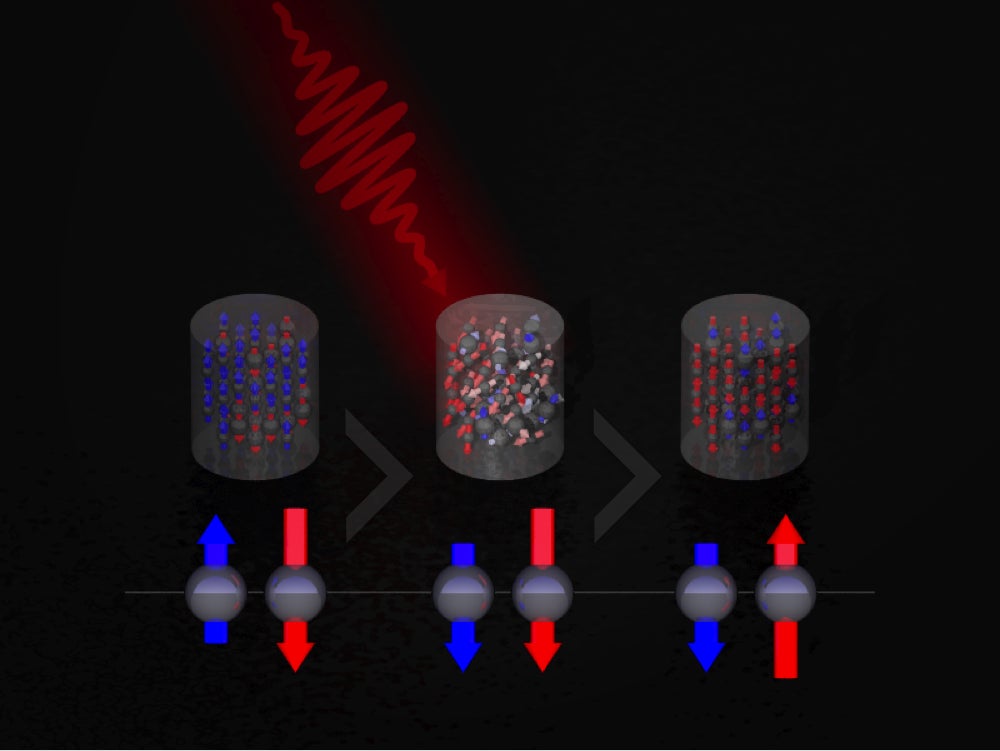
An international team of researchers claims to have figured out a way to use ultrafast bursts of heat, rather than the typical magnetic field, to record a bit of information on a hard drive–a development they say could vastly increase the efficiency and speed of hard drives. They say it could record multiple terabytes per second, hundreds of times faster than current methods.
Typical magnetic recording technology for hard drives uses an external magnetic field to invert the poles of a magnet. The speed of the recording depends on the strength of the magnetic field. But the physicists, led by a team at the University of York, says they have figured out a way to use heat rather than a magnetic field to cause the same effect.
The heat in question is a simple ultrafast heat pulse, beamed with a laser. At only 60 femtoseconds, it’s exceedingly brief, but manages to provoke a ferromagnetic state in certain materials.
It’s very interesting on a theoretical level; this is a change in how we thought data storage worked in pretty basic ways. But given the growing prominence of solid-state storage–which is not magnetic, and can theoretically perform these operations far faster than a magnetic hard drive–we’re not sure this is really going to catch on. Still, interesting stuff.
The article appears in the journal Nature Communications.