Eco-Friendly Battery Runs on Old Newspapers
I’ll start you guys off with a quote here: In talking about Sony’s new battery technology, which uses old cellulose...
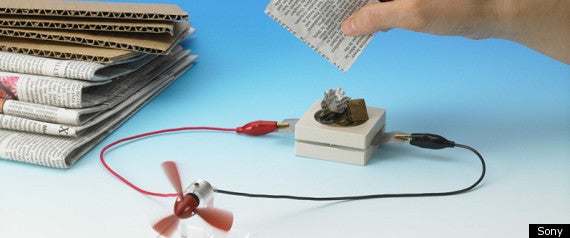
I’ll start you guys off with a quote here: In talking about Sony’s new battery technology, which uses old cellulose product like newspapers and cardboard to generate electricity, the BBC says: “Their work builds on a previous project in which they used fruit juice to power a Walkman music player.” Thank you, crazy Sony recycling-engineers.
This new tech relies on turning cellulose products (including, lest we forget, the paper greeting cards all you Earth-hating monsters are exchanging this time of year) into glucose sugar. That’s done by introducing the old paper products to a solution of water and cellulase, an enzyme found in nature, and, um, shaking it. The cellulase solution decomposes the cellulose to form that necessary glucose, which is in turn combined with oxygen and some other unnamed enzymes, producing electrons and hydrogen ions, the former of which is fed into batteries to charge them.
If you’re wondering where in nature this wood-eating cellulase enzyme is found, look no further than the termite. Cellulase is naturally occurring in the wood-eating species, and in fact the Sony researchers involved in the project actually compared their technique to that of a termite.
As with all new battery tech, especially in the early stages like this one is, the battery isn’t powerful enough to run high-demand gear. A portable music player, like the Walkman™, is about all it can handle at the moment. But as the byproducts are basically harmless (water and gluconolactone, a neutral product often used in anti-aging cosmetics), it’s definitely a tech we’d like to see improve and become viable.