BOWN 2010
Cellphones are seriously hazardous to the environment when not disposed of correctly. The ecoATM hopes to make recycling easier--with cash
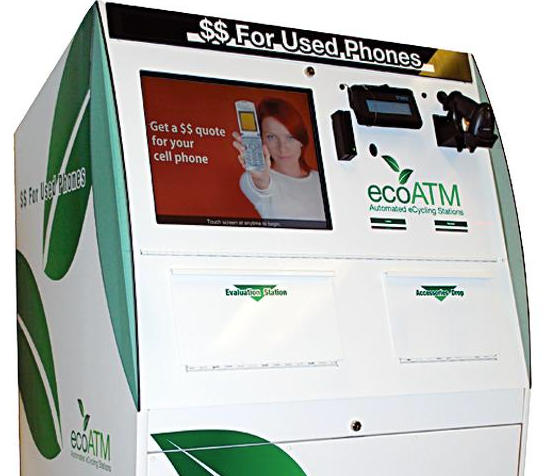
EcoATM EcoATM

As electronic devices increasingly permeate society, we must confront the question of how to manage the resulting e-waste of discarded cell phones, computers, iPods, and other electronic jetsam in an environmentally responsible way. Inspired by the problem, the fledgling company ecoATM has developed an innovative approach to eliminating eWaste with their prototype “ecoATM kiosk,” essentially a reverse vending machine for old cellphones. Old cellphone goes in; cash comes out.

The ecoATM is designed to identify and evaluate used cell phones, by both inspecting them visually and digitally probing their software. The company developed sophisticated computer algorithms able to visually differentiate a phone from thousands of other models and inspect it for flaws and damage. According to primary inventor and IP holder Mark Bowles and CEO Tom Tullie, the machine is “trained” to visually identify existing models of phones exceedingly quickly--it can identify the phone and assess its condition within seconds. The ecoATM then determines the device’s value, after which the customer can receive cash back once they drop the phone in the adjacent recycle bin.

I visited the ecoATM company headquarters here in San Diego and checked out the most recent prototype. The evaluation procedure is quite simple, with each step prompted by a touchscreen. It takes only a couple of minutes to get in and out with the cash. It goes something like this:


In addition to the technology, which should be appealing to any techno-geek (I actually found it pretty fun just to watch all the bells and whistles during the evaluation procedure), the system makes recycling of electronics beautifully easy. According to Bowles, while there are other electronics recycling options available, they're often not successful due to the hassle of the process--regardless of good intentions. However, with the ecoATM soon to be made available at shopping malls, Target locations, grocery stores, and other public locations, recycling is as easy as drawing cash from an ATM. Receiving some cash back on the spot obviously increases the incentive to do something positive for the environment.

The first fully automated test prototypes of the ecoATM are currently being fitted and will be available at a handful of locations around the country for field testing soon. According to the company, they plan to go into full production by the first half of next year and should be expanding to over a thousand machines by late 2011. Eventually they hope to increase the database to include computers, iPods and other electronic devices.

12 Comments

Cool! I would try this if i have a cellphone. Yay 1st comment!!!!!!

I work for an electronics recycling company. We make our living by taking in obsolete electronics and breaking them down into the commodity level. If this machine really takes hold, my own job might become obsolete!

www.gesrecycles.com

I doubt it. Someone has to recycle the collector machine when it fails to collect its own weight in electronics.

Like the article says, this is probably the best bet to get people to recycle their used electronics. Nobody wants to save them and drop them off at a special location just because it's the right thing to do, so giving them some cash to do so will hopefully improve the odds they recycle. Plus if these machines are at places people are anyways frequently like a grocery store, all the better!

It'd be interesting to see what the price tables are. I can't imagine a cell phone I don't use anymore, frequently 2+ years old with most cell plans, would be worth more than 10 or 20 bucks.

Sounds like a cool place to dump stolen phones!

I was just thinking about how people could exploit it. For example, when the machine is taking diagnostics of the software in the phone, I'm pretty sure one could attach a malicious program to the data it extracts to alter the machine's behavior. That way the person could get the phone and the money and move on to another station. So security software would have to be installed into the machine I bet. Just a thought.

www.geekness.webs.com

All well and good, but, I heard on NPR that in reality most recycling places take the 'precious' metals then ship the hazardous waste somewhere to dump anyway. Doesn't that defeat the purpose??? Where does ALL of the phone end up, really? Or is it all about everyone getting some money, last one with it throws it on the ground somewhere anyway?

God forbid someone tries to do something good.

@kellerfan - Stripping out the copper *is* recycling, because it means less mining in the future and less consumption outright of a reusable resource. I may not believe that this is feasible, but that particular detail wouldn't sink it.

@quantumwarrior - it's pulling data from the phone. It's not executing anything. There's no "code." What you're suggesting is equivalent to trying to crack a department store computer by changing a barcode before taking the item to the register. If there was abuse, it would be exactly that - giving a fake signal to ring up a fake price, or, in this case, return. That, with all things considered, wouldn't get you far, given how little the phones are probably worth and how low the maximum payout probably is, to say nothing of the difficulty of actually making the phone to trick the machine.

Gah, forgot to mention ....

kellerfan, recycling isn't even the main point in the article. It's proper disposal. Li-ion battery packs are nasty little juiceboxes of death. That's reason enough to collect the phones.

OKKKKKK, um, Dirk?
Is Copper the only thing, other than the battery, within the cell phones, that is harmful to the earth and humans???
I think otherwise.....

....SHOULD listen to NPR 'SOMETIMES', you might LEARN something......
G.Y.H.O.O.Y.A!
Ahhhh, you must be from Jooysey too!

I work for ecoATM and can address some of the comments above.

- Is it successful at collecting a lot of phones?
Every location that we have put a machine we immediately begin to collect vast numbers of phones so the machines work quite well and are more efficient in every measure than any other collection methods including web buy back, POS buy back, and charity boxes. In just the first small trials we have collected 10's of thousands of phones and paid consumers hundreds of thousands of dollars for stuff that was mostly (90% of it) bound for our landfills.

- What about stolen phones?
We deploy a number features that deter people from selling stolen phones to an ecoATM. We have the ability to check the ESN of each phone against a stolen phone database and we can refuse to buy the phone. We also get the drivers license info from every customer and in some municipalities they even require a thumbprint so we collect those when required. If we do receive a stolen phone we can track all of the information, report it to police, and return the device to the owner. There a lots of ways to sell a stolen phone and we make sure ecoATM is one of the least attractive options.

- What happens to the phones and what about the environment?
We generate 2 basic streams from the ecoATM. About 25% of what we collect has no secondary market for reuse so we take it directly to materials reclamation. The 2 most reputable and scrutinized firms on the planet that do this are Umicore in Belgium and SIMS here in the US. Phones are fairly densely packed with different precious metals like gold, platinum, palladium, and others. About 65 cents worth per phone. It is important to reclaim these materials both because they are in short supply and because the process of mining them from the earth is really nasty. In fact, the EPA estimates that just for the tiny smidgen of precious metals in each mobile phone there is 3 tons of toxic mining waste somewhere that was generated to get those metals. By reclaiming those metals on end-of-life devices we help avert that 3 tons for at least one cycle. SIMS and Umicore also capture all of the other toxic materials like the bromenated plastics, cadmium, and other nasty stuff so that it doesn't enter our landfills or water tables. These are the best known environmental practices and this is not a profit center for ecoATM. The second stream we generate is devices that are bound for a second life. This is about 75% of what we collect. These devices generally get a refurb and are sold as insurance replacements, warranty replacements, refurbished phones, etc. The environmental benefits on this stream are just as important because we avert the need for a new mobile phone to be created thereby saving all of that energy, materials, mining waste, etc. The average ecoATM collects enough phones within 5 days of placement to make the machine CO2 negative for an entire year and the next 360 days its CO2 positive. In fact, an average ecoATM offsets enough energy to be equivalent to taking 21 houses off the grid, enough greenhouse gas mitigation equivalent to taking 3 cars off the road, and enough mining waste averted to equal 25,681 tons. These numbers come from the EPA calculator, not our own estimates. For our environmental leadership in this area we were recognized this year alone with many awards including United Nations Environmental Program Low Carbon Leadership Program Honoree, CES 2011: Innovations Honoree in Sustainability, Green:Net – GigaOm Winner Judge’s Choice, International Electronics Recycling Conference and Expo Innovative Product of the Year, Cleantech – CONNECT Most Innovative Product, not to mention the Popular Science Best of What's New award in cleantech.

ecoATMs have good benefits to consumers because they can quickly and conveniently turn trash into immediate cash, get thier personal data removed, and do the right thing by the environment. And the environment wins because this stuff doesn't enter our landfills. see the ecoATM website for more info.


June 2013: American Energy Independence

Five amazing, clean technologies that will set us free, in this month's energy-focused issue. Also: how to build a better bomb detector, the robotic toys that are raising your children, a human catapult, the world's smallest arcade, and much more.


Online Content Director: Suzanne LaBarre | Email
Senior Editor: Paul Adams | Email
Associate Editor: Dan Nosowitz | Email
Assistant Editor: Colin Lecher | Email
Assistant Editor: Rose Pastore | Email

Contributing Writers:
Rebecca Boyle | Email
Kelsey D. Atherton | Email
Francie Diep | Email
Shaunacy Ferro | Email

circ-top-header.gif
circ-cover.gif