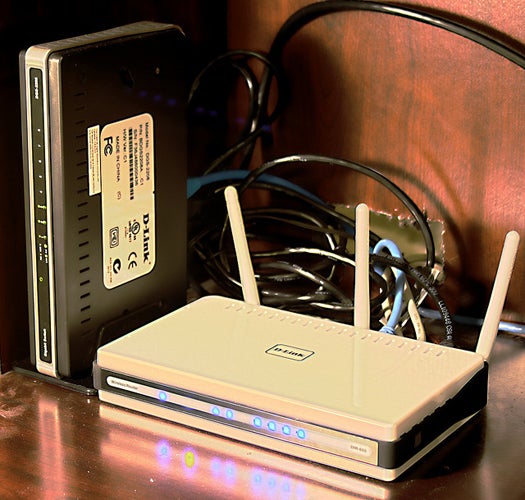
Plug In roychung1993 via Flickr

The Internet seems to offer countless chances to win -- "You're Our Lucky 10,000 Visitor!!! Click Here to Claim Your Free iPod!!!" -- but this month you really could be the lucky winner. According to IMS Research, sometime this month the 5 billionth device will connect to the Internet, and within a decade that number will swell by more than four times.

While that number largely consists of PCs -- there are some 1 billion connected in the world that connect to the Internet regularly -- and mobile devices like smartphones, future growth will be driven by machine-to-machine technologies like smart grid-enabled appliances, e-book readers, public safety systems, traffic and parking control devices, sensor networks, Web-enabled TVs, and automobiles that sync up to the Net. IMS also projects that by 2020 there will be 6 billion cell phones in the world, most of which will have Internet connectivity.

We should note here that we have no idea how IMS is keeping count, but we're not ones to spoil a perfectly good celebration.

[Network World]

6 Comments

This article is similar as counting how many light bulbs are being manufactured. If there is a ramification, consequence from reaching a certain threshold of nodes on the net, I guess this article would have a point, but it does not. This is a boring article and pointless too.

I'm tempted to put my router on a timer so that it gets a new ip every 2 minutes. I'm not gonna be home much this month anyway. lol

Well, if an IP is essentially a 32-bit number, then the cap of devices that can have an IP address any any given time is alittle over 4 billion...

@rosen380 Thats why they we have NAT :D Though to be honest, all NAT really is, is a bandage to cover what IPv6 could cure...at least for the foreseeable future.

"The present is theirs; the future, for which I really worked, is mine." -- Nikola Tesla

Maybe they're just counting mac addresses.

I've read that in the Eastern parts of the world, which are becoming much more connected but weren't assigned nearly enough IP addresses back when they were being divvied up, it is common for entire neighborhoods to share one external IP address, NAT-style (this is why China is pushing IPv6 so hard).


138 years of Popular Science at your fingertips.

Innovation Challenges


Popular Science+ For iPad

Each issue has been completely reimagined for your iPad. See our amazing new vision for magazines that goes far beyond the printed page


Download Our App

Stay up to date on the latest news of the future of science and technology from your iPhone or Android phone with full articles, images and offline viewing


Follow Us On Twitter

Featuring every article from the magazine and website, plus links from around the Web. Also see our PopSci DIY feed


February 2012: The Future of Fun

Science is reinventing play, from extreme sports to gamification to ridiculous roller coasters to the playgrounds of tomorrow, and this issue is chock full of fun. Also, on a less fun note: Did global warming destroy my hometown?


circ-top-header.gif
circ-cover.gif
bmxmag-ps