Dreams of Olympic glory could make athletes risk their lives on an experimental procedure
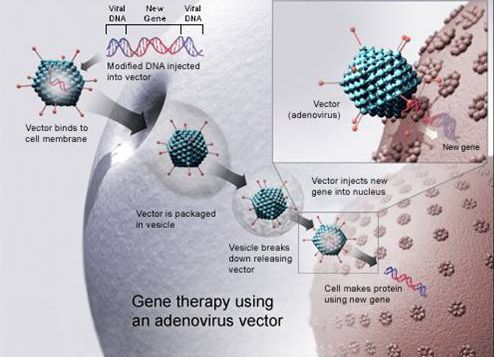
Gene Therapy Let's polish up those genes U.S. National Library of Medicine

Steroids seem so last-decade, now that gene therapy has caught the eye of athletes looking for a competitive edge. But scientists warn that gene therapy still represents a high-risk, experimental practice even within medicine, and that athletes could endanger their lives by giving it a try.

Gene therapy has shown promise in a few treatments by helping swap out defective genes or changing the degree to which genes turn on and off. For instance, it has helped establish some immune system function in so-called "bubble children." But researchers have become extra cautious with gene therapy ever since the death of 18-year-old Jesse Gelsinger during a 1999 research trial.

Unsurprisingly, the practice has been banned by the World Anti-Doping Agency that regulates sports. But experts writing in the journal Science fear that gene therapy may still tempt athletes eager to duck the stringent drug testing at events such as the upcoming Winter Olympics in Vancouver.

A German coach and a Chinese lab have already been flagged for trying to obtain gene delivery treatments that boost erythropoietin (EPO) production. EPO leads to a surge in red blood cells that carry oxygen in the human body, and has become somewhat of an item among endurance sports athletes. Doping tests can still pick up on signs of the gene therapy if they are done soon enough.

Gene therapy experiments in monkeys have managed to recover sight in the colorblind and even increase muscle growth. Yet another gene therapy trial meant to boost red blood cell production led to fatal anemia in some monkeys, which highlights the unpredictability of the method.

This is just the latest in a long line of debates over athletic enhancements. We previously covered the question of cyborg athletes and whether prosthetic limbs give people an edge. But at least prosthetic users don't take their lives into their own hands. Any athletes willing to risk it all on gene therapy for Olympic glory would be doing just that, scientists said.

[The Canadian Press]

3 Comments

I guess gamma rays don't so good in gene therapy.

Well if the public wants superhuman performance and record breaking then they will absolutly do it.

gene therapy should definitely not be banned. this is what will eventually unlock our true potential, so many other organisms in nature exhibit greater speed, strength, and better overall abilities to cope with their environments. gene therapy can be dangerous when proper steps are not taken to ensure safety as in the case stated in this article, but we shouldn't let a few irresponsible scientists who are overconfident in themselves and just want to rush into things ruin it for the good scientists who can make this work effectively and safely. we should also not limit therapies to those that cure genetic diseases, although i feel that those should take priority in the short term. we could all have intelligence exceeding the smartest person alive today while being able to outperform the most elite athletes, and to all those thinking that this will turn into a boring world where everyone is perfect, this is not the case. most of our personalities and emotions come from interaction with our environment. the brain is not hard wired, and we will still be capable of choosing our own path in life. people who want to become professional athletes will still have to put in the years of training it takes to compete with all the other people with genetic modifications. in fact, everyone will start out on a much more even playing field than before which is the whole goal of regulating sports in the first place. i also believe that physical attributes such as hair, eye, skin color, sex, and height (with the exception of conditions such as dwarfism, gigantism, and other conditions of that nature), or anything for that matter that does not effect the overall fitness of the person should not be altered, ever. once we start doing these modifications to zygotes, these traits will be carried on through generations, and we can make each one better than the last. so basically, i think if we do this right, with proper regulation to ensure safety, we can unlock some great potential for our species as a whole and that alone should be enough reason to go forward with gene therapies.


June 2013: American Energy Independence

Five amazing, clean technologies that will set us free, in this month's energy-focused issue. Also: how to build a better bomb detector, the robotic toys that are raising your children, a human catapult, the world's smallest arcade, and much more.


Online Content Director: Suzanne LaBarre | Email
Senior Editor: Paul Adams | Email
Associate Editor: Dan Nosowitz | Email
Assistant Editor: Colin Lecher | Email
Assistant Editor: Rose Pastore | Email

Contributing Writers:
Rebecca Boyle | Email
Kelsey D. Atherton | Email
Francie Diep | Email
Shaunacy Ferro | Email

circ-top-header.gif
circ-cover.gif