Puts medical diagnostic tools at the fingertips of everyday folk
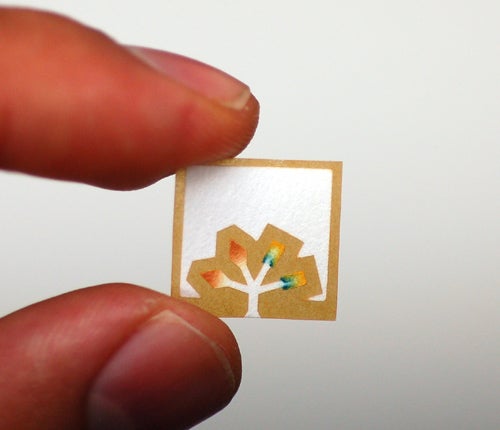
Paper Lab The prototype of the paper lab-on-a-chip looks similar to this earlier Whitesides Lab device, except that it would test blood instead of urine. Whitesides Lab

Existing lab-on-a-chip designs can put the power of testing in the palm of your hand, but an upcoming model may represent the cheapest and most colorful one yet. A Harvard University chemist has created a prototype "chip" technology out of paper that could help diagnose HIV, malaria, tuberculosis and other diseases for just a penny each time, according to CNN.

A drop of blood on one side of the paper chip results in a colorful tree-like pattern that tells physicians or nurses whether a person has certain diseases. Water-repellent comic-book ink helps channel the blood into the tree-like pattern, as several layers of treated paper react to the blood and create the telling colors.

George Whitesides, the Harvard chemist, said that the colors can also reveal the severity of a disease rather than just saying if a person has it or not. It's not the most sophisticated lab-on-a-chip, but that's the point -- many of these could become cheap diagnostic tools for a developing world that often lacks physicians and clinics.

Patients in Africa or Asia could even take photos of their diagnostic results with mobile phones, which have become wildly popular even in the poorest regions. They could then send the photos on to medical centers for proper diagnosis.

Whitesides was one of the speakers at the recent TED Conference. Perhaps he should discuss his work with fellow TED attendee Bill Gates -- we know that the Gates Foundation has devoted $10 billion over the next decade toward vaccines as a method of combating childhood diseases. Maybe Gates could spare a bit of change for this nifty yet simple tech as well.

[via CNN]

13 Comments

This is a hint at the future of medicine. Cutting back the workload on medical personnel could only be a good thing.

Pretty amazing tech.

I do wonder how sensitive it is to contamination of the blood sample due to dirty hands, etc. No slight intended to anyone, but I suspect that there are areas where it is not very convenient to wash before submitting a sample.

Not only innovative this is a creative idea!

It's funny to think that if they took away the gimmicky 'tree' aspect of it, these chips would be 'even cheaper'..!

....Finding out that I have a deadly disease from a colorful 'little tree' isn't going to make my day any better...

Imagine putting this inside band-aids with a quick little chart to tell what is going on. Each time you nick yourself you get a checkup too! It could help get people to the doctor who otherwise wouldn't even know there was an issue. I love this technology.

It's funny to think that if they took away the gimmicky 'tree' aspect of it, these chips would be 'even cheaper'..!

....Finding out that I have a deadly disease from a colorful 'little tree' isn't going to make my day any better...

I have a feeling the tree style is out of function and not style. It would appear to an uninformed eye that the two branches on each side test for the same disease for some redundancy, and that each branch probably contains a chemical that is used to detect it. So making it a tree form would allow for one blood sample taken to test multiple things. They could probably accomplish the same thing by placing one sample site on each edge and have each sample site test for one specific disease, but that would probably end up costing more(due to more materials used.

Imagine putting this inside band-aids with a quick little chart to tell what is going on. Each time you nick yourself you get a checkup too! It could help get people to the doctor who otherwise wouldn't even know there was an issue. I love this technology.

good idea, though it might need some tweaking to make it work. I imagine that something like a blood testing strip that diabetics use would be an easy to accommodate form factor for this type of device.

The Congress and their American Medical Association lobbyist allies will never allow it to be sold in the US.

But it's nice that we invent things other countries can use.

Saw this on TED - totally amazing idea - I love how this low level technology is simple yet complex and saves so many lives for such simplicity.

I don't know if this can actually "save lives." Per the description, the scope is limited. What if it's a prion disease mimicking some other disease? Is a "ballpark" diagnosis from a piece of paper good enough? 2 out of 3 ain't bad? Yeah, that's conventional medicine alright.

Any mention of when or if this will actually be available?

Well, if it costs just a penny, that means the hospitals will pay $500 for it and they will bill the insurance company $1500 for it. Its the American way!

Jess
www.fbi-logging.at.tc

This is an absolutely fantastic development. Don't get hung up on 'it can't do everything, so let's not bother'. If a 1-cent test can be made to replace the multitude of lab tests we now pay for, think of the money saved by the medical consumer in the US alone!

Cholesterol checks (lipids panel) run $116/test if the insurance company pays for it; $76 if you pay cash. Wouldn't you like to save $75.99 on your next lab test?

Don't look for the physicians medical groups to embrace this new technology - many have a financial interest in the labs performing the tests.

I love disposable, simple stuff. Sort of like fire and forget.

Very clever indeed. Though I am surprise, now I have seen this, that it has not been done long ago. It is not unlkie the pregnancy home test. I too wonder how easy it is to contaminate and or how accurate the results are?

www.supplyways.com


June 2013: American Energy Independence

Five amazing, clean technologies that will set us free, in this month's energy-focused issue. Also: how to build a better bomb detector, the robotic toys that are raising your children, a human catapult, the world's smallest arcade, and much more.


Online Content Director: Suzanne LaBarre | Email
Senior Editor: Paul Adams | Email
Associate Editor: Dan Nosowitz | Email
Assistant Editor: Colin Lecher | Email
Assistant Editor: Rose Pastore | Email

Contributing Writers:
Rebecca Boyle | Email
Kelsey D. Atherton | Email
Francie Diep | Email
Shaunacy Ferro | Email

circ-top-header.gif
circ-cover.gif
bmxmag-ps