EADS Astrium Plans to Put A Solar-Collecting Demo Satellite in Space
The space power race is on. Japan announced a plan in September to put a small solar-power-harvesting demo satellite into...
The space power race is on. Japan announced a plan
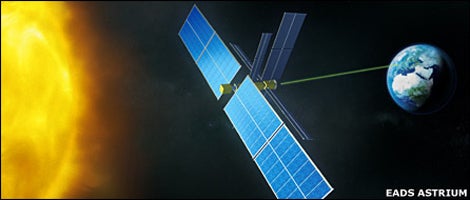
in September to put a small solar-power-harvesting demo satellite into orbit by 2015 that will beam energy back to earth via microwaves. Now Europe’s biggest space company, EADS Astrium, is vowing to put its own solar-collecting demonstration satellite into orbit on a tighter timeframe–by decade’s end.
The idea of gathering solar power from orbiting satellites and beaming it to earth is not novel, but it is fraught with technical hurdles and potential dangers. While an uninterrupted, unobstructed line of sight to the sun improves the efficiency of solar collection, the energy lost in transmission back to earth and the difficulties assembling and maintaining large arrays in space have kept previous space-based solar schemes grounded.
Then there are the fears that a misdirected microwave beam will scorch huge swaths of earth and any people unfortunate enough to be caught in its path.
EADS Astrium intends to sidestep that latter concern by using infrared lasers to transmit power, which in case of misfire would not cause disaster on the ground below. The company has been tweaking the laser technology in labs and is confident that it can up the efficiency of its transmission system as bigger and better lasers are developed. They also claim that conversion of the infrared energy into power on the receiving end is coming along quickly.
The company is looking for partners on the project, inviting anyone from the EU to individual nations to private companies to contribute investment, technologies or know-how to the massive undertaking. When or if we see clean, efficient solar energy from space powering cities on Earth is uncertain, but it won’t be for lack of trying.