Panasonic’s Robotic Bed Transforms into a Mobile Chair, Makes Standing Up Obsolete
Mobility-impaired patients and layabouts alike can rejoice at the debut of Panasonic’s robotic bed that transforms into a wheelchair. Human...
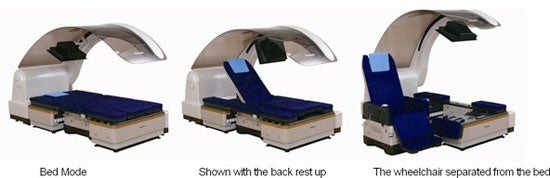
Mobility-impaired patients and layabouts alike can rejoice at the debut of Panasonic’s robotic bed that transforms into a wheelchair. Human nurses and hospitals may also breathe a tiny sigh of relief.
The bed-shaped bot morphs upon command to sidestep the usual trouble of moving a bedridden person from bed to wheelchair, or vice versa. Yet unlike the Japanese bear bot nurse that carries patients, a self-controlled bed bot allows humans to regain some independence and dignity.
Comfort and ease of use play a big role in this bot’s appeal. Robotic Bed includes posture support with a mattress that adjusts to the person’s body, and can help users turn over and avoid bedsores. The wheelchair detaches itself automatically from the rest of the bed, and even detects people or obstacles in its path.
But that’s not all. A Robotic Canopy interface permits users to watch television, operate home appliances, and even check the security camera network. “Wall-E” fans may get a kick (or shiver) out of that.
Between this and Japan’s HAL robotic suit, humans may never again have to take a single unassisted step. For now, fans of the future can flock to the healthcare expo at Tokyo Big Sight to gawk at Panasonic’s device from September 29 to October 1.