Memory Scientists Say: All Is Not Forgotten
Though they seem inaccessible, forgotten details persist in our brains
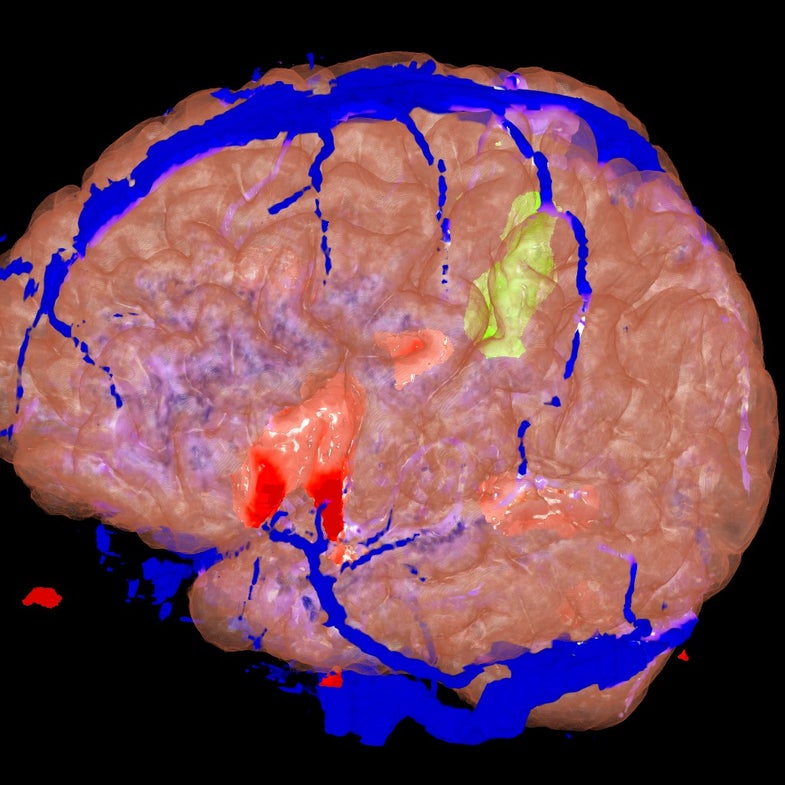
Unless you are this woman, you probably have a long mental list of moments and facts you wish you could remember — but for the life of you, you can’t. To use a personal example, I periodically Google the words “yellow house Berlin,” hoping to produce the name of that one hostel I lived in for a summer in college; alas, no success yet. The good news, though, is that while such memories may be currently inaccessible, they’re not entirely gone, and could theoretically be retrieved, according to new brain imaging research from the University of California, Irvine.
In the study, neurobiologist Jeffrey Johnson (along with a few colleagues) ran 16 college participants through an fMRI machine (which measures neural activity via blood flow) to compare brain patterns during memory formation and recall. First, he showed the students various common words (e.g., carrot, tennis, ocean) and had them perform a few tasks: say the word backwards in your head, think of its uses, and picture how an artist would depict it. Then, 20 minutes later, after the students re-entered the fMRI machine, Johnson showed them the list of words and asked them to recall whatever they could from before. Finally, he compared brain activity from both sessions, and what he found will surprise you.
Using what is called “pattern analysis,” it’s possible to attach a unique pattern of brain activity to every individual thing we do. This means that when a participant says the word “apple” backwards (it’s elppa) the associated pattern of brain activity is different than when he pictures the fruit. But interestingly, there’s a close similarity between the pattern that emerges when we engage in an activity and when we later recall it. The stronger our memory, the closer the pattern, but as Johnson found, even at a moment when we can’t remember anything, our neurons still fire in a way that resembles the activity of when we formed the memory. It’s like our brain is telling us, “You may not remember that, but I do.”
This suggests that forgetting is more a matter of access-denied than erased-data, and implies that sometime in the future we may be able to retrieve the memories we thought we’d lost forever. This, of course, is not yet possible — so in the meantime, you’ll have to rely on the Polaris phone to remind you of the shenanigans you pulled last week.
[via Wired.com]