PopSci U: Seven of the Country’s Coolest SciTech Courses
As students everywhere return to school, the luckiest are heading for caves and rocket firing ranges instead of lecture halls
Caving 101
So you want to explore the deepest caves? Design the cars of the future? Fire rockets? Don’t wait until you graduate. Here are 10 college programs that offer the most fun per credit—and can help you land your ideal job.
So You Want to…Hunt for Martian Microbes?
Where: Barton Lab, Northern Kentucky University
What You’ll Learn: How microbes thrive in harsh environments
Job Prospects: Geologist
Typical Assignment: Explore a 10-mile-long cave and capture the exotic creatures that live deep inside
If you want to be one of the six lucky undergrads to get off the waiting list and into Hazel Barton’s course, you’d better like tight spaces, heights, the dark, bats and getting dirty—and that’s just to get to the bacteria. Unlike microbiology majors at other schools, the ones laboring over microscopes and petri dishes all day, Barton’s students study extremophile microbes where they thrive: caves.
This fall, with NASA assistance, Barton and a select few students will explore the longest quartzite cave on the planet, a rare 10-mile-long labyrinth of pink and amber sandstone on Venezuela’s Roraima plateau. It teems with microbes that researchers think could provide clues to what life might look like on Mars.
Most caves are formed by limestone, a carbonate rock. The rock of Roraima, however, is mostly silicate, which is also found on Mars. The team will collect the nitrogen-eating, ammonia-spewing
microbes and other strange organisms that live in the walls. Back at the lab, students will observe the bacteria’s behavior under varying conditions, gathering information that could help NASA hone its search for extraterrestrial life.
Other students, like sophomore and newbie spelunker Katarina Schneider, cave closer to home, measuring groundwater pollution and studying links between microbes and cave formations. “Exploring that far below the earth surrounded by bats, beautiful rock formations and billions of organisms that you can’t see but you know are there,” she says—”that’s awesome.”

Dyeing for Jelly
So You Want to…Dive with Jellyfish?
Where: Dawson Lab, University of California at Merced
What You’ll Learn: The evolutionary reasons behind jellyfish swarms and how they energize the ocean
Job Prospects: Marine biologist, evolutionary ecologist
Typical Assignment: Swim alongside 10 million golden jellies in an island lake in the Pacific
The schedule for the grad students and postdocs in the Dawson Lab this year sounds like an extended spring break, with scuba diving, snorkeling and speed-boating in places like the Gulf of Mexico, the California shoreline and the island nation of Palau. But the work they’ll do—trying to explain what the lab’s namesake, evolutionary biologist Michael Dawson, calls “the dark energy of the oceans”—is far from trivial.
Dawson and his students hope to solve one of the most puzzling aspects of the world’s oceans: where they get all their energy. Ocean mixing is the process whereby turbulence and currents redistribute heat and bring nitrogen, carbon and other elements from one part of a body of water to another. But scientists have done the math, and to see mixing to the degree they do, the ocean must be getting extra energy from some unknown source.
One candidate is the jellies. In swarms, the movements of even small animals might have a serious effect. And Palau’s Jellyfish Lake, a 12-acre sea landlocked from the ocean some 15,000 years ago and now home to millions of golden jellies, is the perfect laboratory for testing that theory. If the sum of the animal-created turbulence has a strong enough mixing effect here, then it might have a comparable effect in the oceans. Last year, Dawson’s team and its California Institute of Technology collaborators, funded by the National Science Foundation, became the first to suggest the link between jelly-swarm turbulence and ocean energy. The students spend six to 10 hours a day for months at a time in the water, swimming alongside the jellies and measuring the velocity of the tiny eddies they create as they make their twice-daily migration across the lake. It’s one of the few places in the world where researchers can get this close to an entire population of jellyfish.

Jelly Junkies

That’s a Hyundai?
So You Want to…Resurrect Detroit?
Where: Transportation Design Program, College for Creative Studies, Detroit, Michigan
What You’ll Learn: How to prototype the future of transportation
Job Prospects: Auto designer, mass-transit designer
Typical Assignment: Create a car that could be built in the year 2020
Chasing a degree in the auto industry might seem a little backward right now, but CCS is the place where companies from Hyundai to Fiat sponsor projects for their most forward-looking concepts. It also places more designers in the industry than any other institution; alums include heads of design at divisions of Toyota, GM, Nissan and Mercedes-Benz.
Last year, when Hyundai challenged seniors to come up with green cars of the future, Dong Tran designed a particularly ambitious vehicle: an aerodynamic hydrogen-fueled car with wheels like wind turbines. A hydrogen fuel cell powers four independent hub-mounted electric motors, cooled by air drawn in through the center of the rims as the wheels rotate. “The cooler the better,” Tran says. “Dissipating heat prolongs life span and increases efficiency.”
Tran rendered his concept car using 3-D modeling programs, but students often build scale prototypes as well. This year, the school added a new master’s program in transportation design, one of only a few in the country, that will combine business classes with design.
Dig-Dug
So You Want to…Walk in the Ancient World?
Where: StarCAVE, University of California at San Diego; UCSD Desert Archaeology Field School, Faynan, Jordan
What You’ll Learn: How to model an archaeological site in virtual reality
Job Prospects: Virtual archaeologist
Typical Assignment: Unearth the function of an Iron Age fortress in Jordan
It’s something you’d expect to find in Lara Croft’s mansion: a pentagon-shaped room projecting a 3-D virtual-reality model of an excavated 57,000-square-foot fortress from the 10th century B.C. The StarCAVE is the world’s most advanced virtual-reality room, with 34 high-definition projectors that display images around and beneath the user, totally immersing students in their data. With a handheld controller, they can walk through buildings, rotate artifacts, or rise above the model for a bird’s-eye fly-through.
Students spend months at a time investigating and recording in three dimensions the real site in Jordan. In San Diego, they use the data to build the virtual model of the entire fortress. “What exactly the huge fortress was used for, that’s the big question,” explains grad student Kyle Knabb. “The answer, we hope we’ll find in the CAVE.”
Hot Rocket
So You Want to…Fire Big Rockets?
Where: Propulsion Research Center, University of Alabama in Huntsville
What You’ll Learn: What will make up the future of rocket-propulsion systems
Job Prospects: Aeronautical engineer, mechanical engineer
Typical Assignment: Test burn rates of new propellants
Each year, 20 aeronautical- and mechanical-engineering students get eight months to design, construct, and fly a rocket to a height of exactly 5,280 feet. These aren’t hobby rockets, which typically fly to less than 1,000 feet (any higher requires an FAA permit). “Consider that an A engine is half as strong as a B engine, and so on,” says engineering professor Marlow Moser. “The rockets you shoot off in the park: A and B engines. Our rockets: L engines.”
Last year’s class built a 37-pound, 8.5-foot-long carbon-fiber projectile with advanced data-collection systems onboard. The nosecone carried a video camera and avionics to record the rocket’s flight path and other information; the aft end, temperature and strain sensors.
Students enter their rocket in a NASA-sponsored student rocket-launching competition and present a report to the space agency’s scientists and engineers as if they were a company vying for a contract. Although the presentation is just an academic exercise, several rocket-crew alums go on to work for NASA, which has its Marshall Space Flight Center just down the road from UAH.
“Here, students are playing with fire and explosives all day,” Moser says. “It doesn’t get much better than that.”
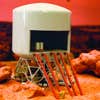
Home Sweet Home
So You Want to…Design Lunar Habitats?
Where: Sasakawa International Center for Space Architecture (SICSA), University of Houston College of Architecture
What You’ll Learn: How to design and model spacecraft and orbital and planetary outposts
Job Prospects: Space architect, aerospace engineer
Typical Assignment: Design a lunar pod to support four NASA astronauts on a 28-day stint
Luke Schmick already has a pretty cool job teaching astronauts how to operate the space shuttle. What could top that? Designing a spacecraft from scratch, says the 24-year-old part-time engineer, one of five grad students attending what’s billed as the only space-architecture master’s degree program on Earth.
There are the vehicles that may someday take us to space, and then there’s everything else that we’ll need for off-planet living and working—that’s what the students of SICSA design, often at the behest of NASA or its contractors. The job requires more engineering know-how than terrestrial architecture does, explains Larry Toups, NASA’s head of lunar habitation systems and a SICSA alum. “Students have to understand and factor in the ergonomic effects of walking in one-sixth gravity, for example,” he says. Another challenge is protecting crews from the intense radiation in space.
For Earth orbit, students developed plans for an expandable, inflatable laboratory. And for Mars, they’ve built models (some digital, some physical) for all the elements of a permanent base—living quarters, research labs, hydroponic gardens, even the ground-exploration vehicles.
“A lot of what we come up with at NASA ends up being very engineered. The designs may work, but they’re complex,” Toups says. “The students at SICSA tend to find simpler solutions, designs that are more easily deployable or require less power. They make us look at things in a fresh light.”

Wrench Jockeys
So You Want to…Fix the World’s Biggest Engines?
Where: Engines and Energy Conversion Lab (EECL), Colorado State University
What You’ll Learn: How to make a 2,300hp engine run cleaner
Job Prospects: Mechanical engineer, chemical engineer
Typical Assignment: Design a laser-ignition system for a new typeof natural-gas generator
Take it from CSU postdoc Sachin Joshi, you haven’t really seen an engine until you’ve climbed inside one. At the EECL, students retrofit industrial engines that reach two stories in height. “Students at no other university in the world work on anything near the scale we have,” says lab director and founder Bryan Willson.
One of the largest is a two-stroke, 440-horsepower combustion engine, typically used to compress natural gas and push it through underground pipes. In the lab’s 17 years, the technologies it has developed for this type of engine alone (including a now-ubiquitous fuel-injection system) have reduced nitrogen oxide emissions by an amount equivalent to taking 120 million modern cars off the highway.
Joshi and his students are now working on a 17-ton Caterpillar natural-gas-powered generator that’s capable of providing electricity for up to 1,200 homes. Utilities want to hook up the 1.8-megawatt machines to the grid in the middle of cities (to save the energy otherwise lost in transit), so they need to run clean. Caterpillar donated one to EECL. The team has already created an ignition system in which a laser travels through fiber-optic cables to optical spark plugs. It burns fuel more efficiently than the stock ignition while emitting fewer nitrogen oxides.
So You Want to…Save the World
Three programs where students conceive products for the world’s poor
Colorado School of Mines Humanitarian Engineering
To earn this 18-credit minor, CSM students take engineering classes focused on solving humanitarian challenges, including groundwater mapping and sustainable energy systems. The program began partly in response to industry demand for engineers with cultural awareness. During their senior year, they have the opportunity to participate in humanitarian design projects overseas or close to home, such as on Native American reservations. One recent project found a way to generate electricity in rural villages in Ecuador using parts that could be manufactured and maintained by the villagers. Another team developed a mobile bicycle pump in Ghana to help farmers get water for irrigation.
Penn State University Humanitarian Engineering and Community Engagement
Penn State’s program focuses not only on creating products but employment as well. In a current project in Kenya, students work with citizens to make biodiesel from local crops and use the fuel to power a low-cost portable generator (also designed in the program) to produce electricity for the village. Surplus fuel will be sold to outside markets to provide a steady source of income for the community.
Stanford University Entrepreneurial Design for Extreme Affordability
Students here take workshops ranging from welding and plastics- and metal-forming to sewing and finance before heading to countries like Nepal, India and Myanmar to identify a local problem they can engineer a solution to. Take the baby incubator designed by the 2007 student team, for example. It’s aimed at the 20 million premature and low-birth-weight infants born every year in remote locations and costs just $25 (standard hospital incubators cost $20,000). Now being developed by a spin-off company called Embrace, the incubator looks like a sleeping bag but contains a sealed pouch filled with a material that can regulate body temperature without using power or moving parts. Another company, D.light Design, which grew out of a 2006 Stanford team, is replacing polluting kerosene lanterns with solar LED lamps for the 1.6 billion people worldwide who don’t have access to electricity.