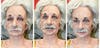
Toeing the uncanny valley's edge

Robo-Einstein Learns to Smile:  Erik Jepsen/UC San Diego
According to developmental psychologists, as infants, we learn to govern our bodies through a process of random experimentation and feedback. We contort our faces into weird shapes, watch our parents react, and then switch up our movements accordingly.

Now, computer scientists at the University of California, San Diego are applying this same strategy to robotics research. Through the use of machine learning, they’ve made it possible for their robot–an Einstein lookalike–to teach itself to make realistic facial expressions.


The team has been upgrading their Einstein-bot for the past several years, and in the past had to manually program the robot’s 31 servo-driven facial "muscles" for it to form the right expressions. Now the robot has learned to guide itself. To quote the team's release:

To begin the learning process, the UC San Diego researchers directed the Einstein robot head (Hanson Robotics’ Einstein Head) to twist and turn its face in all directions, a process called “body babbling.” During this period the robot could see itself on a mirror and analyze its own expression using facial expression detection software created at UC San Diego called CERT (Computer Expression Recognition Toolbox). This provided the data necessary for machine learning algorithms to learn a mapping between facial expressions and the movements of the muscle motors.

Once the robot learned the relationship between facial expressions and the muscle movements required to make them, the robot could master facial expressions it had never encountered before.

So far, Einstein has managed to learn to convey emotions like sadness, anger, joy, and surprise. It's only a matter of time before it can stick out its tongue.
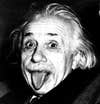
Einstein's Tongue:

[UC San Diego]

Want to learn more about breakthroughs in electronics, medicine, nanotech, and more?
Subscribe to Popular Science and enter to win $5,000!

6 Comments

Hey guys, commenting is back, by the way. Sorry for the hiccup there.

That's supposed to look like Einstein?! Looks more like my grandma!

that doesnt really look a lot like einstein
www.youtube.com/watch?v=FHTQMWLn2m0

Editor:

Is "teachest" a new word? Didn't find that in Merriam-Webster.

It is just scary how real this looks and how far we have come from the first metal/plastic robots of 10-15 years ago.

This robot freaks me out!

Mira - http://www.teeth-diseases.com


Download Our iPhone App

Stay up to date on the latest news of the future of science and technology from your iPhone with full articles, images and offline viewing


Follow Us On Twitter

Featuring every article from the magazine and website, plus links from around the Web. Also see our PopSci DIY feed


Become a Fan On Facebook

Share links with friends, comment on stories and more


November 2009: Astronaut 3.0

Inside NASA's astronaut bootcamp and the grueling new training regimen for deep space. Plus, ten young geniuses shaking up science today, one writer's quest to analyze every man-made chemical in her body and more.

Check out the issue's full contents online here

Popular Science Photo Pool


Share your photos in the Pop Sci pool at www.flickr.com!
tags_sprite.png
POP_embeddedForm_cover_May09.jpg