A new study suggests long-duration space flights could make astronauts shorter, fatter, balder
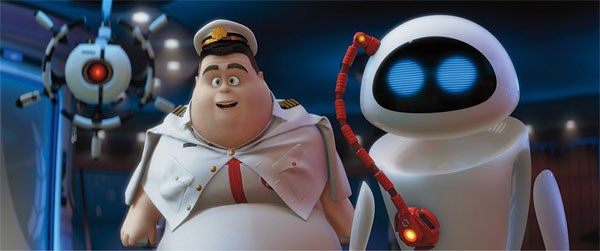
Ugly Space In space no one can hear how fat and weak you are. Except maybe the robots. Image from Disney's Wall-E

Doesn’t it seem that all movies and television shows suggest that space will one day be populated by nothing but dashingly lithe men and buxom women? Well there’s a reason it’s called science fiction, because extended space travel could actually leave astronauts a gross, bloated, unattractive mess. Astrobiologist Dr Lewis Dartnel projects that long-term exposure to zero gravity has the potential to ravage your looks in the most unappealing ways.


As we reported earlier this week, NASA is recruiting “pillownauts”, people willing to stay in bed for months at a time to observe the effects zero gravity will have on the body. And the results aren’t pretty. Since you can float, little force is required to get around in space, leading to quick atrophy of muscles. Astronauts tend to lose bone mass fairly quickly making the body very brittle. The development of our circulatory system compensates for gravity, so without it blood starts pooling in strange places, like our heads. This leads to painful headaches, chronic congestion, and, given enough time, comically swollen heads. If the trip is extended into generational lengths of time, the results could become more severe. Muscles and bones may not develop correctly, making space babies short and fat. And living in filtered and climate-controlled environments could lead to an evolutionary phase-out of hair, which primarily functions to maintain body warmth and protect from foreign particles.

The fact remains: the human body wasn’t designed for space travel, but perhaps we’ll one day be able to overcome these negative effects. Perhaps our diet will have added supplements which will overcome bone loss. Perhaps we’ll create artificial gravity so our heads don’t blow up like a balloon. Perhaps we’ll find more efficient ways to exercise in space so we don’t lose muscles. Let’s hope because otherwise the future is beginning to look ugly.

[Telegraph]

Want to learn more about breakthroughs in electronics, medicine, nanotech, and more?
Subscribe to Popular Science and enter to win $5,000!

8 Comments

Why the hair? I understand that from a biological standpoint, hair would be unnecessary in space, but being unnecessary doesn't make something just go away. Not without selective pressure, and I can't imagine that something about zero-G is going to reqrite the programming that tells up that nice, healthy hair is a genetic attracter. Nothing about zero-G would affect hair growth in and of itself (blood pooling in the head might, but only for cranial hair).

As far as long term stays in space, artifical gravity is easy enough with centrifical force (two objects tethered with a cable bolas style or a large spinning cyllander). Any long-term travel would necessarly involve the trouble of artifical gravety, as the Russians have already proven how damaging long term zero-G time is.

Building a large spinning space-craft at this time just doesn't sound very practical.

bdhoro87

from coral gables, fl

Multi-generational space flight doesn't sound very practical right now either, but when it does become practical, it probably will involve a large space-craft that generates artificial gravity through centrifugal force (outward rotational inetertia). 2001: A Space Odyssey anybody?

Cuishi14

from avondale , az

if scientist can alter human dna to consume fat rather then carbs wil that mean that people in space wont get fat either?

Magnets and gyros, and a 2 layer cloth, some type of polymer, gel, or piezoelectric layer in between for pressure/resistance?

By the time humans claim their place in space, we should be knowledgeable enough about it's long term effects on our physiology that we, through technology, will be able to adapt and evolve favorably against the effects of the space environment.

"Welcome! to the Federation Starship SS Buttcrack!!!"

Uh-oh. I foresee slim pickings at the Miss Galaxy pageant three hundred years from now ....

Seriously, though, I think most of us agree that, by the time long-distance space travel actually happens (once we've clawed our way out of this recession, balanced the budget, paid off at least a reasonable chunk of our national debt, and convinced our politicians to give priority to manned spaceflight again), we'll have figured out ways to get around these problems.

Personally, I'm betting on the bola-tether plan for generating artificial gravity, just because it could be used on smaller (i.e. cheaper) spacecraft.

As far as baldness goes, Oakspar has a point - it may not be essential for our survival in space, but sexual selection will probably keep our hair thick and shiny.

Body hair elsewhere may go the way of wisdom teeth, but fear not! We have this wonderful invention - it's called CLOTHING!!!

Besides, those hairless little gray guys at Area 51 seem to do just fine without it. :P


Download Our iPhone App

Stay up to date on the latest news of the future of science and technology from your iPhone with full articles, images and offline viewing


Follow Us On Twitter

Featuring every article from the magazine and website, plus links from around the Web. Also see our PopSci DIY feed


Become a Fan On Facebook

Share links with friends, comment on stories and more


December 2009: Best of What's New

In our December issue, Popular Science names the 100 best innovations of the year: bombproof wallpaper, self-parking cars, the fastest helicopter, and 97 more. Plus inventor profiles and videos.

Check out the best of what's new here.

Popular Science Photo Pool


Share your photos in the Pop Sci pool at www.flickr.com!
tags_sprite.png
POP_embeddedForm_cover_May09.jpg