A shuttle on the ground, seen in a new light
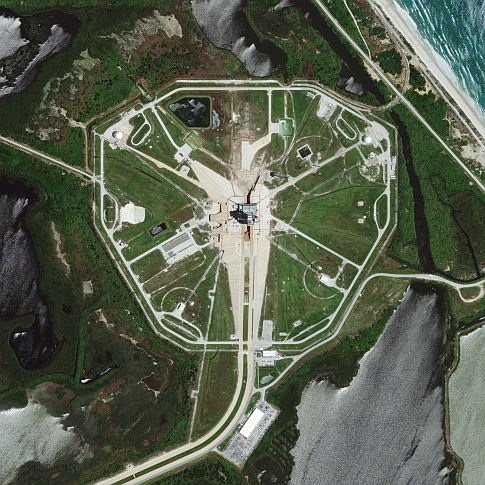
Endeavour at Cape Canaveral GeoEye (See it bigger!)

Here's a view of the Space Shuttle you don't frequently see--a half-meter-resolution satellite photograph taken from orbit by GeoEye-1 shows Endeavour on the launchpad, ready to go.

On June 11, the GeoEye satellite photographed Endeavour as it sat in the service structure on Launch Pad 39A at Kennedy Space Center in Florida. GeoEye-1 orbits at a speed of 4 miles per second, at a height of 423 miles above the planet, and shoots photographs with the highest civilian resolution available, one half meter.

See the image bigger!

Want to learn more about breakthroughs in electronics, medicine, nanotech, and more?
Subscribe to Popular Science today, for less than $1 per issue!

2 Comments

Pretty amazing - I can't wait until they have sattelites that can show realtime video (although I suppose such technology would never be made available for citizens anyway for security reasons).

Mark Foster | www.onewhitewedding.com

True, Mark. But think on this. Everyday boards,chips, and batteries get smaller, more efficient, and more capable. Not to mention cameras. I just read on a plane designed to fly for 5 years on solar! (PopSci, last week) and while a civilian built RCV would probably never match the capabilities of a government craft-and would certainly be subject to airspace, communications bandwidth, and as the article states, resolution, I do not think it is illegal to build or operate one for recreation or as a learning platform.


138 years of Popular Science at your fingertips.

Innovation Challenges


Popular Science+ For iPad

Each issue has been completely reimagined for your iPad. See our amazing new vision for magazines that goes far beyond the printed page


Download Our App

Stay up to date on the latest news of the future of science and technology from your iPhone or Android phone with full articles, images and offline viewing


Follow Us On Twitter

Featuring every article from the magazine and website, plus links from around the Web. Also see our PopSci DIY feed


February 2012: The Future of Fun

Science is reinventing play, from extreme sports to gamification to ridiculous roller coasters to the playgrounds of tomorrow, and this issue is chock full of fun. Also, on a less fun note: Did global warming destroy my hometown?


circ-top-header.gif
circ-cover.gif