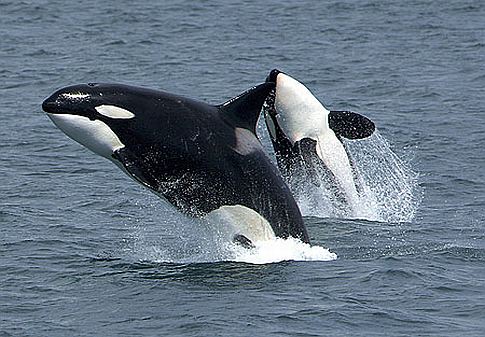
A neuroscientist carves up brains to investigate the presence of unique brain cells found only in humans, primates, elephants and a handful of marine mammals -- species that are characterized by large brains, a long childhood spent learning from their elders, and sophisticated social interaction, reports Smithsonian.
In his Caltech lab, John Allman slices off the thinnest slivers of an elephant's brain, looking for the presence of von Economo neurons -- and possibly a glimpse into the evolution of human behavior.
Discovered in 1881, von Economo neurons are only recently being linked to "social intelligence." The long cells are four times the size of most others in the brain, and have only a single dendrite -- compared to other brain cells have have several. They reside in areas of the brain that are especially active when people experience emotion and which appear to be important in "self-monitoring." Allman theorizes that the cells' length indicates that they are especially fast, and so aid communication from "the brain's social hot spots" to the rest of the brain.
138 years of Popular Science at your fingertips.
Each issue has been completely reimagined for your iPad. See our amazing new vision for magazines that goes far beyond the printed page
Stay up to date on the latest news of the future of science and technology from your iPhone or Android phone with full articles, images and offline viewing
Featuring every article from the magazine and website, plus links from around the Web. Also see our PopSci DIY feed
Science is reinventing play, from extreme sports to gamification to ridiculous roller coasters to the playgrounds of tomorrow, and this issue is chock full of fun. Also, on a less fun note: Did global warming destroy my hometown?
from neverland
From the evolutionary point of view, people dramatically progressed in the past decades, newborn children appears to be more intelligent than previous generations.
The question is how such changes alter our bodies. I wonder if and how it affects the development of intelligence to other animal species such as dogs, cats and other animals that are adapted to our society, are they also increasingly intelligent because of our development or are they following their independent evolutionary paths.
.
.
Xspot,
is it that the brains are changing for better for our children or is it that our children get easy access to quality information at an earlier age than we did?...
what if our brains are simply some sort of computers configurable by the information we have access to until a certain age or during all our life?
it might be that we simply had no access to Internet and stuff during our childhood. consider children with various social backgrounds when judging this, even the feral children...
best wishes!