As the CDC announces the first U.S. death from the swine flu, media outlets wrestle with how to cover the outbreak
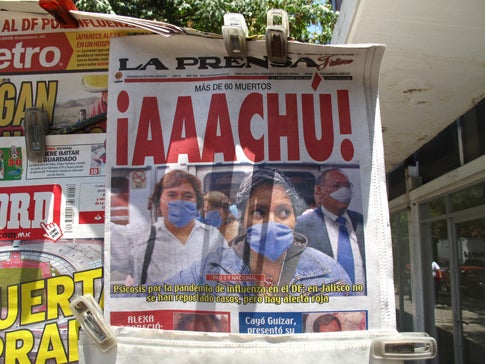
Flu News Taken in Guadalajara, Mexico. courtesy of itinerantlondoner, via Flickr.com

The hardest part of writing about the swine flu outbreak has been striking the right tone. No doubt, this is a serious threat, as even a mild flu pandemic, on the order of the 1968 Hong Kong flu, would cause significant economic downturn at a time when the country already faces immense financial problems. On the other hand, hyping the threat does a disservice to the very public that the media intends to help.

PopSci isn't the only news outlet wrestling with these problems. The New York Times takes a look at the media response to the flu, and the role of Twitter in disseminating information, and misinformation, has been widely target="_blank"covered.

The effectiveness of the government responses to the flu also complicates reporting on the dangers of the virus. Ross Hammond, a fellow at the Brookings Institute who uses computer models to study flu outbreaks, told PopSci, "if there was absolutely perfect response to a virus that could cause a deadly pandemic, you may never notice." In effect, if the media runs around telling everyone how dangerous the virus is, but flu then causes no damage because of an effective reaction from the health care system, the warnings will look like hype, even though the reporting's accurate.

So, before we get into today's swine flu news, let's take a second to deal with both the hype and the true dangers surrounding the flu.

First, and most importantly, officials don't know how many people the virus infected in Mexico. Without that baseline, the true mortality rate of the virus cannot be assessed. If many thousands have been infected, but just haven't been diagnosed, then the death rate from the virus would be consistent with the more mild seasonal flu. Until we know how many people have been infected, no one can say whether this flu is more or less deadly than the seasonal flu, which itself kills around 36,000 Americans every year.

Second, as Nancy Kass, the Phoebe R. Berman Professor of Bioethics and Public Health at Johns Hopkins, told PopSci, the lessons of recent disasters have significantly improved the government's ability to effectively deal with the outbreak.

"In the spirit of making lemonade out of lemons, there's stuff our infrastructure learned from SARS, and the disaster of Hurricane Katrina," said Kass. "Could they be better? Sure, but they've come a long way."

Finally, however, the danger does need to be taken seriously. A 2006 Congressional Budget Office assessment of the economic effects of a pandemic determined that even a mild, 1968-like pandemic would cause the economy to contract an additional 1 percent over what would happen without a pandemic (a Milken Institute Review from 2007 pegged that number as between 0.6 and 1.4 percent). Considering the country is already dealing with a recession, having both supply (through lost work time) and demand (through declines in tourism and consumer and entertainment spending) drop would complicate the already challenging problem of righting America's economic ship.

With all of that in mind, let's get to today's flu news.

The big story was the the first death in the U.S. related to swine flu. The victim was a toddler whose family had recently crossed from Mexico into Texas.

The Associated Press reports that President Obama is considering closing schools if the outbreak continues to grow. Additionally, Mexico City has closed nightclubs, bars, restaurants, and other public venues.

Also, the World Health Organization holds another emergency meeting. This is the third such meeting since the outbreak began, and may result in another pandemic alert level change, raising the level from 4 to 5, out of a possible 6. [Postscript: yes, they raised it to 5, "characterized by human-to-human spread of the virus into at least two countries in one WHO region."]

And just so we don't go out on a down note, Boing Boing points out this composition by composer Stephan Zielinski. Zielinski has transformed the swine flu genes that code for hemagglutinin (that's the "H" in the H1N1 or H5N1 flu names) into a piece of ambient music. It's Aphex Twin meets 9th grade biology class.

Want to learn more about breakthroughs in electronics, medicine, nanotech, and more?
Subscribe to Popular Science and enter to win $5,000!

10 Comments

so should we be more worried than we were two days ago? a 5 is pretty damn close to 6, although it's 5 min. to midnight according to the doomsday clock and most Americans don't even think about that anymore. President Obama's thinking about closing schools? just how long until we fully understand this virus?????

Still not an issue to be debated by candlight in the bunker yet! Did you stock up on the toilet paper? Sorry, thinking Northeast snowstorms there for a moment...
Most cases are still mild, like the stay in bed and drink plenty of fluids like the regular flu type. Tamiflu is being perscribed with success to help some who suffer a bit more. Doctors are now really on alert to look for symptoms and get people checked out for the virus, which will improve odds of a better diagnosis and prompt treatment if you are having a more severe reaction to the virus. Bottom line, if you or your baby is sick, go to a doctor!
The President has to think ahead and contend with what-ifs if he is to respond properly. Closing schools and isolating the populations is being talked about but it is a drastic measure that would really only need to occur if mortality rates begin to spike and the CDC needed time to crank out a vaccine in a hurry.

The issue is, if it continues to spread as fast as it has (more than 100 cases in US, vs. 12 swine flu in 5 years), a lot of people will get it. Even if it has a morality rate of a regular flu, it could kill a lot more. You would be amazed a how effective closing schools is. Christmas break has been known to break regular flu outbreaks.

So stay tuned, do not be afraid, but be smart.

"The New York Times takes a look at the media response to the flu, and the role of Twitter in disseminating information, and misinformation, has been widely target="_blank"covered."

Nice HTML right there, very nice indeed. ^

5 is really close to 6. So, if 36,000 people die from the seasonal flu each year in the United States, how many people will die from this H1N1 flu. They recently changed the name from swine flu to H1N1 flu so that the name of the flu would not help decrease the sales of pork products. As for the president closing schools so that the virus dosn't spread, ok. But I would only close schools in the states that are affected. Also, if you didn't know, there are 256 cases around the world and 138 cases are in the U.S.!!!

The media has made this outbreak sound a million times worse than it actually is. They now have the general public cowering in fear for the safety of their lives. Swine flu has the EXACT same symptoms of the common flu, it is just a different strain of it. There has been one recorded death in America, and guess what?, it was an infant. Yes, those with weakened immune systems, such as infants and the elderly, are more susceptible to the flu and are at a higher risk of death. So don't freak, this is merely an outbreak, NOT a pandemic, epidemic, or whatever else the media is telling you. Wash your hands often (crazy idea, right?!), and you will be just fine.

So JimmyD and AMP13 posted exactly 12 hours apart. What are the odds of that when there are only 6 comments in a period exceeding 24 hours. Were you watching the clock AMP13.

As far as the swine flu is concerned I find the fact that PopSci is hopping on the media bandwagon to be sad. I am disappointed but not canceling my subscription.

If there is one thing that the government and media do well together it is to generate hype. In nearly 60 years of living I have learned one thing above all. Listen with one ear closed. 36,000 deaths a year from regular old everyday flu gets no coverage but call it Bird, Avian, Swine or any other name and suddenly we have a Pandemic. What IS a pandemic anyway? I have yet to read an explanation of that term in any of the articles I have read nor have I heard it from the live media. Tell me what it means while you are tossing it about please. I might get sick and die or someone I know and love may succumb but here in the US it seems our chances of survival are pretty good.

There are many other ways that I can meet my maker as well but I am not about to stop living my life and pull the covers over my head. We need to know what dangers are out there so that reasonable precautions can be taken. But the constant beating of the warning drums is probably directly related to the increasing use of anti-anxiety drugs. Who after listening to all this would want to go about their daily business drug free.

The Old Home Project

I don't want to make small of the seriousness of the virus but........
a) Call it by it's medical name. SOL we don't get it from pigs!
b) The media is getting people "hyper" about it.
Did you ever think that if you stopped talking about the "Poor Economy and Swine Flu" maybe people might get to be positive about life?

I think ya'll might be missing the most important part of this. Unless there is something else in the works that is better than thermaflu or terraflu (whatever it's called), we're screwed. Every time a virus comes around and we "kill" it, it mutates and is better when it comes back. Now, if we release the our most powerful drug to fight this miscalled "swine flu" (h1n1 virus) or "pandemic" (that isn't even a pandemic) then the next time the virus mutates and comes back it will be able to beat our best drug that we have right now. If and when that happens, if we don’t have a better drug to fight the next wave then there will be nothing we can do to save humanity. There will always be vaccines, granted you get vaccinated BEFORE you get the virus.
Personally, I am more concerned with the future and the drugs we have or don't have to fight off virus than this so called "pandemic'. The WHO should of known better and should be ashamed of themselves for over-reacting.

A personal sarcastic kudos goes out to the president and WHO. Thanks!

Some facts about Influenza Viruses:

Virus is a Latin word, meaning ‘poison’.

A virus is more of a very well organized molecular parasite than an actual life form, such as bacteria.

The virus cannot grow or reproduce without a host cell- another life form. That means it needs a bird or mammal, such as humans, in order to exist and thrive.

And the virus has the potential to completely destroy the host they have acquired in the process in order to exist.
Presently, influenza is once again a very concerning sub-microscopic infectious agent, and we are their potential hosts in order for these viruses to survive.
The influenza viruses are of what are called orthomyxoviruses, which is a group or family of RNA viruses that are categorized into A, B, and C.

The Influenza A virus is the one that historically has caused pandemics that have developed in the past.

About eighty percent of flu cases in the U.S. are type A influenza viruses.

Influenza vaccinations are the only available method of prevention at this time from the potentially deadly effects of influenza.

Influenza is the virus responsible for the disease that has its name, and it is spread easily to other humans.

This virus can be deadly to a greater degree when the virus creates a pandemic, which did happen in the United States and other parts of the world less than 100 years ago.

Other influenza pandemics primarily and historically have occurred in countries in Asia.

For an influenza pandemic to occur, which means a global disease existence and presence, the virus must emerge from another species to humans without a strong immune system- as well as the ability to make more humans ill than normal due to the constant mutation of the influenza virus.

Also, the virus must be highly contagious for a pandemic to occur.

That pandemic caused around a half a million deaths in the United States alone.

This event is now known as the Great Influenza Epidemic.

Understandably there was panic among people worldwide, as the influenza virus itself was not identified until the year 1933.

So, the mystery was rather frightening of what was happening at that time.

The etiology for the illness and the deaths that followed at such a rapid rate was a complete mystery to everyone at the time.
Clearly, at times these influenza strains are more dangerous than others, and this was one of the strains that clearly proved to be much more during that particular epidemic.

The potentially deadly effects of the influenza virus is due to this virus penetrating the host, such as a human being

Once infected and established in the host, the virus replicates within the cell of the host in the cell’s cytoplasm.

To survive, the influenza virus targets an enzyme called polymerase, which is what directs the content of this cell to produce proteins the virus needs to exist.

Unlike coryza, influenza expresses symptoms more severely, and usually lasts two weeks until one recovers who has the flu.

Influenza, however, poses a danger to some with compromised immune systems, such as the chronically ill.

So the risk is greater in such populations, along with women who may be pregnant during the flu season, residents of nursing homes or chronic care facilities.

If unprotected by an effective influenza vaccination given to such patient populations, influenza has a greater ability to penetrate hosts and create complications.

These complications may include deadly diseases, such as bacterial pneumonia or encephalitis.

Symptoms of influenza usually start to express themselves symptomatically about two days or so after being infected with the virus.

Over 10 percent of the population is infected with this virus every year- resulting in about 200,000 hospitalizations and nearly 40,000 deaths, according to the Center For Disease Control (CDC).

Those who do survive an influenza infection allow others to obtain antibodies from them to develop other antibodies for future viral outbreaks.

The antibodies are used to produce vaccines to prevent acquisition of the damaging effects of influenza.

Yet this is only if the antibodies contained in the influenza vaccine are effective against the suspected particular influenza strains that are present during the influenza season.

Specifically, it is usually what is known as strept pneumo bacteria that kill those due to an infection of these microbes due to being invaded by influenza, ultimately.

This is the type of bacteria that typically infect a person suffering from influenza who may have compromised immune systems, as mentioned earlier.

In these cases, the bacteria are allowed to thrive at a higher and more deadly rate.

On average, it takes over a week for one to die after being infected by influenza that has the power to cause death in particular human populations.

Pandemic flu outbreaks, such as the one that happened that was mentioned earlier was an influenza strain so powerful that it overkills the cells of its host.

The influenza virus has this ability on occasion, and its efficacy is dependent on its mutations that have developed over time that make it more powerful than other influenza viruses.

The flu vaccination is trivalent- meaning it contains three viral strains of suspected viruses for flu outbreaks during a particular winter season.

The viral strains are determined by the World Health Organization, as well as the Centers for Disease Control, and other organizations.

Yet one should keep in mind that these three strains of influenza may not even exist in a particular flu season.

The vaccination is a guess, at best, yet is certainly better than the absence of a flu vaccination.

Unfortunately, the influenza vaccine administered last flu season was believed to be largely ineffective due to unsuspected strains of the virus infecting others.

Although about 140 million injections of this vaccine were administered, this proved to be pointless for preventative medicine for influenza during this season.

The most recent flu season was fairly mild, according to the CDC.

After giving the vaccination dose to one, it takes about 10 days for that person to build up the immunity for the disease of influenza.

The months of October to December are recommended to receive this vaccine.

And the vaccine is about 50 percent effective in offering protection from influenza, according to others, if one calculates the previous flu seasons with flu vaccinations.

Vaccines are a catalyst for antibody production in humans, which protect them against the virus, if the influenza virus happens to present itself within them.

The influenza vaccines can be given by injection or nasally.

The flu season that is now occurring was supplied with 150 million vaccines in the United States.

However, some studies have shown that this vaccine is rather ineffective based on incidences of the acquisition of the influenza virus by others, initial reports have indicated.

The influenza season peaks between the months of January and March.

The vaccine for this influenza season is manufactured by 6 different companies in preparation for this timeframe of the influenza season.

Also, it takes manufacturers about 6 months to make and formulate the influenza vaccination.

The influenza vaccine is produced every year according to which type of virus types that may be prevalent during a particular flu season.

The presence of influenza can be widespread in certain states, yet not others. The vaccination is recommended to be administered to those who are at high risk, such as the chronically ill.

Also, it is recommended that those under 18 years of age get the vaccine, as well as those people over the age of 50.

Pregnant women should receive the immunization. Health care personnel are always encouraged to get a flu vaccine as well.

Such populations of those recommended to receive the flu vaccination are those believed to need the protection the vaccine may offer the most.

This is of concern, as influenza can progress rapidly into the more serious illnesses mentioned earlier that can lead to death.

Anti-virals, on the other hand, decrease greatly the ability for viruses to reproduce once established in a human.

That seems like it should be a focus during viral seasons instead of any vaccination that exist today regarding the disease of influenza.

Yet, as with antibiotics, viruses can become resistant to anti-virals as well.

Yet the strains chosen for the influenza vaccine contain what are speculated influenza viruses.

So the vaccine is ineffective if a new and dominant influenza viral strain that possibly could cause a pandemic happens to be present during an influenza season.

With the influenza virus, again it can have the ability to kill mammals, as well as birds, along with humans at times.

The concern that there is an influenza strain that exists that has the ability to mutate.

If this happens, the viruses have the ability to share genetic data between separate life forms as they, multiply within each one of them with ease.

This is the case with what is known as the Avian Flu, as well as the Swine Flu.

The most recent avian influenza virus was identified in China in 1997. Called the H5N1 virus subtype, it has the potential to be the next flu pandemic.

The last Swine Flu outbreak occured in the United States during the mid 1970s.

However, the virus responsible for the pandemic mentioned earlier was an avian influenza, which was called the H1N1 influenza virus.

This virus, unlike the human influenza virus, has a longer incubation period- about 5 days.

Also, H5N1 has the ability to mutate more rapidly, as well as replicate at a similar speed.

Avian influenza viruses are highly pathogenic. No one fully understands the influenza virus and its rapid ability to mutate.

This is because this particularly malicious virus is the result of two separate influenza viruses acquiring the same host at the same time.

As a result of mutual sharing of genetic material between the two viruses, novel attributes are allowed to develop and create a H5N1 that obviously prove to be rather deadly.

The H5N1 Avian influenza virus seems to have become progressively more pathogenic in the past decade, according to others.

The letters H and N, by the way, stand for the antigens HA and NA-and are the letters of proteins that protrude from the viral shell.

It is these proteins that mutate so often with the influenza virus, and which is why we continue to be infected with this virus.

With the Avian Influenza existing with the H5N1 strain, millions of birds have been slaughtered due to the danger and unpredictability of this strain.

The first recorded incidence of human-to-human transmission of the H5N1 virus was believed to be in Thailand in 2004.

There have been outbreaks of Avian flu in about 10 or 20 countries in the world so far- with Indonesia appearing to be the worst.

Migratory birds spread this influenza virus between continents.

The pathogenic strength of the H5N1strain varies due to constant re-assortment or switching of genetic material between the viruses.

This essentially creates hybrid modifications of what it was before this occurs due to this re-assortment that makes this virus much more virulent.

So far, nearly a half a million people worldwide have been infected with this strain.

Also, about half have died from the infection caused by this H5N1 influenza virus.

Vaccinations are being developed and reformulated constantly at this time due to the pandemic threat of the H5N1 Influenza virus, and most recently, the swine flu virus. Of the two, the H5N1 is believed to be more deadly.

www.cdc.org/flu/weekly

Dan Abshear


Download Our iPhone App

Stay up to date on the latest news of the future of science and technology from your iPhone with full articles, images and offline viewing


Grab the Tech Buyer's Guide iPhone App

Carry everything you need to make a smart buy on HDTVs, cameras and 14 other product categories right in your pocket


Follow Us On Twitter

Featuring every article from the magazine and website, plus links from around the Web. Also see our PopSci DIY feed


Become a Fan On Facebook

Share links with friends, comment on stories and more


February 2010: Renovating America

Innovative fixes for five of the country's biggest infrastructure messes, plus a look the quest to read the human mind, the LCD screen that might finally kill paper dead, and the world's scariest science.

Read the issue here.

Popular Science Photo Pool


Share your photos in the Pop Sci pool at www.flickr.com!