Veggies May Be the Key to Fighting Cancer
UC Berkeley researchers are the first to explain how a compound in broccoli and cabbage can inhibit an enzyme to battle breast and prostate cancers
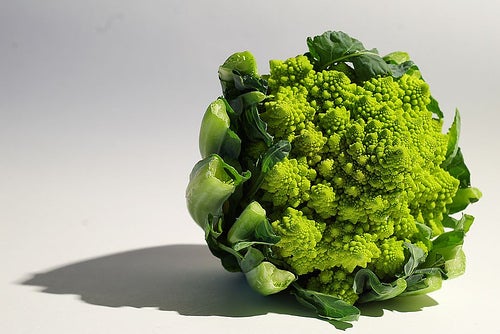
When your mother says eat your greens, you just might want to listen. It’s been known since the 1970’s that cruciferous vegetables, or cabbage family vegetables, such as broccoli, cauliflower, Brussels sprouts and kale, have anti-cancer benefits. But researchers at the University of California, Berkeley, who have studied the benefits of anti-cancer vegetables for 15 years, are the first to explain how an anti-cancer compound, indole-3-carbinol (I3C), found in broccoli and cabbage, works to slow down the activity of an enzyme linked to rapidly developing breast cancer.
In the study released online in the journal Proceedings of the National Academy of Sciences, Berkeley scientists honed in on how I3C inhibits elastase, an enzyme which at high levels in breast cancer cells reduces the effectiveness of cancer-fighting chemotherapy and endocrine treatments. They found that I3C prevents elastase from shortening cyclin E, a cellular chemical that controls the cell cycle.
At the moment, I3C is a supplement used as a treatment option for non-malignant tumors of the larynx. The Berkeley researchers say that now they have connected the dots on one extremely important pathway, scientists will be able to create an improved version of the I3C supplement to help fight against a broader range of breast and prostate tumors (and possibly against other types of cancer as well). Additionally, since I3C is derived from a natural source, it would have fewer side effects than traditional treatments, as well.
Via PhsyOrg