Super-Repellant Surfaces

Millions of nanosize nails form a highly repellent surface
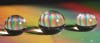
Watertight:  Tom Krupenkin
A trio of prismatic drops (left to right: water, ethylene glycol and ethanol) balances on a new ultra-repellent surface invented by scientists at the University of Wisconsin–Madison. The surface, made up of silicon spikes just 400 nanometers wide, physically repels a wide variety of liquids, including water, oil, solvents and detergents.

Previously, scientists relied on chemical modification to make surfaces repel liquids, a time-consuming process. In the end, each coating worked to repel only certain liquids, and oil-repellent surfaces simply weren’t possible to manufacture.
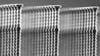
None Shall Pass: The heads of the nanonails support the liquid droplets  University of Wisconsin-Madison

The new surface blocks almost all liquids. Researchers can also turn off the physical barrier: An electric voltage instantly draws liquids down between each spike, where they spread out along the base upon which the spikes sit. This switchable quality makes the surface perfect for controlling liquids in “lab on a chip” chemical reactors, and its super-repellent properties could help keep helicopter blades free of heavy, altitude-robbing water and ice.

Want to learn more about breakthroughs in electronics, medicine, nanotech, and more?
Subscribe to Popular Science and enter to win $5,000!

5 Comments

Solace

from Ojai, California

Is it just me, or does that look very easily damaged? Lab-on-a-chip maybe, but that really doesn't look like something practical for a propeller...

maybe one could put it on as a coating, like the wood repelent stuff except better. it does not say if it is very costly i imagine though it is

The film wouldn't be all that easily damaged, unless it was cut... the size of the 'nails' makes it so that any force, even drops of liquid, are displaced over large areas relative to the film, just like a bed of nails. Sounds like a great counter-top material too, along with a million other things. Car finishes? Rust proof.

400 nanometers is quite small. The wavelength of my green laser is 532nm. For all intents and purposes it's a solid material.

Axeman

from Brisbane, Queensland

Awesome, windshield wipers may become obsolete in the very near future.

not only is this just cool but all the amputies coming from war will now(soon) have a normal life. Kargo 1 out of 1 people found this comment helpful Cargo second is power i wonder what kind of battery pack it requires to run one of those !

Popular Tags

Regular Features

  • The Doctor Is In with Isadora Botwinick | Weird and wild stories of the human body, health and disease
  • Sex Files with Susannah F. Locke | A broad view of new research and ideas in the sexiest of the hard sciences
  • Science Confirms the Obvious with Laura Allen | The research that makes us say "duh"

Popular Science Photo Pool


Share your photos in the Pop Sci pool at www.flickr.com!

Subscribe for 2 free issues!

POP_embeddedForm_cover_May09.jpg