SUBSCRIBE NOW! POPULAR SCIENCE!
12 issues for
only $14
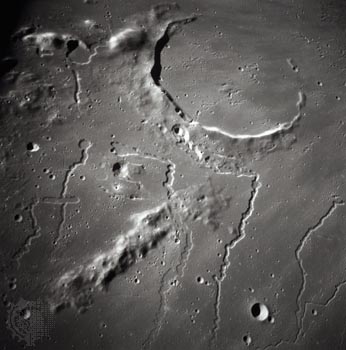
Laser radar systems now being developed at Rochester Institute of Technology and MIT's famed Lincoln Lab could eventually generate ultra-detailed, three-dimensional maps of planets, comets, asteroids and moons. The scientists are developing a LIDAR (light detection and ranging) technology that operates both in the optical and ultraviolet, and could deliver detailed information about atmospheric composition, plus air temperature and pressure, wind speed, and precise topological features of a planet or planetary body. The tech is so precise, in fact, that the LIDAR system will be able to distinguish between bumps on the surface that have just a one centimeter difference in height.
And it will also be quicker than the current standard. "You can take LIDAR pictures at fine resolutions and build up a map in hours instead of taking years at comparable resolution with a single image," says Donald Figer of RIT.
Via RIT
The Fastest Swimsuit on Earth
"At the Beijing Olympic pool, perhaps the only star bigger than Michael Phelps was his swimsuit. The Speedo LZR (pronounced "laser"), like Phelps, didn't disappoint: 16 of the 32 gold-medal winners wore the full-body suit, and another 13 wore LZR pants."
[Read full story]
A Finish that Repairs Itself
"It won't save you from a key-gouging vandal, but the finish on the 2008 Infiniti EX and FX-model SUVs can erase scrapes caused by, say, car washes or stray branches."
[Read full story]
Boeing Advanced Tactical Laser
"Truck-mounted IED-destroying lasers have already been tested in Iraq, but firing lasers from an airplane is a more difficult proposition."
[Read full story]
A Spit Test for Heart Attacks
"This year, San Antonio EMT crews began using a spit test that detects cardiac arrest faster, more accurately and more cheaply than other diagnostic tests."
[Read full story]


Comments
Laser radar systems now being developed at Rochester Institute of Technology and !
0 out of 0 people found this comment helpfulTala
Yılan yağı MIT's famed Lincoln Lab could eventually generate ultra-detailed, three-dimensional maps of
Lida Havalandırma planets, comets, asteroids and moons. The scientists are developing a LIDAR (light detection and ranging) technology that operates both in the optical and ultraviolet, and could deliver detailed information about atmospheric Lida Lida composition, plus air temperature and pressure, wind speed, and precise topological features of a planet or planetary body. The tech is so precise, in fact, that the LIDAR system will be able Estetik kepçe to distinguish between bumps on the surface that have just a one centimeter difference in height. elektronik sigara