Luggage Lost and Luggage Found
RFID could make missing baggage a thing of the past
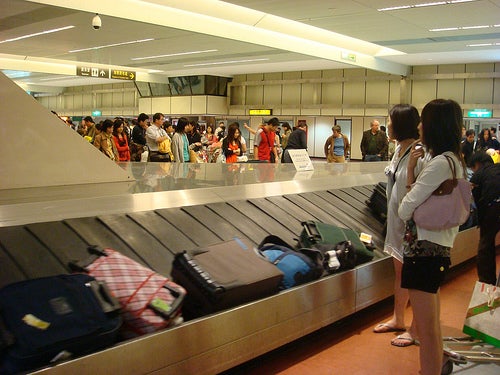
Radio-frequency Identification chips, or RFID, are miniature transponders which emit an identification signal using radiowaves. They can be attached to most anything and are steadily making their way into nearly every corner of our lives, whether for good—the chip in your cat which broadcasts his address if he gets lost—or for the not so good—the RFID chips in our newest passports, which are terribly insecure and emit a plethora of personal data. Most commonly, though, RFID is being used to track our stuff, like the inventory in a grocery store. It was only a matter of time before we figured out how to use it in place of the barcodes on the tags of our luggage.
Siemens has built a system which does just that and has field tested it successfully, scoring a success rate of 99.9 percent. The advantages over the traditional bar code tag are obvious—the most important being the RFID tag can be read at any angle. Barcode tags are regularly crumbled or bent and easily become unreadable as they pass through the sorting system. That’s the biggest reason luggage is lost. The RFID system is non-contact and so does not rely on correct bag positioning.
Via [Washington Post](http://www.washingtonpost.com/wp-dyn/content/article/2006/09/15/AR2006091500923.html/: target=_blank)
http://www.physorg.com/news128703805.html/