Cheap, power-sipping sensors do everything from tracking global warming to keeping your house warm
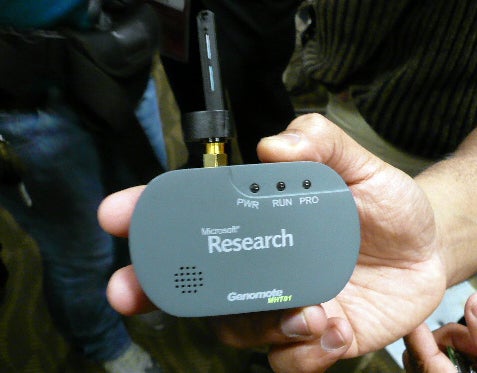
Microsoft Sensor Inexpensive sensors, powered by AA batteries, can transmit data for years. Steve Morgenstern

The ability to scatter lots of wireless sensors over a wide area has tremendous potential, whether it's tracking the melting of a glacier, the stress on a bridge span or the temperature in your home. The trick? Making them cheap enough so you can use plenty, and having them last long enough so you don't break the bank or your back changing batteries (those trips to the glacier add up). This week, Microsoft showed us a prototype version of a wireless sensor that tackles both challenges.

The sensors shown at Microsoft's TechFest (the company's annual science fair) run on a pair of AA batteries for up to four years. And while they didn't have cost estimates for a final production model, the basic data processing/radio transmitter chips from TI sell for only about $3 each.

Microsoft doesn't plan to sell sensors themselves -- they were demonstrating a reference design they will provide to other manufacturers. The company's interest is in selling the software used to track and monitor the data dished up from sensors by the dozens, or the hundreds.

Today the hardware and software is being tested in Microsoft's own data centers. Large mainframe computers generate lots of heat. By scattering wireless temperature sensors through the area, software can locate hotspots and balance the computational loads on the computers to keep the temperatures in a safe range.

In the future, a home climate-control system set up in zones could make use of the same technology to read a separate wireless thermostat in each room and target heating and cooling efficiently.

Want to learn more about breakthroughs in electronics, medicine, nanotech, and more?
Subscribe to Popular Science and enter to win $5,000!

4 Comments

who say's Microsoft doesn't innovate?

I'm really sorry but there's absolutely nothing innovative in that demo from Microsoft.

These things have been researched in the academia for a decade already. These days such devices are already commercially available. And yes, with potentially years of operating time using a couple of AAA batteries depending how you duty-cycle the radio.

When a news item is nothing new...

br

I posted a rough cost breakdown of the Microsoft Sensor modules and some comments on my open source Zigbee blog. You can find it here:

http://freaklabs.org/index.php/Misc/microsoft-sensor-modules-rough-cost-breakdown.html
Akiba


Download Our iPhone App

Stay up to date on the latest news of the future of science and technology from your iPhone with full articles, images and offline viewing


Follow Us On Twitter

Featuring every article from the magazine and website, plus links from around the Web. Also see our PopSci DIY feed


Become a Fan On Facebook

Share links with friends, comment on stories and more


November 2009: Astronaut 3.0

Inside NASA's astronaut bootcamp and the grueling new training regimen for deep space. Plus, ten young geniuses shaking up science today, one writer's quest to analyze every man-made chemical in her body and more.

Check out the issue's full contents online here

Popular Science Photo Pool


Share your photos in the Pop Sci pool at www.flickr.com!
tags_sprite.png
POP_embeddedForm_cover_May09.jpg