A storm's radar signature could help scientists better predict twisters
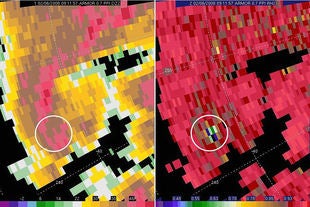
Tornado Radar Imagery University of Alabama, Huntsville

In the aftermath of the Feb. 6 tornado, scientists at The University of Alabama, Huntsville have been analyzing radar images of the event, searching for signs that might help them issue faster warnings in the future. The radar signature from debris sucked up into the air is so distinctive that the group thinks it may be able to develop an automated detection system. Essentially, they’d program computers to automatically pick out these signs in the data, and raise a flag immediately. The system would probably only apply to large tornadoes, or mesocyclones, so it wouldn’t necessarily deliver the first warning to people on the ground. But it would give scientists better information on the location of the twister, and add more precision to the warnings.

Via Newswise

Want to learn more about breakthroughs in electronics, medicine, nanotech, and more?
Subscribe to Popular Science and enter to win $5,000!

1 Comment

Ok we all want to warn people! But if you have debri then its a little to late for those in that home or the very next one dont you think?
Now a lot of tornado alley is acrossed the great plains, and the same tornados there can travel a lot of distance before they suck up anything as debri again not issuing any warnings.
This would be a good method to identiy a tornado but its warning effect is almost useless.


Download Our iPhone App

Stay up to date on the latest news of the future of science and technology from your iPhone with full articles, images and offline viewing


Follow Us On Twitter

Featuring every article from the magazine and website, plus links from around the Web. Also see our PopSci DIY feed


Become a Fan On Facebook

Share links with friends, comment on stories and more


November 2009: Astronaut 3.0

Inside NASA's astronaut bootcamp and the grueling new training regimen for deep space. Plus, ten young geniuses shaking up science today, one writer's quest to analyze every man-made chemical in her body and more.

Check out the issue's full contents online here

Popular Science Photo Pool


Share your photos in the Pop Sci pool at www.flickr.com!
tags_sprite.png
POP_embeddedForm_cover_May09.jpg