Inside a CAVE
A 3-D digital patient that could save your life
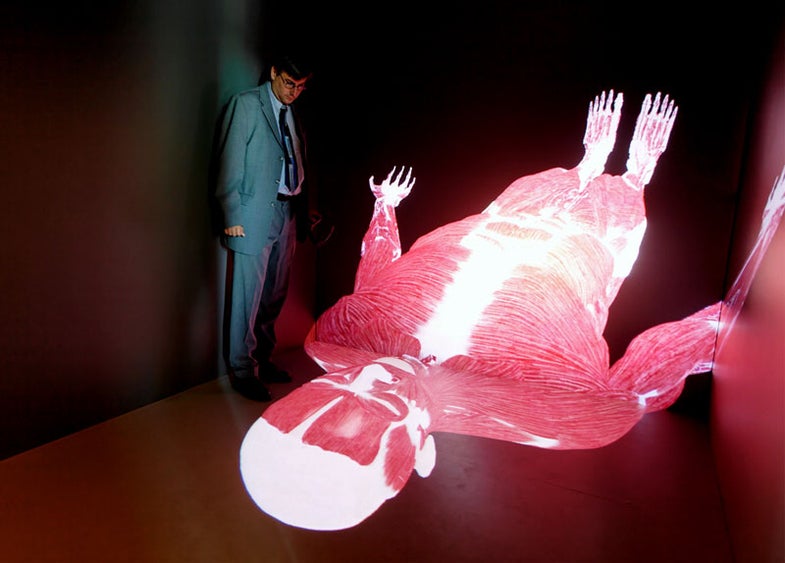
Hovering above the floor in a darkened room called the CAVE (for “cave automated virtual environment”) is the larger-than-life-size virtual patient CAVEman, the world’s most sophisticated digital model of the human body. To create it, scientists at the University of Calgary and graphic artists used anatomy texts and specimens to render every organ, bone, nerve and biological system into detailed 3-D images.
From the CAVE’s floor and walls, projectors display the virtual patient at 10 times the detail of the next-best simulations. CAVEman started life as a massage-therapy training tool, but researchers can now customize the generic version to represent actual patients by plugging in data and images from MRI scans, biopsies and other personal information—anything that’s compatible with the software. Next up: The Calgary team will add tactile feedback sensors and make CAVEman simulate dynamic processes, such as respiration and blood flow, so that doctors can test-run treatments before trying them in the O.R.
Say “Ah”
The CAVE Images

CAVEman Skull
Looking at CAVEman
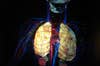
CAVEman Lungs
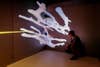
CAVEman

CAVEman

CAVEman