Can Fear Be Forgotten?
If fear really is all in our heads, Joseph LeDoux thinks he can eliminate it. The first step is to block out our memories
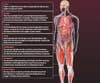
An Atlas of Fear
How does fear work? Click here to launch our Atlas of Fear.
When I was nine years old, my family moved into a newly constructed home in a pleasant Seattle suburb. Within a few days, I began to notice an unsettling number of spiders creeping along baseboards, dangling in closets, and loitering under furniture. I convinced myself that the assault could only be because our digs had inadvertently razed some kind of spider civilization, and these guys were out for revenge. I remember being unable to sleep, spooked by the sight of an eight-legged nasty clinging to the ceiling, waiting to pounce. I would insist that my father leave the stairwell light on so I could track its every move, certain that under the cover of darkness the little monster would sneak into my bed and burrow into my ear canal, where it would lay its sticky spider eggs and spawn a whole new arachnid dynasty. I stuffed wads of toilet paper into my ears as a first line of defense.
Fast-forward 30 years, and I find my repulsion firmly entrenched, seemingly for good. On a recent business trip, I glimpsed a spider behind the nightstand in my hotel room. I summoned the concierge, who duly chased the evil critter into the hall with a broom. “No problem,” he smirked when I apologized for my wimpiness. “Happens all the time.”
There’s a proven treatment for phobias called exposure therapy, better known as “facing your fears.” I merely have to immerse myself in a bathtub with hundreds of spiders, let the insects crawl freely over my naked body, and voil! I’ll be cured.
Luckily, New York University neuroscientist Joseph LeDoux, the world’s preeminent fear guru, agrees that this tactic might not be the most efficient remedy. Imagine forcing an aviophobe onto a plane-a severe panic attack could trigger a midair rerouting to the nearest loony bin. But LeDoux may have uncovered a better way. After a two-decade-long pursuit into the depths of the brain, LeDoux has shown that it’s possible to eliminate deep-seated fears. All you have to do is remove the memory that created it.
Last year, in a landmark experiment in rats, LeDoux opened a path to doing just that. He showed that it’s possible to obstruct the memory of a specific traumatic event without affecting other memories. He also demonstrated that when the memory was stifled, the fear it roused vanished as well.
This sudden ability to produce selective amnesia stunned the scientific community. It also offers unimaginable promise. It could relieve soldiers suffering from post-traumatic stress disorder (PTSD) or rid sexual abuse and rape victims of haunting memories. My spiders would be fair game, as would LeDoux’s enduring aversion to snakes. Other researchers have been quick to adapt LeDoux’s findings. One has already begun experimenting on human subjects, and a startup company has emerged that plans to eliminate fears in the comfort of your own home. All you need is a mail-order box of pills and the accompanying DVD.
**The Shock of Discovery
**
Down the corridor from LeDoux’s office, near a paper sign reminding students of the lab’s Wi-Fi password (“fearisgood”), heavy glass doors open to reveal the fear factory. Inside, 300 plump white rats live like rodent royalty. Each gets its own transparent acrylic cage and is fed a continuous supply of filtered water and top-notch rat chow. Their cages, neatly aligned on stainless-steel wire shelves, are scrubbed regularly and ventilated with oxygen-rich air. When we enter, we have to wear surgical masks to keep from sullying the rats with germs we might be tracking in from the outside world. According to Marie Monfils, a postdoc here, these rats are treated exceptionally well because happy, healthy, easygoing rats make ideal test subjects when it comes time to scare the holy crap out of them.
To understand why rats-and other animals, including humans-get scared, you have to start at the amygdala, the place where sensation and memory join forces to spawn the venerable beast we call fear. The amygdala is buried in the forebrain directly behind the eyes. LeDoux first started researching the amygdala in the late 1970s with early experiments that investigated how rats adapt to danger.
In one experiment, LeDoux played a tone to the rats and then dispensed a mild electric shock. After a few repetitions, the tone alone made the rats freeze-a classic Pavlovian response. He had expected this, but at the same time he wondered what was actually occurring inside their brains when they froze. He injected a dye that mapped out the connections in the rat brains and found that the auditory thalamus-the part of the brain that receives signals from the ears-connects directly to the amgdala. He then surgically cut the pathway that connects the auditory thalamus to the amygdala, repeated the tone, and found that the rats no longer feared the sound.
Somehow, the amygdala was forming and storing what LeDoux labeled a “fear memory” that preempted all other brain activity whenever it recognized the offending input. The rats were essentially oblivious to their freezing behavior, responding to the tone without the use of their higher brain functions, precisely the way I might squeal like a schoolgirl at the sight of a spider before I can reason that it’s not going to eat my left arm.
The study revealed that when it comes to fear, the “thinking” part of your brain is instinctively subordinate to the amygdala. Your fears forestall your thoughts, and the amygdala is the reason why. It takes a new input, checks it against your fear memories and, if there’s a match, initiates a response.
Without the fear memory, though, the chain falls apart: If my brain can’t remember why I’m afraid of spiders, then I won’t be afraid of spiders. Yet selectively eliminating a memory would seem to be impossible. LeDoux suspected it was not.
**The Young Brainiac
**
LeDoux is the hippest nerd I know. His salt-and-pepper hair is smartly slicked back, and a soul patch crowns his chin. He’s wearing flip-flops, black jeans and an embroidered lime-green shirt with its square-cut shirttails untucked. The rockabilly look is fitting when you learn that he spends most of his spare time jamming with his band, The Amygdaloids, playing guitar, singing, and writing lyrics. Of course, one can only be so hip: Most of their songs are about neuroscience.
We’re sitting at a round conference table in his office on the 11th floor of NYU’s Center for Neural Science, where LeDoux is giving me the Fear 101 primer. The 58-year-old’s Cajun accent, though refined, still lingers from an upbringing in Eunice, Louisiana, where he raised prize-winning cows, bulls and horses and aimed to become a priest. “I went to Catholic school, and the nuns thought of me as their pet project,” he recalls. “I made rosaries and was the alter boy. I used to hold mass in my bedroom by myself, just to practice. But in eighth grade, the hormones kicked in and I started thinking more about girls than religion.”
He first started tinkering with brains at his father’s butcher shop. “In those days, they would slaughter the animal by shooting it,” he says. Pops tasked the young LeDoux with digging through cow brains, a local delicacy, to retrieve the bullet, because “you wouldn’t want to chomp down on a piece of lead.” While poking around in the mush, LeDoux remembers pondering its purpose. “I’d reach in there and would always be thinking about what each part does.”
LeDoux was one of only three people from his 1967 graduating high-school class to leave the bayou for the big city-Baton Rouge. He enrolled at Louisiana State University and begrudgingly obliged his parents’ desire for him to study marketing. After all, they were paying the tuition. But his budding interest in the mind led him to study consumer psychology, where he mused about how it might be handy for understanding consumer behavior. (At one point, LeDoux wrote a letter to B.F. Skinner asking the eminent psychologist what he thought of the concept. Skinner replied, scolding it as unethical. Today you’d be hard-pressed to find a single major ad agency that doesn’t have a consumer psychologist on staff.)
LeDoux went on to get a master’s degree in marketing. But a course he took taught by LSU psychologist Robert Thompson that examined the roots of memory convinced him to become a lab scientist. He applied to Ph.D. programs in biological psychology-12 in all, to ensure that he got accepted somewhere. (His grades weren’t stellar, LeDoux says: “I got hooked up with people in college who showed me the good life.”) He ended up at the only school that accepted him, the State University of New York at Stony Brook.
At that time, scientists scoffed at the idea that emotions and fear dwelled in some kind of tangible neural mesh hidden in the brain. They believed that emotions were complex psychological phenomena that, for the most part, had little to do with what LeDoux imagined as rogue bits of brain circuitry. But he suspected that he could understand human emotions by starting small. Because fear was easy to isolate-a raw and universal emotion that spanned all species-it seemed like a sensible thing to tackle first.
In the 30 years since grad school, as a professor at Cornell University Medical College and later at NYU, LeDoux has become the undisputed King of Fear, having written two acclaimed books and published dozens of groundbreaking studies based on the simple premise that memory and fear are, in fact, inextricable soulmates.
**Eliminating Memories
**
LeDoux populates his lab with kindred thinkers, resourceful polymaths who can draw from multiple disciplines to arrive at unforeseen solutions. There are people like Monfils, who explains to me how she programmed rats to forget their fears while she cradles one of the rodents in her arms, stroking its white coat as if it were a cuddly housecat. This rat, it should be noted, is one she has “modified”-the top half of its cranium looks like it has been sliced off, and in its place sits an implantable microchip that lets Monfils watch its brain activity in real time on her laptop PC.
In a study published in Nature Neuroscience last year, LeDoux’s team repeated the tone experiment, except this time there were two tones: a high-pitched beep and another like a digitized cricket. The rats heard both tones 20 times and then got a shock. This sequence was repeated three times, enough for the rats to learn to fear the tones as before. Now it came time to break the memory and, hence, the fear. While only the cricket tone played, the rats were injected with U0126, a chemical that prevents long-term memories from forming. Twenty-four hours later, when the rats heard both tones again, they froze only after listening to the beep. The drug had flushed away any memory of getting shocked after hearing the cricket noise-and no memory meant no fear.
The study joined a growing chorus of research demonstrating that memories aren’t immutable objects encased in museum glass. Rather, they are living, changing things and can be manipulated whenever evoked. “It sounds like science fiction, but long-standing memories are vulnerable to change,” says LeDoux.
More important, it also proved that a specific memory could be altered or erased (remember, it eliminated just the rats’ fear of the cricket, not the beep). The rats remembered getting a shock after hearing the cricket tone, and so they froze whenever it was played. U0126 blocked that fear memory, but only because the drug was dispensed when the rats were prepared to get the shock again. “Your memory of a specific event is only as good as your last memory of that event,” LeDoux says. Thus, every time you dredge up a memory, good or bad, it’s susceptible to change. (Incidentally, this is how neuroscientists account for “alien abductees” who pass lie-detector tests. The victims recall their close encounters so exhaustively and so often that the repeated recollections gradually alter the memory until the fabrications become indistinguishable, neurochemically speaking, from truths.)
News of LeDoux’s experiments spread, and the neuroscience community quickly took notice. The conventional practice of “talk therapy” suddenly seemed tedious and of dubious efficacy. Why would I want to spend hours of couch sessions with my shrink when a shot of an amnesia-inducing compound into my brain at the exact moment I’m remembering my childhood spider invasion would make me fearless in an instant?
“When you recall something, you don’t recall what originally happened; you recall what you recalled the last time you recalled it,” explains Roger Pitman, a professor of psychiatry at Harvard University who has been experimenting with a drug called propranolol that reduces the intensity of memories in patients with post-traumatic stress disorder. “A memory is preserved in a plastic state. You can sculpt it or update it. Theoretically, any memory, including a fear or declarative memory-being able to say what you had for breakfast yesterday-is capable of being modified.”
**Making the Fear Pill
**
Beginning this fall, in Orangeburg, New York, LeDoux will direct a new research lab, the Emotional Brain Institute, where scientists will comb the brain’s molecular networks to search for biochemical clues that might ultimately be used to develop fear-quashing therapies. He won’t have any trouble finding test patients. LeDoux gets frequent e-mails and letters from people pleading for relief. “They have phobias, panic disorders, schizophrenia, PTSD-you name it,” he says.
Some of research at the Emotional Brain Institute will involve human subjects, and so LeDoux won’t be able to use U0126, because it needs to be injected directly into the brain. But there’s another compound, an antibiotic called d-cycloserine, or DCS, that already has FDA approval (in higher doses, it’s prescribed to treat tuberculosis). The strange thing about DCS is that it works in nearly the opposite way U0126 does-instead of shunting off old memories, it helps the brain to form new ones-but it produces similar results.
DCS stimulates a protein in the brain called the N-methyl-D-aspartate (NMDA) receptor, which facilitates memory formation. When the amygdala is actively embedding a new memory or evoking an old one, NMDA receptors switch on. DCS is like Red Bull for NMDA receptors: It makes them hyperactive, facilitating the formation of new memories. The idea is to create new memories of a given stimulus-a view from a great height, for instance-that lack the traumatic associations of the old memory.
Michael Davis, a professor of psychiatry and behavioral science at Emory University, has conducted some of the first experiments using DCS on humans. Davis gave DCS to patients who had a fear of heights and then outfitted them with virtual-reality (VR) goggles that played a digital video clip simulating the inside of an ascending glass elevator. “The higher they got, the more anxious they got,” he says. But over time, their old traumatic memories were overwhelmed by new memories of a benign virtual-reality glass elevator. Compared with those who took the placebo, the DCS patients conquered their fear at a rate of almost 4 to 1.
Davis’s latest project is a 300-patient trial that will examine if DCS can alleviate post-traumatic stress disorder in soldiers returning from war. “We have a virtual Iraq, where soldiers are driving their Humvees down the road and there are [explosives] going off,” he says. Wearing VR goggles, soldiers are assaulted with the sights and sounds of battle. Before the memories are rekindled, the patients are given DCS in pill form. Neuroscientist Jacek Debiec is running a similar trial in association with LeDoux’s lab for PTSD-afflicted vets. “Our VR software has visual, audio and tactile components. We also added smells, like smoke,” he says. “It’s quite realistic, very intense.”
But perhaps the most ambitious endeavor is in Atlanta, at Tikvah Therapeutics. Its CEO, Harold Shlevin, a pharmaceutical-company executive who founded the firm in 2006, tells me that Tikvah (Hebrew for “hope”) is conducting clinical trials to get FDA approval to use DCS to treat panic disorders, PTSD, obsessive-compulsive disorder (OCD) and “a general catchall category for fears such as snakes, spiders and heights.” Shlevin has enlisted a company called Virtually Better to create virtual-reality simulations, and he plans to release a DVD that will be packaged with DCS capsules. The DVD would feature simulations to address a variety of fears-the interior of a jetliner, for example, for fear of flying, or a crowded auditorium with the patient on center stage, for fear of public speaking. For OCD, Shlevin says, “we’d emphasize cleanliness, so we will have them touching a toilet seat.” He expects to market the medication and DVDs to consumers in late 2009 or early 2010; it will available on a prescription-only basis from a psychiatrist.
**The Core Question
**
Trials like Tikvah’s are designed to answer the most basic questions about using DCS as a fear pill, including dosage and whether it corrupts other memories or cognitive functions. LeDoux suspects that as these move forward, however, researchers will run into some serious troubles. “Complex memories are spread across hundreds of thousands of neurons” through different regions of the brain, LeDoux explains. “The same neurons can participate in many memories.” Just because you can tamper with a fear memory in the amygdala doesn’t mean you’re not mistakenly destroying or adversely altering a memory (or an entire collection of related memories) somewhere else in the brain.
This point is critical. Fear is fused to basic instincts embedded in systems throughout the brain-instincts that evolved over millions of years to protect life and limb. You don’t want to erase a person’s fear of heights only to find out later that he jumped off a bridge believing he could fly. I need to retain the knowledge that some spiders are deadly poisonous even when my fear of them has been eliminated.
It’s certainly possible that eventually we’ll have enough skills to manipulate our own fears, memories and emotions. But according to Ledoux, we won’t reach that point until “we stop thinking of the brain as a bunch of systems and start thinking of it as a system itself.” This conviction betrays a hope for the future of his field-that someday, instead of treating the brain as a collection of dissimilar mechanisms, scientists will approach it (and understand it) holistically. “As individuals we are not the mere sum of our perceptions, fear memories, thoughts and emotions, but synergistically something more,” says Ledoux. “This is the big problem brain research needs to solve-how our brains make us who we are.”
How does fear work? Click here to launch our Atlas of Fear.
Michael Behar’s last story for Popular Science_, “The Prophet of Garbage,” appeared in March 2007._