A Better Body Cam
This mini telescope captures budding disease in 3-D
by Courtesy Massachusetts General Hospital
Think sports look amazing in high definition? Forget about Derek Jeter’s hair follicles-wait until you see the inside of your esophagus, courtesy of the world’s first high-def miniature 3-D endoscope. It captures images of tumors and other diseases in unprecedented detail and perspective, an innovation that may help physicians spot trouble they would otherwise have missed.
Inventor Guillermo Tearney, a physician at Massachusetts General Hospital in Boston, says, “It’s particularly useful in any place where size matters,” such as the brain, heart and spine, and in fetuses, where traditional imaging devices are too big to safely go.
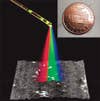
Most endoscopes consist of a bundle of fiber-optic cables about a centimeter in width that can damage tissue as they snake into the body. Tearney’s scope, in contrast, is a single fiber-optic cable no bigger than the width of a human hair, so in many cases it can be administered without anesthesia.
Increased patient comfort aside, the probe’s biggest advantage is its high-quality 3-D views. It illuminates surrounding tissue with a rainbow of colors, using different wavelengths of light to more fully capture uneven surface areas. A spectrometer records the intensity of the light as it reflects off the tissue, and an imaging device renders the data into a crisp 3-D snapshot. The whole procedure can take less than five minutes.
Tearney plans to begin human trials by the end of the year and hopes to make the device available at local hospitals within a few years.