SPECIAL REPORTTechnology vs. Terrorism
Toxin sniffers, missile jammers, dirty-bomb detectors: Will a new security arsenal make us safer?
The future of secure travel hinges on seamless, instant communication-and 24/7 autonomous surveillance. For a look at the technologies that will soon safeguard your travel plans, launch the photo gallery.
Five years after terrorists chillingly exposed our home-front vulnerabilities to unconventional warfare, are we safer? Ask Maureen McCarthy, director of science and technology transition at the Department of Homeland Security, and she answers in a word: â€Absolutely.â€
Pause. Clarification: â€They can still game us, but figuring out how to get past our defenses now is harder to do.â€
In the race to prevent future 9/11-style attacks-or worse-Washington has marshaled the U.S. science establishment on a scale not seen since Sputnik. Federal investment in
homeland-defense research has swallowed nearly $4 billion since 2003, and that´s a mere drop of total security spending. (DHS´s budget this year alone is $40 billion.) More important, McCarthy suggests, is that the accelerated spending has brought together formerly disparate disciplines: Software engineers, epidemiologists and biologists have teamed up to produce technologies that protect air and food against bioterrorism. Nuclear physicists and bioforensics specialists now cooperate with the best brains in behavioral science to devise ways to reduce the threat of nuclear smuggling and suicide bombers.
Yet some experts argue that much of the big spending provides only an illusory sense of security. â€A lot of it is security theater-technology designed to make you feel better,†says Bruce Schneier, author of Beyond Fear: Thinking Sensibly about Security in an Uncertain World. He points to high-tech protection poured into landmarks, from the White House to local city halls, that he claims diverts terrorist attention to â€softer†targets like subways and stadiums. But the government seems to have taken the point. Its ever-expanding homeland-security measures cover not just big targets but the nation´s broader vulnerabilities as well. Here are five of the highest-risk areas, along with some of the technologies emerging over the next few years to defend them.
Air, Water, Food Supplies
One of the biggest challenges in this area is to develop sensors that can sniff out attacks on everything from crops in fields to air-conditioning systems in public spaces. The Environmental Protection Agency, in conjunction with the Centers for Disease Control and Prevention and the Federal Bureau of Investigation, has deployed a network of miniature toxin detectors in 30 American cities as part of a $300-million program called BioWatch. The filters collect airborne toxins, which are sent to laboratories for analysis.
Scientists at Lawrence Livermore National Laboratory have pushed this idea further with their Autonomous Pathogen Detection System, or APDS. Inspired by the 1995 Sarin gas attack in the Tokyo subway, APDS can identify chemicals and biotoxins without
requiring researchers to gather daily samplings and wait for readouts. Hooked to the ventilation system of a mall, train station or other gathering place, APDS can perform 178 separate samplings of air over a week without human intervention and relay its findings wirelessly to a central lab. It´s been tested in New York City and could debut in other urban areas by 2008.
The future of secure travel hinges on seamless, instant communication-and 24/7 autonomous surveillance. For a look at the technologies that will soon safeguard your travel plans, launch the photo gallery.
**Borders, Infrastructure
**
Since 2004, some 60 million visitors to the U.S. have had their two index fingerprints recorded by an optical scanner that checks the information against a watch list in Washington, D.C. The $1.5-
billion U.S.-VISIT biometrics program has identified 1,100 people trying to enter the country under false pretenses and more than 20,000 would-be entrants with questionable backgrounds, according to the DHS.
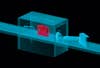
As the archive of visa applicants balloons, scans of all 10 fingers will provide more fail-safe identifications. Systems may also employ iris scans and voiceprints. In the meantime, at 100 ports and border points, a truck-mounted scanner called VACIS (Vehicle and Cargo Inspection System), designed by Science Applications International Corporation, gives customs inspectors a tool to probe the innards of trucks and cargo containers without prying them open. VACIS uses low-energy gamma rays that penetrate even lead-lined boxes to produce grainy images in as little as six seconds. If the operator detects objects that don´t match what´s listed on a shipping manifest, the container can be shunted off for inspection.
Also in development are micron-size sensors-known as â€smart dust†or â€motesâ€-that can be sprinkled around pipelines, unguarded borders and utility plants to monitor intrusions or the release of biological aerosols, chemicals or radiation. Building on advances in sensor telemetry, these battery-powered computers form a network of electronic eyes, ears and noses that can communicate with one another along a low-bandwidth frequency and beam readings to a central server. Experts say that, depending on funding, motes could be ready for nationwide deployment by 2010.
Transportation
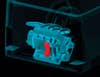
Subways, buses, trains and planes-and the hubs that service them-are vulnerable to threats ranging from aerosol-borne pathogens and â€dirty bomb†radiation to truck bombers. Technology out of the California branch of Sandia National Laboratories connects sensors wirelessly or through fiber optics to a shoebox-size device called an Intelligent Sensing Module, or ISM. A network of ISMs at a facility linked to a command post elsewhere can offer facility managers or security agencies early warning of a threat in time to take action. The system has been in use at 30 facilities, including sports arenas, subways and airports, since 2004. As detection systems improve, future versions could be installed at nuclear and chemical plants and key transit centers.
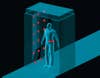
To head off would-be bombers, so-called puffing machines, now on duty at 26 airports, can tell whether you´ve been suspiciously near explosives in the past week. Resembling a sleek outhouse, the $150,000 walk-through machine sends a quick blast of air over your clothing to dislodge trace explosive particles. It then collects the air and sends it to a detector that can identify eight types of nitrate-based explosives-all in seconds. â€We can find the equivalent of a milligram of aspirin in an Olympic-size swimming pool,†says Kevin Linker, a senior engineer at Sandia Labs in New Mexico. A DustBuster-size 11-pound version known as â€micro-hound†is already in development. And to head off suicide bombers, researchers have worked up a prototype of a device to detect explosives traces from a distance of 30 feet away.
The future of secure travel hinges on seamless, instant communication-and 24/7 autonomous surveillance. For a look at the technologies that will soon safeguard your travel plans, launch the photo gallery.
Public Spaces
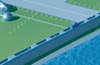
Although office buildings and public areas now routinely employ video surveillance and crash barriers, local building codes and the high cost of refitting sites have slowed progress in terror-proofing. â€If you designed every building against the threat of an attack, we couldn´t afford to build anymore,†concedes former congressman Richard Swett, a member of the panel selecting the design team to rebuild the World Trade Center. Still, building technology today already seems light-years beyond pre-9/11 days. Plans for the rebuilt towers, Swett notes, include blast-proof windows and building materials, sensor systems, radio repeaters to ensure that rescue workers on the upper floors can communicate with colleagues on the ground, and â€smart systems†that allow a building to automatically isolate contaminated areas.
As for the rescue crews that must enter a disaster site, they will most
likely be outfitted with high-tech protective gear including the LifeShirt, invented by Vivometrics in Ventura, California, and Accenture Labs in Chicago. The vest-like top monitors 30 physiological signs, uses GPS technology to track rescuers´ movements, and streams all that real-time data to a command center where dozens of first responders can be tracked simultaneously.
The Internet
A cyberattack on the country´s financial networks or power and telecommunications grids could make other means of protecting our physical assets moot. In response, computer scientists at Pacific Northwest National Laboratory in Richland, Washington, have developed a program called Mozart to detect would-be spies and intruders on Web sites. The software, now used by the Department of Energy, employs search tools that drill into Web sites to discover and catalogue sensitive information that could compromise national security. Developers describe it as a â€Google-esque†tool and predict that it will be available to the military and other government agencies by year´s end. Next on the agenda: what´s called Intrinsically Secure Computing-basically, a master plan to help computers â€understand when they´re under attack and take measures to
protect themselves,†explains Bryan McMillan, PNNL´s technical manager for cyber-security. Broad deployment of the plan is still at least 10 years away.
Such over-the-horizon concepts and the billions spent on them will never amount to 100 percent protection. â€The biggest performance gains in technology result from improving the performance of humans,†cautions Chris Latimer, an engineer at Johns Hopkins University Applied Physics Laboratory. The simple truth is that no amount of hardware will ever substitute for the kind of intelligent human decision-making needed to guard us should, for instance, an iris scan fail or a smart sensor play dumb.
The future of secure travel hinges on seamless, instant communication-and 24/7 autonomous surveillance. For a look at the technologies that will soon safeguard your travel plans, launch the photo gallery.

Subways

Cargo
Smart Walls
Puffers

Radical Radar, Laser Guards
Luggage
Buses