The 11-Year Quest to Create Disappearing Colored Bubbles
Chemical burns, ruined clothes, 11 years, half a million dollars-it's not easy to improve the world's most popular toy. Yet the success of one inventor's quest to dye a simple soap bubble may change the way the world uses color
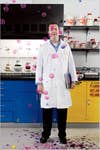
Tim Kehoe has stained the whites of his eyes deep blue. He’s also stained his face, his car, several bathtubs and a few dozen children. He’s had to evacuate his family because he filled the house with noxious fumes. He’s ruined every kitchen he’s ever had. Kehoe, a 35-year-old toy inventor from St. Paul, Minnesota, has done all this in an effort to make real an idea he had more than 10 years ago, one he’s been told repeatedly cannot be realized: a colored bubble.
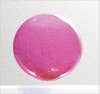
No, not the shimmering rainbow effect you see when the light catches a clear soap bubble. Kehoe’s bubble would radiate a single, vibrant hue throughout the entire sphere-a green bubble, an orange bubble, a hot-pink bubble. It’s a bubble that can make CEOs giggle and stunned mothers tear up in awe. It’s a bubble you don’t expect to see, conditioned as you are to the notion that soap bubbles are clear. An unnaturally beautiful bubble.
Kehoe made a bubble like that when he was 26, after only two years of trashed countertops and chemical fires. He showed it to toy-company executives, who called it a “holy grail.” And then it broke, as bubbles always do. And when it did, the dye inside escaped onto clothes and carpets and walls and skin, staining everything it touched. The execs told him to come back with a bubble they could wash off their boardroom table.
That was nine years ago. In the intervening years, Kehoe continued to mix, boil, and brew with endless enthusiasm and little success. Until one day, his stubborn persistence led him to $500,000 in financial backing, enough to hire a dye chemist. Together, they took Kehoe’s obsession to an outcome even more amazing than he had ever hoped, an outcome no one could have anticipated for the simple reason that no one imagined it possible. The secret to nonstaining colored bubbles, it turns out, is a dye that could unlock a revolution in color chemistry. All you need to do is make color disappear.
Anatomy of a Bubble
Bubbles, the plain kind, have been around for as long as there have been water and surfactants, a material found mainly in soaps that interacts with water to reduce surface tension. This allows the fluid to spread across a bubble wand without breaking. Introduce air, and the thin film pushes outward until it eventually detaches, forming a bubble. People have been onto this for at least 400 years; 17th-century Flemish paintings show children blowing bubbles with clay pipes.
In the world of toys, where the average shelf life of a product is less than 18 months, bubbles are a juggernaut.
A Chicago company called Chemtoy began selling bubble solution in the 1940s, and the fad never wore off. According to one industry estimate, retailers sell around 200 million bottles annually-perhaps more than any other toy.
Despite their enduring appeal, bubbles haven’t been improved much in 60 years, the only significant exception being in 2002, when SpinMaster in Toronto introduced Catch-A-Bubble, clear bubbles that lasted as long as five minutes. Time magazine called it one of the year’s top inventions, and seven million bottles sold the first year.
The market for lasting bubbles is the same as the market for clear bubbles: elementary-school kids. If an inventor could somehow add color, though, suddenly adults might have reason to start blowing again. Picture bubbles in NFL team colors, or bubbles that match charity ribbons. The potential market would grow to include every man, woman and child. So why don’t they exist?
It turns out that coloring a bubble is an exceptionally difficult bit of chemistry. A bubble wall is mostly water held in place by two layers of surfactant molecules, spaced just millionths of an inch apart. If you add, say, food coloring to the bubble solution, the heavy dye molecules float freely in the water, bonding to neither the water nor the surfactants, and cascade almost immediately down the sides. You’ll have a clear bubble with a dot of color at the bottom. What you need is a dye that attaches to the surfactant molecules and disperses evenly in that water layer. Pack in more dye molecules, get a deeper, richer hue. Simple. Well, on paper anyway.
Toy Story
Tim Kehoe is just over six feet tall, with a build he prefers not to call “portly.” He lives in an old brick house in St. Paul, across the street from the elementary school he attended and where two of his four kids now go. He is the embodiment of phrases like “Minnesota nice” and “Midwestern work ethic,” a shirt-off-his-back kind of guy who finishes what he starts and who’s usually starting something.
“It’s hard not to get excited about whatever Tim is excited about,” says Charlie Girsch, another toy inventor who has been a mentor to Kehoe ever since Kehoe stole, and in 1995 married, Girsch’s son’s girlfriend, Sherri.
Kehoe grew up in a stoic Irish house, but Sherri came from a big, raucous Italian clan. During Kehoe’s first Christmas with his future in-laws, the grandmas and cousins and kids all gathered in the living room to play Pictionary. The game was boisterous and hilarious, and Kehoe couldn’t believe what a blast he had. That night he left with a new calling-to, as he puts it, “solve the problem of how to have fun.”
His first attempt, in 1989, was a board game about recycling called Save the Earth that was about as much fun as it sounds. Toy companies were unimpressed, but one rejection letter pointed Kehoe to an independent toy rep named Frank Young. Kehoe hounded him for months with dozens of ideas, until finally Young gave the tenacious kid $30,000 a year to create toys for him full-time. For the next year, Kehoe worked day or night, whenever inspiration hit. Young’s confidence (and the casual, come-and-go schedule) fueled Kehoe’s creativity, and the ideas poured out: a toy truck with tires that children could pump to monster-truck size; colored sand that hardens in an Easy-Bake toy oven; colored soap bubbles.
Colored soap bubbles! Of course! Everyone loves blowing bubbles. It seemed such a simple and perfect idea, the kind that would leave other inventors slapping their foreheads and saying Why didn’t I think of that? Kehoe says, “I remember walking down to the store thinking, â€This is so easy. I’m going to be rich!’ “
“I started with Jell-O, because I thought, â€Well, it’s got pretty intense color.’ So I mixed Jell-O and Ivory soap. I got nothing.” Undeterred, he went back to the store and tried food coloring. Then hair dye. Then ink. Within weeks, he was taking Sherri on dates to the grocery store, where he would buy as many colored products as he could afford. Back in his kitchen, he’d dump the Fruit Roll-Ups or Juicy Juice into a pan, heat it on the stove until he figured the color was loosened up, and pour in the dish soap. Only clear bubbles emerged.
When he realized that the answer probably couldn’t be found on a store shelf, he started studying patents and reading about surfactants. “I’d see a chemical mentioned in a patent, and when we had some extra money, I’d order it and start mixing,” he says. Once he tried nitric acid, a toxic chemical that gives off red fumes at room temperature. “I got it making a really cool bubble, but it could’ve killed somebody,” he recalls. “It ate through clothes.”
What had been a simple, ingenious idea was becoming an obsession. The idea that colored bubbles might make a few children happy had been a great reason to start the project, and that it could make him a millionaire was a good line for his very patient wife (the only other person who knew what he was up to). But those ambitions were not what kept Kehoe up nights. What drove him crazy was a single question, one that taunted him with every clear bubble that came off his wand: Why can’t it be done?
A Burst of Color
One year and 115 prototypes after Young and Kehoe met, money was getting tight at Young’s. Not enough of their toys were hits, and Young couldn’t afford to keep Kehoe around. So Kehoe pitched himself to Bruce Lund, who ran a 12-man invention studio in Chicago that was high on recent successes like Vac-Man, the archenemy of the Stretch Armstrong elastic doll. Lund ran his shop like a factory. A bell told inventors when to be at their desks and when to take breaks. New ideas were expected every Monday morning and were expected to be good. “I saw grown men cry on a regular basis,” Kehoe says.
Bubbles took a backseat while Kehoe spent his nights and weekends trying to come up with enough new dolls not to get fired. Within a year, he’d had it with sweatshop life, and he and Sherri moved back to Minnesota. He launched his own toy company, Kick Design, mostly to get back to bubbles full-time.
Color remained elusive, but his try-anything approach kept plenty of other strange bubbles floating across his kitchen. One exploded with a loud bang. Another gave him chemical burns when it popped. The best one bounced, just like a Super Ball. He thought he could have sold that one, but he couldn’t re-create it. He could rarely re-create any of his experiments. “I never wrote anything down,” he says. “I’d get too excited as I was doing it. But once I lost that bouncing bubble, I was crushed. I started videotaping myself so that next time I’d know more than â€It was something on that side of the kitchen.’ “
Ask Kehoe now to describe the day the first colored bubble appeared, and the details are fuzzy. He remembers dipping his wand into a pot of blue solution (although they produced clear bubbles, most of his solutions were colored by then) and looking at the quivering film, thinking that this one seemed different. He blew, and a bubble floated across the room. It was blue. He tried again. The next bubbles were blue too. He called Sherri in to make sure he wasn’t hallucinating. No, she agreed, it was a blue bubble. As far as they knew, the world’s first blue bubble. In his kitchen.
How could this be? He hadn’t added any special ingredient. He was just playing around with the variables-heating this a little longer, dumping in this before that-and something worked. How didn’t matter. Kehoe wasn’t after a theory; he was after a bubble, and that he had, on videotape. As far as he was concerned, the project was finished. All that was left was to collect his license deal. So he started showing his tape to toy companies.
“A guy at Hasbro told me they had tried it for two years, and mine were better than anything they had seen, visually,” Kehoe says. Every executive who saw them was stunned by their beauty, and everyone told him they could put clear bubbles out of business.
“The problem,” Kehoe says, “was that if the bubbles touched you, they stained your skin for weeks. It ruined everything. Everybody said the same thing: Call me when you get it right. So I went back to work.”
Partners in the Bubble Lab
The chemistry behind Kehoe’s first colored bubbles, the floating spheres of dye eager to stain the next thing they touched, was altogether basic. He’d found a dye and a process of mixing it with the surfactant that caused the two to bond. That meant that the color would stay uniformly distributed around the bubble as long as the surfactants did-which is to say, as long as the bubble was intact. But the dye was only barely water-soluble, so it was nearly impossible to wash. Kehoe hoped others would just license his proof of concept and perfect the formula themselves, but all the toy companies that rejected him realized something Kehoe didn’t: that the chemistry was still a long way from workable.
With his bubbles staining boardrooms across the country and a new baby and house to pay for, Kehoe had to move on. What he did with those next eight years-starting a Web-design business, then moving to another company (where I first met him)-isn’t really important but for one key event. In 2003 the software company he was working for was sold, putting him out of a job and making its founders rich. This inspired him to return to toys full-time, and the founders’ fond opinion of Kehoe inspired them to launch a new toy company with him, 50-50. Kehoe threw in 219 ideas; they threw in half a million dollars. Only after the deal was secure and Kehoe cashed the check did he tell them about the bubbles.
“I’d been avoiding it because I knew they’d get excited and want to do it,” Kehoe says. “And I didn’t know that I could.” In eight years of intermittent experiments, he had created bubbles in dozens of colors, with dozens of dyes, yet never one that was washable enough to sell. “You’re asking for magic,” Kehoe says. “I tried to talk them out of it, but they were adamant. I knew sheer money or manpower still might not do it, and how could I let them down?”
But that Friday his business partner Guy Haddleton, the one who signed
the checks, told him to bring the bubbles in on Monday morning. So Kehoe pulled out the old pots and powders and set about destroying Sherri’s new marble countertops.
“And I couldn’t get it,” he says. “All
Friday night, into Saturday morning, I’m trying everything I thought I did before, and all I’m seeing is clear bubbles.” He now suspects that Proctor & Gamble changed some small ingredient in its dish soap that caused it to react differently. “I really panicked. I went to the store and tried every soap I could find. Nothing worked.”
If he couldn’t fix it with soap, he had to find a new dye. “I cleaned out stores of any products with color. The clerks thought I was nuts. I spent hundreds of dollars buying one of everything. One store had these specialty inks that were $30 a bottle that I had never tried. So I raced home and started mixing-failure after failure. I freaked out, wondering how I would explain to Guy that his money may have been better invested on the 100-to-1 pony in the eighth race at Del Mar.
“Then one of the inks worked. It made the most wonderful colored bubbles I had ever seen. And they washed off my skin without scrubbing. I had never tried it because it was a pigment-based product, and I gave up on pigments years ago [because they tend to stain more than dyes]. But these behaved more like dyes and were skin-washable.” Kehoe and Sherri dumped the solution on their clothes and kids, and every time it washed out. When Haddleton saw the bubbles on Monday, he was thrilled.
The long years of desk jobs and desperate late-night experiments were finally over. He had done what the toy companies had told him to, and now it didn’t matter what they thought. He had his own well-financed company and a washable bubble. It was time to tell the world.
Play Date
In July 2004 Kehoe and his partners invited dozens of kids and their parents to Haddleton’s estate on Sunfish Lake, near St. Paul, for a bubble unveiling and focus-group party. They hired a film crew and rented massive bubble machines to fill the air with the washable solution that, they figured, would be on store shelves in a matter of months.
The first five minutes of the party were stunning. Mothers gasped, and a few were even moved to tears, at the initial sight of the strangely vivid orbs almost glowing in the sunlight. Kids shrieked and chased after them. It was the moment Kehoe had pictured all those years-not big checks or fame, just seeing this project reach its end in a single joyous afternoon.
And then the bubbles broke-on the kids, on the parents, on cars, on Haddleton’s prized German shepherds. It looked like there had been a paint fight. Kehoe had told the parents that the color would wash out, but it didn’t matter. Not when their children were covered head to toe in blue and pink splotches, when the color was getting into their shoes and hair and soaking into the concrete. In the faces of the horrified mothers, Kehoe immediately grasped the lesson. “You can’t go to market with something that leaves that much color, even if it is washable,” he says. “It freaks people out.”
Just when he thought he’d succeeded, he’d failed again. Washable wasn’t good enough. He needed color that disappeared on its own, that would never stain any surface it touched. But in the history of organic chemistry, no one had ever created a water-soluble dye that disappeared on its own. And Kehoe, despite his years of tinkering, was no chemist.
Calling in the Expert
Ram Sabnis is a leader among a very small group of people who can point to a dye-chemistry Ph.D. on their wall. Only a handful of universities in the world offer one, and none are in the U.S. (Sabnis got his in Bombay). He holds dozens of patents from his work in semiconductors (dying silicon) and biotechnology (dying nucleic acids).
Sabnis wasn’t the first chemist to reply to Kehoe’s deliberately vague Monster.com ad. He was just the first one who didn’t think that what Kehoe and his partners wanted-a water-soluble disappearing dye that could color the very thin wall of a bubble-was impossible. Sabnis told them he’d have it ready to market in a year. Like Kehoe, Sabnis doesn’t seem to consider the possibility that a problem can’t be solved. But even he had no idea how hard this one would turn out to be.
“This is the most difficult project I have ever worked on,” Sabnis says now. “You think it’s easy. Why could someone not make it? But when you actually do it, it’s just impossible.” For months, he ran 60 to 100 experiments a week, filling notebooks with sketches of molecules, spending weekends in the library studying surfactant chemistry, trying one class of dyes after another.
The breakthrough finally happened in an empty lab in Minneapolis on a Sunday this past February. As with Kehoe’s first bubble, it arose from the slow, subtle refinement of a process over thousands of experiments. But Sabnis could re-create it. He synthesized a dye that would bond to the surfactants in a bubble to give it bright, vivid color but would also lose its color with friction, water or exposure to air-not fade, not transfer to something else, but go away completely, as though it had never been there. When one of these bubbles breaks on your hand, rub your hands together a few times and look: Poof. Magic. No more color. If the bubble breaks on your shirt or the carpet or the dog, you have two choices: Dab it with a touch of plain water to remove it immediately, or forget about it for half an hour. Either way, the color will soon be gone.
Sabnis’s solution was to build a dye molecule from an unstable base structure called a lactone ring that functions much like a box. When the ring is open, the molecule absorbs all visible light save for one color-the color of the bubble. But add air, water or pressure, and the box closes, changing the molecule’s structure so that it lets visible light pass straight through. Sabnis builds each hue by adding different chemical groups onto this base.
“Nobody has made this chemistry before,” Sabnis says. “All these molecules-we will make 200 or 300 to cover the spectrum-they don’t exist. We have synthesized a whole new class of dyes.” Sabnis also impressed Darlene Carlson, a former 3M chemist who helped Kehoe and his partners write the job ad. “What Ram did was an extremely difficult bit of chemistry,” she says. “Somebody without his experience in dyes would not even know where to start.”
Without the lactone structure (a phrase Kehoe had never heard before Sabnis presented it), Kehoe might have toiled in his basement for many more years and never made the dye he needed. Yet without Kehoe’s obsessive dedication and belief in the idea, the project never would have been funded. And without his years of experimentation, Sabnis’s dyes would have slipped straight down the walls of the bubbles.
Introducing Zubbles
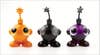
Colored bubbles will hit shelves this February, if not sooner, under the brand name “Zubbles.” The bottles are shaped like little bubble characters. Each color has its own name and personality-Zilch, the villain in black, is a favorite among boys. Girls prefer the pink Zilli. Kehoe is in talks with several major toy companies, and this time, they’re begging him for a deal. Even though bubbles are a traditional summertime toy, Toys-R-Us told him that he’d be a fool not to have the bubbles in stores by Christmas. As Popular Science went to press, Kehoe was looking for a partner with a factory that could keep the formula secret and crank out a million units in six weeks.
When Kehoe isn’t blowing bubbles for businessmen, he’s at home inventing again, coming up with new uses for the disappearing dye, the importance of which is hard to overstate. For decades, the color industry has been focused entirely on color fastness. No one has really thought about the potential of temporary color. That the dye was created for children’s bubbles may turn out to be just a footnote, a funny story Sabnis tells at color-chemist conventions.
Among the ideas Kehoe has already mocked up are a finger paint that fades from every surface except a special paper, a hair dye that vanishes in a few hours, and disappearing-graffiti spray paint. There’s a toothpaste that would turn kids’ mouths a bright color until they had brushed for the requisite 30 seconds, and a soap that would do the same for hand washing.
He’s also thinking outside the toy chest, mucking around in the lab on weekends making things like a Swiffer that leaves a momentary trace showing where you’ve Swiffered and a temporary wall paint that would let you spend a few hours with a color before committing to it. The dye’s reach is so great that there are even biotech and industrial uses being discussed. “We’ve got stuff in the works I can’t talk about that’ll blow bubbles away,” he says excitedly. It might take years, but, knowing Tim Kehoe, we’ll see them eventually. After all, it’s only a little extra work.
Mike Haney is a senior associate editor at Popular Science.

by John B. Carnett
by John B. Carnett
by John B. Carnett
by John B. Carnett

by John B. Carnett

by John B. Carnett

by John B. Carnett