We may earn revenue from the products available on this page and participate in affiliate programs. Learn more ›
Sure, you can buy a flying car from Hammacher Schlemmer. But for truly bizarre catalog collections, turn to America’s laboratory supply companies. It’s a fair bet your favorite holiday catalog will not include a small-animal guillotine, for instance.
Or how about a dissection kit, a rat with Parkinson’s disease, or some cocaine free base? Don’t worry, it’s for science.
These are just a handful of the weird, morbid, or questionable-sounding items you can find in catalogs offered by life science and technology research companies. In the spirit of giving this holiday season, we searched the best-known laboratory supply companies to come up with some rare gems, and we even threw in some sale items for you frugal types.
Some of the items, like lab rats and Schedule II controlled substances, would require special paperwork. But technically, anyone can buy a $950 fireproof hazard suit.
Enter the SciMall gallery to see some of our favorites.
Rats with Parkinson’s, Schizophrenia, and Cancer
$445 Life sciences firm Sigma-Aldrich has a line of knockout rats produced with its line of zinc-finger nucleases, artificial enzymes that can knock out certain sequences of a genome. The new rat models a a term scientists use to describe an animal being used for medical research a can be used to study various neurobiological disorders, like Parkinson’s disease, schizophrenia, dementia and depression. Rat physiology is very similar to humans. During the past year, the company worked with the Michael J. Fox Foundation to make the first Parkinson’s rats. Genes known to be associated with Parkinson’s are knocked out, providing a rat with the biochemical, physiological and behavioral characteristics of Parkinson’s. Sigma went with rats because mice don’t have very complex nervous systems, according to Dave Smoller, president of Sigma’s Research Biotech division. aParkinson’s models in mice don’t shake, so maybe rats will be a better model,a he said. Sigma also sells off-the-shelf rats, and offers rats and mice with knockout genes made to order, Smoller said. aIf someone has enough they want, we will make it for them,a he said. The Parkinson’s rats are not available yet, but Sigma’s knockout rat catalog has about a dozen other specimens. The Mdr1a knockout rat, for instance, can be used to study cancer. The animals are shipped worldwide in climate-controlled containers to aensure safe, clean and comfortably stress-free travel,a according to Sigma’s website.
Quantum Dots
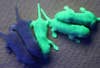
Prices and suppliers vary. Invitrogen’s Qtracker 565 non-targeted quantum dots are designed for in vitro imaging of small animals; $432 for 200 µl. These tiny semiconductors are used in items ranging from energy-efficient displays and lighting to pharmaceutical testing and quantum computers. Their behavior is somewhere between traditional semiconductors and individual molecules. Their sizes and capabilities range, depending on their use a€” researchers have used them in transistors, solar cells, LEDs, and more. Most quantum dots are made from cadmium mixed with tellurium, selenium or sulfur. Invitrogen’s Qdot Nanocrystals are fluorophores, which absorb photons of light, then re-emit photons at a different wavelength. They can be useful for medical imaging, because they can be easily coupled to proteins, synthetic DNA strands or other small molecules, which can then be imaged.
Advanced Bullfrog Dissection BioKit – You Know, For Kids
$165 Young scientists who need to practice their skills can turn to Carolina Biological Supply Company, which has some of the most awesome catalog items you can find on the Internet. This in-depth frog dissection kit can be used for a class of 30 students, who will learn about a bullfrog’s external anatomy, muscles, digestive and genital organs, heart and blood vessels, and central nervous system.
Cat Anatomy Kit, Approved for Homeschool Use
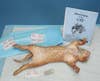
$84.95 To really learn mammal biology, you’ll need a practice kit. Carolina offers a wide range of morbidly fascinating preserved creatures for your study. The Perfection Solution Cat, which is preserved with a proprietary formula, is injected with red and blue latex to delineate arteries and veins. It comes in a vacuum-sealed bag and includes a disposable dissection mat and an instruction manual. Carolina makes a point of sharing that its Perfect Solution specimens are aideal for homeschool use.a They are nontoxic and don’t smell like chemicals, so budding veterinarians won’t need any special ventilation a they can cut open their formaldehyde felines right at the kitchen table!
Cherry-Flavored Fluorescent Protein
$440 for 100 µl (microliter) Once you’ve got your knockout rats, you’ll want to monitor the effectiveness of treatments for Parkinson’s, cancer or other ailments. Jellyfish protein will let you see your work in real-time. Fluorescence microscopy is a common method for imaging molecules, proteins and other compounds to illustrate their distribution or effectiveness. Clontech Laboratories has been selling fluorescent proteins and related products since 1994, the same year the journal Science published the first study into the use of jellyfish protein as a marker for gene expression. Clontech’s line of fluorescent proteins and protein antibodies includes the basic green fluorescent protein derived from Aequorea victoria jellyfish, as well as fun choices like mCherry, tdTomato and mBanana. Clontech says its breadth of colors, from cyan to far-red-shifted proteins (mPlum is farthest) is the broadest available anywhere.
Motorized Tissue Grinders, To Help Your Weary Hands
Cordless motor $122.86 Pack of 100 tubes $33.54 Most life science companies offer a wide range of tissue grinders, which involve a tubular mortar and pestle. Fisher Scientific even sells motorized ones, like the Kontes Pellet Pestle Cordless Motor shown here. Tissue grinders break down animal tissue so scientists can study what’s inside. The mortar and pestle grinding method is gentle enough to preserve molecules, organelles, cells and viruses. There are several varieties a€” the Dounce grinder style is used to open cells to release molecules, according to Wheaton Scientific, a manufacturer of tissue grinders. Dounce grinders work by squeezing cells and releasing pressure when the pestle is moved, Wheaton explains. Most are hand-operated, like a regular mortar and pestle, but the grinder shown above comes with two AA batteries.
Clearance Mutant Mice
Prices vary The Jackson Laboratory offers a host of mutant mice made to order, either with genetic mutations or with special induced states, like pregnant mice or overfed obese mice. But don’t pay full price a€” check the clearance racks and you might be surprised at what you’ll find. Jackson Labs usually maintains large mice colonies, to ensure a robust supply and to allow for spontaneous mutations. But sometimes this results in an oversupply of animals, the lab explains, and then it’s time for a sale. This little fella and some of his brethren a€” males only a€” is on sale while supplies last. Depending on their age, the mice cost between $83.60 and $98.65 apiece. These mice are models for obesity-induced Type 2 diabetes, but their specific mutation means they don’t get as morbidly obese as some of their cousins, which have experienced mutations in the leptin/leptin receptor axis, which regulates eating behavior. There are also infection-prone mice, immune-deficient mice and mice with a reduced ability to produce macrophages. Jump To:
Small Animal Guillotine
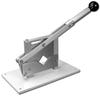
$850 Kent Scientific’s small animal guillotine, catalog item # DCAP, is a humane way to dispense of your rodent subjects. The 1½ inch-square maximum blade opening is suitable for decapitating rats, mice and other small animals, and cleanly slices through bone and tissue, according to Kent’s website. The base has four holes so it can be mounted on a workbench.
Naked Mouse
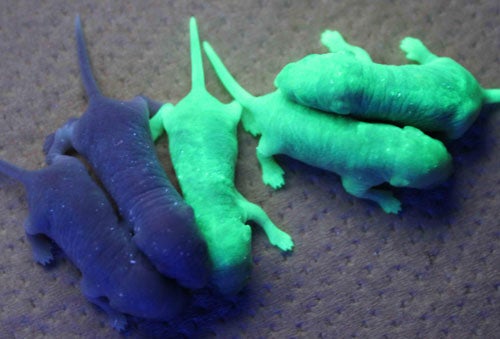
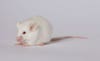
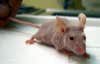
Prices vary; females are more expensive, and younger mice are cheaper. $38 for 3-week-old of either sex, $54 for a 10-week-old female. While you’re shopping for forgotten mice, keep in mind this little naked one, who could use a warm place to stay. Both hairless and albino, the nude mouse is useful for research because it can accept numerous tissue and tumor grafts without rejection, because it has been modified to have a deteriorated or absent thymus. That creates an inhibited immune system, but also a side effect of no body hair. Jackson Laboratories in the U.S. and Charles River Laboratories in Europe maintain colonies of nude mice.
Atomic Force Microscope, For The Tiniest Tasks
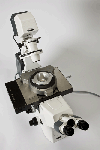
$100,000-$200,000 (at least) Life scientists don’t get to have all the fun. The gold standard in nano-imaging, an atomic force microscope is one of the coolest things you can order online. You’ll have to go through several hoops to get one, however a Agilent Technologies, maker of several AFM models, asks that you request a quote before they’ll give you a price range. Alternatively, you can build your own, albeit slightly less powerful, scanning tunneling electron microscope, based on the Arduino platform. If you don’t need a laboratory-scale AFM, check out NanoProfessor, a curriculum program designed for students. The program’s astudent-friendlya AFM has a flexible scan head so it can be easily moved around in air and liquid. It comes with its own computer and special software. No word on a price, though a you’ll have to visit NanoInk Inc. to learn more.
Arc Flash Protective Suit Kit — Best (and Safest) Costume Ever
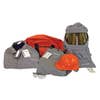
$950 You never know what can happen when you’re working with lasers and other powerful electronics. What happens if you drop a wrench and the circuit shorts out? In case of a major arc flash, this kit sold by lab supply company Cole-Parmer can protect you. It meets the highest standards for safety set by the National Fire Protection Agency a€” so it could protect you from an arc flash powerful enough to vaporize the metal conductors involved, blasting molten metal and expanding plasma outward with extreme force, according to the U.S. Occupational Safety and Health Administration. Its Arc Thermal Protective Value is * 40 cal/cm2 a€” that measures the minimum amount of calories per square centimeter (ATPV or Cal/cm2) a treated garment must pass through with a 50 percent probability of a 2nd or 3rd degree burn. The kit includes an arc flash coat, bib overalls, a Pro-Hood with an anti-fogging lens, a hard hat, safety glasses, and a carrying bag.
Bulk Bags of Fly Food
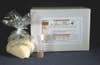
10 lbs for $113 Before you can slice off their heads, you need to keep your fruit flies well fed. Fisher Scientific’s JazzMix Drosophilia Food, consisting of brown sugar, cornmeal, yeast, agar, benzoic acid, methyl paraben and propionic acid, will keep your flies sated until you can trick them into thinking that blue light smells like delicious bananas. Just add water, according to the directions.
Visit Coherent For Your Laser Needs
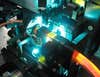
Prices vary There are so many lasers to choose from, it can be overwhelming. Luckily, laser-maker Coherent Inc. has a FinderLaser program to help you focus your laser options and find the one that fits you best. This is a Coherent model 899 ring dye laser, with rhodamine 6G dye, pumped with a 514 nm argon laser. The laser is tuned somewhere around 580 nm, according to photographer Han-Kwang at the AMOLF Institute in Amsterdam, Netherlands. The Talisker 523-8, from a new family of high peak power and high average power picosecond lasers, designed for materials processing. The laser’s picosecond pulses can minimize the areas affected by heat, allowing for supreme precision. From the catalog entry: aMinimizing thermal damage enables a new range of high precision applications such as silicon machining, wafer dicing, solar cell manufacturing and glass scribing with unprecedented quality.a You can get it in wavelengths of 1064 nm, 532 nm and 355 nm, or in a package that includes all three wavelengths.
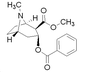
Cocaine Free Base
Prices range from $507 to $1,895 Currently backordered until April 25, 2011 You’ll need plenty of paperwork if you hope to buy this Schedule II controlled substance from Sigma-Aldrich. It’s not even available in Canada. Why would lab scientists want to buy copious quantities of cocaine free base? It can be used to inhibit dopamine, norepinephrine, and serotonin transporters for medical research. It’s better than amphetamines a€” better for research a€” because it has no effect on fight-or-flight hormones, which researchers might want to study. That’s right, it’s back-ordered until spring.