The best microwaves of 2024
Is there anything as wonderful as a machine that can defrost meat and make a mug-cake in under three minutes?
| Best overall |
|
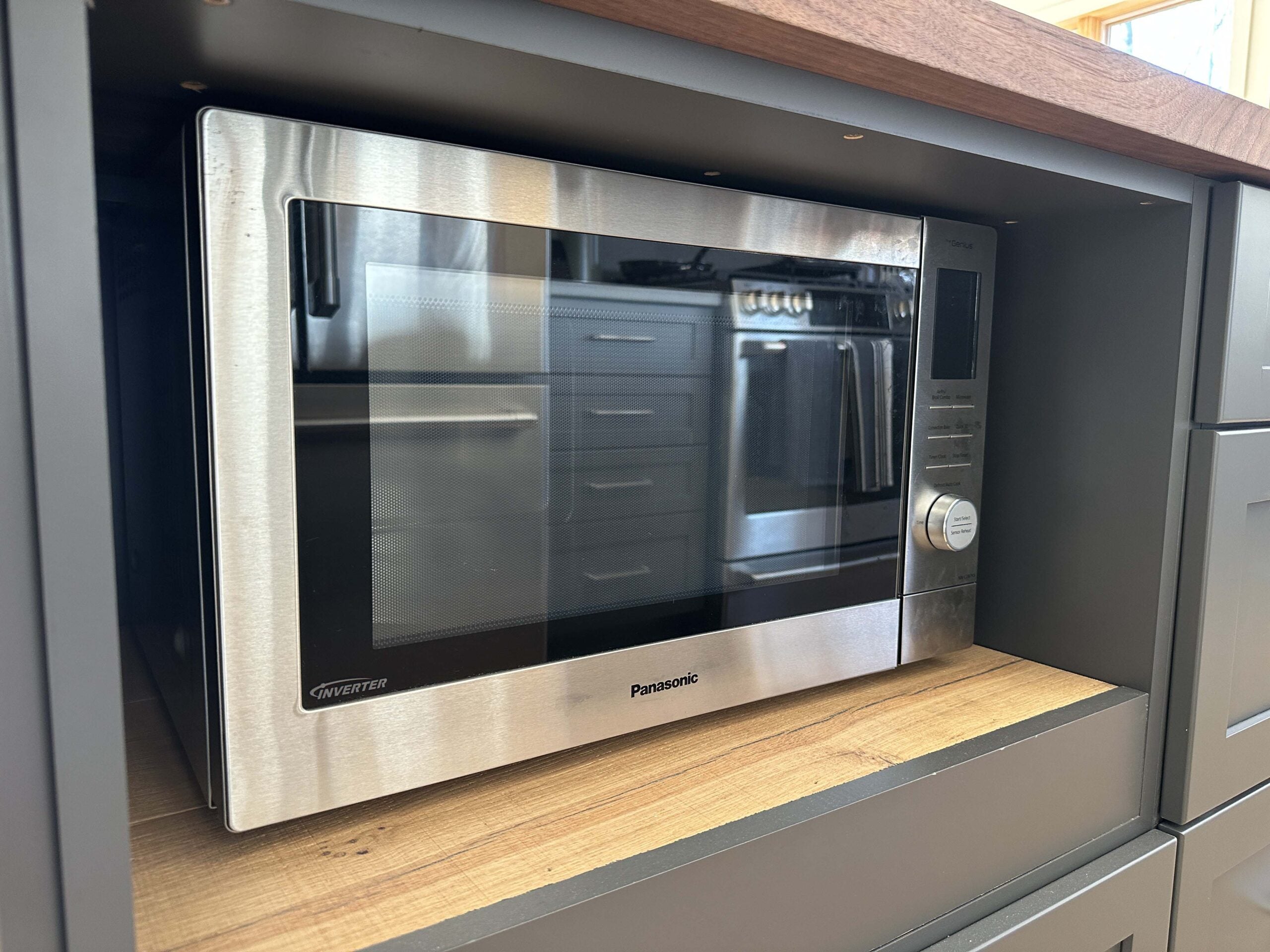
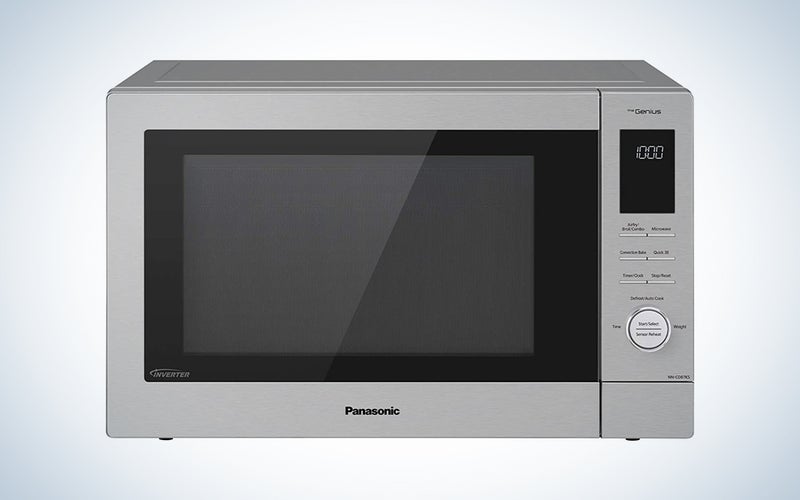
Panasonic Home Chef 4-in-1 Microwave | SEE IT |
This versatile pick is an inverter microwave, microwave, broiler, air fryer, and convection oven in one appliance. |
|
| Runner-up |
|
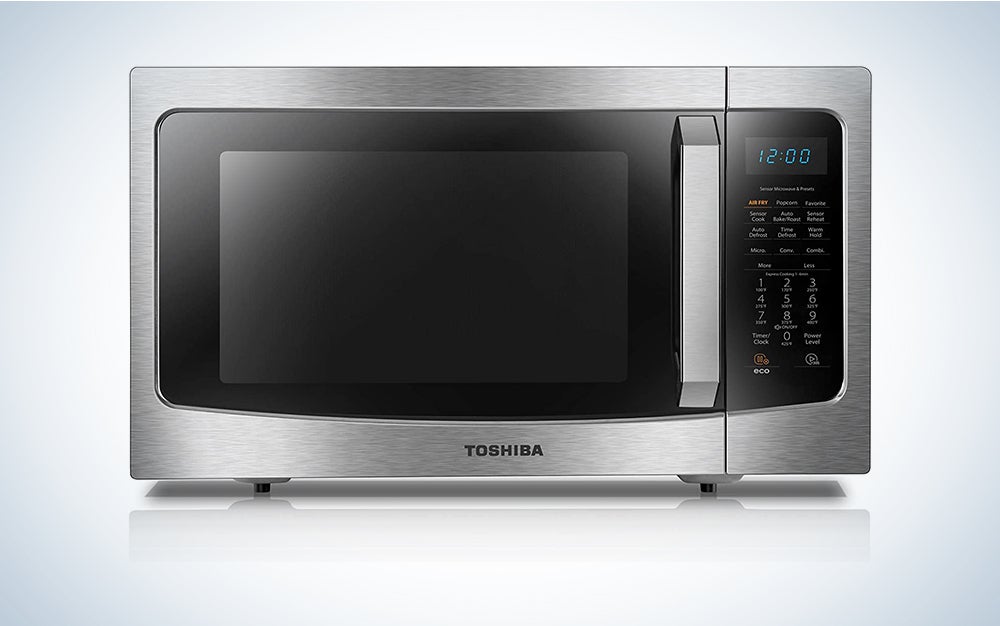
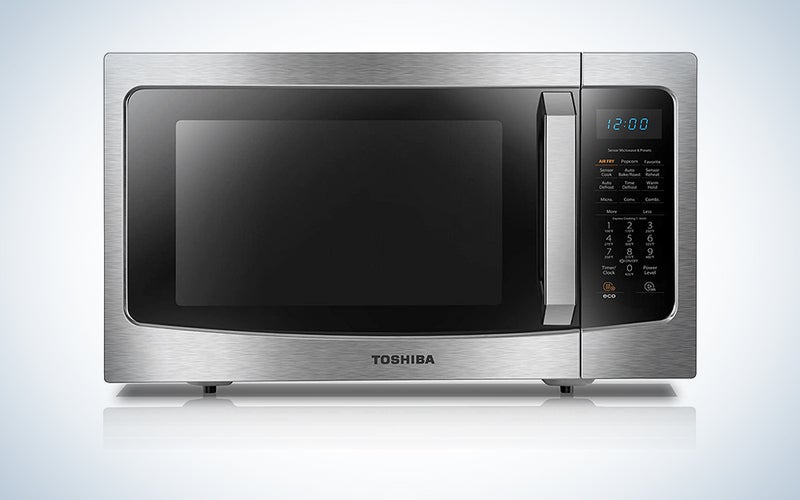
Toshiba Countertop Microwave | SEE IT |
This handy microwave comes with auto-bake and auto-roast and a range of pre-programmed sensor settings. |
|
| Best compact |
|
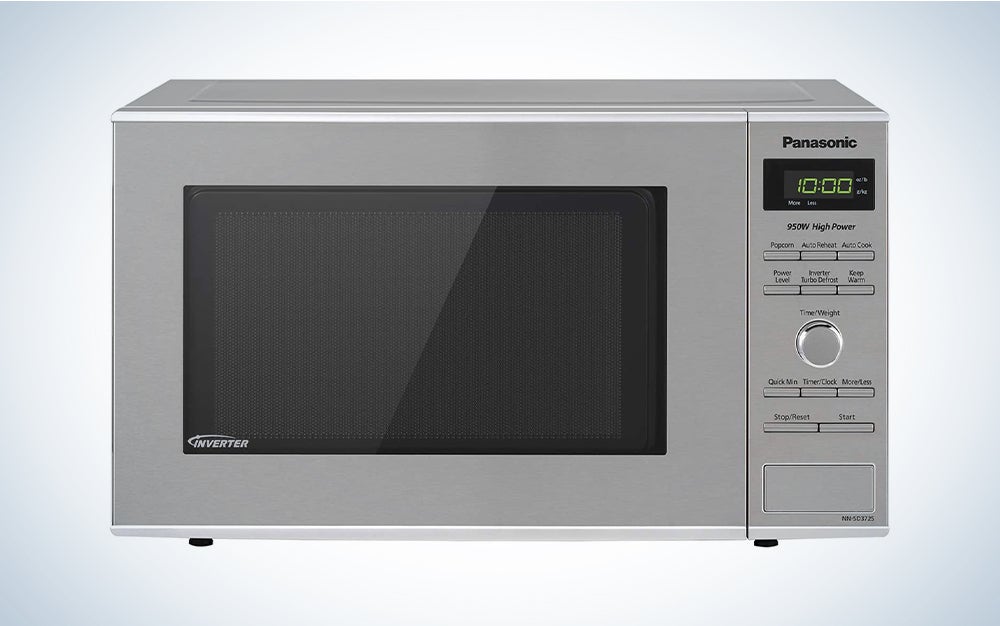
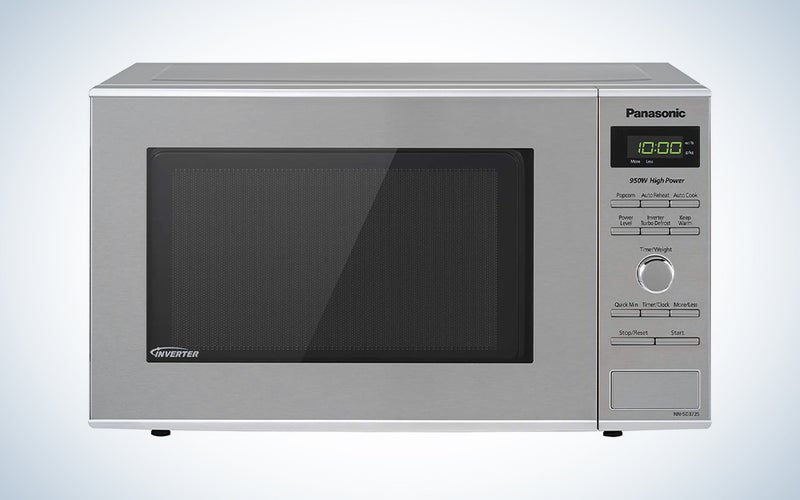
Panasonic Microwave Oven | SEE IT |
This 0.8-cubic-foot model stands up to larger options with its 950-watt output and range of settings. |
We may earn revenue from the products available on this page and participate in affiliate programs. Learn more ›
Some may say dogs are man’s best friend, but we firmly believe that title belongs to the microwave. An ingenious little invention, this kitchen appliance can make a huge difference when it comes to quick snacks, full meals, and delicious leftovers. The best microwave is more than just a tool to heat up cold coffee; these powerful machines are used to bake cup-sized cakes, steam vegetables, dry herbs, and even sterilize soil. They’re convenient for busy bees who are always running out the door and home chefs who need a helping hand in the kitchen.
Microwaves have become an everyday staple in most homes, which means they are widely manufactured and sold. Having so many options available at your fingertips can be overwhelming, so we are going to break down the things you should consider before pulling out your wallet. Get ready for some stellar movie-night popcorn and other favorite treats. (Might we suggest Trader Joe’s microwavable mac and cheese?)
- Best overall: Panasonic Home Chef 4-in-1 Microwave
- Runner-up: Toshiba Countertop Microwave
- Best compact: Panasonic Microwave Oven
- Best high-wattage: GE Countertop Microwave
- Best smart: GE Smart Microwave
How we chose the best microwaves
There are five key things to consider when purchasing a new microwave for your home. First, think about your kitchen style and the amount of available space; this will determine both the type and size of microwave you need. Next, take a look at the options and check out their specs, specifically the wattage; this will let you know how effective your machine will be. Finally, consider any settings or special features you’re hoping to take advantage of; the best microwave is miles ahead of simple defrost settings.
The best microwaves: Reviews & Recommendations
Best overall: Panasonic Home Chef 4-in-1 Microwave
Amazon
Though this Panasonic microwave oven isn’t technically “smart,” it’s going to blow your other appliances out of the water. Not only is it an inverter microwave, but it’s also a broiler, air fryer, and convection oven, plus you can access multiple functions simultaneously. This practically doubles the settings found in a conventional microwave. On top of those functions, it’s equipped with a 30-minute keep warm setting, control lock, turbo defrost, and more. It has 1,000 watts of power behind the microwave and measures 22 by 13.4 by 17 inches.
Runner-up: Toshiba Countertop Microwave
Amazon
Though certainly non-traditional, we love the convection models, specifically this convection microwave from Toshiba. It combines microwave and convection cooking with auto-bake and auto-roast menus and a full roster of pre-programmed sensor settings. With a power output of 1,000 watts, ten power settings, and additional features like warm-hold, buzzer silencing, and a child safety lock, this microwave is ready to help you whip up amazing meals.
Best compact: Panasonic Microwave Oven
Amazon
If you need something that will save you space, but you aren’t ready to relinquish cooking power, we suggest checking out this Panasonic microwave. With an impressive 950-watt output at only 0.8 cubic feet, this microwave is going to be able to stand up to larger models with ease. It is equipped with inverter technology for turbo defrosting, smart-cook settings to adjust power and cook time-based on the food, a child safety lock, and preset menu items.
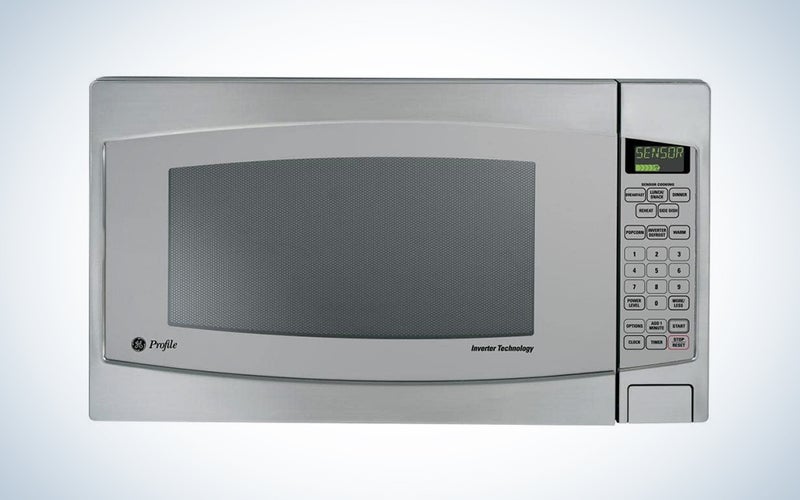
Best high-wattage: GE Countertop Microwave
Amazon
This GE countertop microwave is a great way to make meals for the entire family. It has 1,200 watts of power and a large turntable for an even, efficient cook. It has ten power levels, and multiple settings including auto defrost, keep warm, delayed start, and a “more or less” button. It measures 2.2 cubic feet, so make sure you measure your space before purchasing.
Best smart: GE Smart Microwave
Amazon
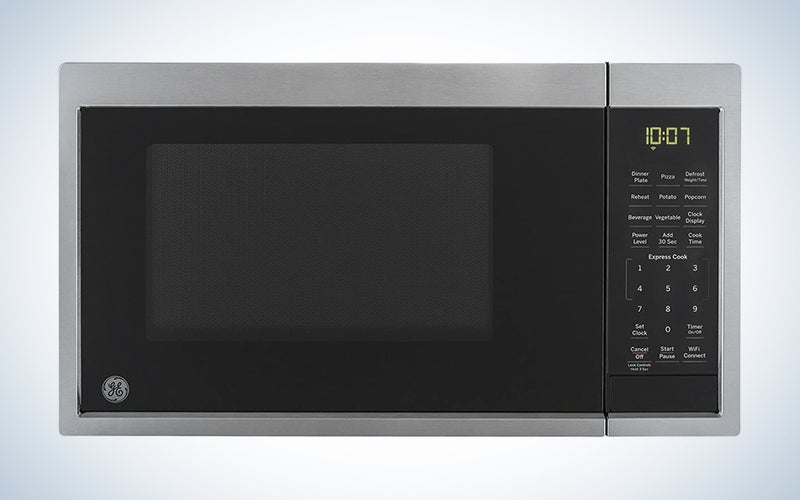
This smart microwave from GE will keep you connected and your food from getting cold. It features the barcode scan-to-cook tool mentioned above as well as Google Assistant and Alexa compatibility so you can get dinner started from any room in the house. There are additional options for pre-programmed settings, sensor cooking, a customizable button volume, and safety locks. It will even send you push notifications when your food is done. It has a 900-watt power output and measures 0.9 cubic feet.
Things to consider when looking for the best microwaves
What settings and sensors should you look for?
The microwave’s brilliance doesn’t lie solely in speed of cooking time, but in the various settings and sensors available to elevate your meals.
Pre-programmed settings can heat popular products quickly or provide a targeted amount of time to cook through frozen foods thoroughly, the most common being the popcorn and defrost settings. As microwave technology improves, we are starting to see new and improved pre-programmed settings such as baked potatoes and coffee or tea re-heat. Pre-programmed settings work best in higher-end models equipped with special sensors to maximize effectiveness.
Sensor cooking monitors the amount of steam your food produces inside the microwave oven to calculate cook time. Accurate sensor cooking is an excellent feature for those of us who are continually under-cooking on the first go and then afraid of over-cooking on the second. Like pre-programmed settings, sensor cooking a dish is going to be most effective with higher-end models.
Additional, standard sensors and settings include programmable cooking, which allows you to choose select power outputs and timing for full control. 30-second or minute-plus options are helpful because they quickly let you tack on an extra 30 to 60 seconds of cook time without needing to plug in the numbers. Child safety-lock settings are increasingly being rolled out with popular microwave brands—because who can blame a kid for wanting to push all those glorious buttons? This setting allows you to create a code that must be plugged in before use, which eliminates accidents that can be started by microwaves that are turned on, especially if there isn’t anything to heat up inside.
Countertop, convection, built-in: What kind of microwave should you buy?
Before you can really decide on a specific microwave model, you’ll need to know which type is right for you. There are four types of microwaves: countertop, over-the-range, built-in, and convection. A countertop microwave is perhaps the most common. There’s no installation required, and it’s “portable” in the sense that it can go anywhere in the home; simply plug it in, and you’re ready to go. These models are typically cheaper than other types, which means they are also traditionally smaller.
Over-the-range microwaves are designed to be installed directly above your oven range. They often double as range hoods or exhaust fans and don’t take up any counter space. They need to be professionally installed but promise a luxurious look.
Built-in microwaves usually come into play with a kitchen cabinet redesign and also need to be professionally installed. Like over-the-range models, these elevate your overall kitchen design, saving you a significant amount of space. Both built-in and over-the-range models can be relatively expensive and typically won’t travel with you in a move.
Convection microwaves often mimic the style and portability of countertop microwaves. Still, they use a different method to heat food, though you can find convection techniques in over-the-range and built-in as well. There are no electromagnetic waves when it comes to convection models. Instead, this appliance uses a high heat temperature and an internal fan to circulate air. That means you can cook food in various ways similar to roasting, crisping, and baking. Convection microwaves can be pretty pricey, but the overall effect and preservation of flavor profiles on your favorite foods make the splurge worth it.
What’s the best microwave wattage?
Now let’s talk about power, or wattage. Electrical power is measured in watts, a product of voltage and current; essentially, it’s the power used or produced per second. Voltage measures the electric potential of energy; it’s the force that pushes charged electrons through a conducting loop to supply power. Those charged electrons make up the current. Wattage is volts (or joules per coulombs), multiplied by amperes of current (or coulombs per second). Of course, you can dive further into the science of wattage, but the main thing to remember is this is the way you can measure the overall power and functionality of your microwave.
Generally, the higher the wattage, the faster and more evenly your food will cook. A low-end microwave may produce 600-700 watts, while a high-end model can have power output between 1,000-1,200 watts. The best microwave packs at least 800 watts. This is the recommended wattage for microwave-specific dishes and recipes; it ensures the food cooks evenly throughout.
How big (or small) do you need the microwave to be?
Of course, one of the most important things to consider is size. This isn’t relegated only to how much space you have for these kitchen appliances but has more to do with how much food you need to heat during a single zap session. Of course, if you’re low on counter space but have room either above the oven or next to your cabinets, consider getting an over-the-range or built-in. Make sure you measure exactly how much room you have, especially if you’re ordering custom cabinets or racks to house your new appliance. If you want to save space, but still want something budget-friendly that can accompany you in your next move, consider a compact countertop, which typically measures 0.5 to 0.8 cubic feet.
If you’re primarily re-heating for one or two people at a time, you should be fine with a mid-size microwave, which typically measures 0.9 to 1.3 cubic feet. You might not be able to squeeze in a sharing platter of leftovers, but you will be able to fit enough dino nuggets to satisfy your sudden craving. For folks with families, chosen or otherwise, family size or full should fit your needs. Family size models measure 1.4 to 1.6 cubic feet while fulls are 1.8 to 2.0.
Keep in mind the height of your dishes as well. This may sound silly, but you’ll thank us when you realize your new microwavable thermos doesn’t fit. You always want room to spare when it comes to microwaving.
What special features do you need?
Our favorite special feature on the microwave market is simple and straightforward: silence. How many times have you snuck into the kitchen at 1:00 am to sneak a “midnight” snack only to be outed by the alarmingly loud beeps that sound upon completion, announcing you made pizza bagels to the whole house? Our answer: Too many times. Luckily, select brands include a silence all setting, which turns off all sounds.
Smart microwaves—or devices such as smart ovens—can also connect to your smartphone through WiFi and be controlled with virtual assistants like Alexa, Google Assistant, or select brand apps. Some have additional features that will allow you to scan the barcode on packaged food to determine cook time automatically, LED touch screen panels, and moisture sensors to avoid drying out your meal. Many models have options to disable the turntable, which helps when cooking or reheating food on uneven plates or dishes that are too wide to spin. Some smart microwaves can track your food routines to suggest customized settings, or boast power-saving modes, antimicrobial coatings, and additional options for heating techniques that include toasting and browning.
FAQs
Q: How often should I replace my microwave?
If you use your microwave as directed, clean it regularly, use microwave-safe dishes, etc., then you shouldn’t need to get a new one for at least a decade. Other tips include being gentle with the door, degreasing the grease filter, and utilizing the preset timers or monitoring your food to avoid overcooking and subsequent damage.
Q: Are microwaves safe? What about radiation?
While direct radiation exposure, especially ionizing radiation, can be dangerous, microwaves are very safe. Though it’s generally recommended not to press your body against the microwave while it’s heating food (not that we think you would), you don’t need to be concerned about radiation poisoning over time. The FDA has regulated microwave manufacturing since the ’70s to make sure models are protected against leakage. That being said, if your microwave is damaged in any way, it is best to take it to a professional to be safe.
Q: What are the best microwave brands?
There are a few brands we stand by, including Toshiba, Panasonic, and GE. These three companies are dedicated to producing high-end appliances for the home, and their microwaves are a testament to their mission. If the products listed above don’t float your boat or meet your specific needs, we suggest starting your search with these brands.
Final thoughts on the best microwaves
- Best overall: Panasonic Home Chef 4-in-1 Microwave
- Runner-up: Toshiba Countertop Microwave
- Best compact: Panasonic Microwave Oven
- Best high-wattage: GE Countertop Microwave
- Best smart: GE Smart Microwave
Hopefully, you are now well on your way to finding the best microwaves. Continue to keep in mind your needs, including space, size, and future meals or snacks you can’t wait to pop in and cook. As long as you pay attention to the specs and stick with some trusted brands, you should come away with a beautiful appliance for your kitchen. From soups to Bagel Bites, hot chocolate, to single-serving portions of pasta, you’ll be dining comfortably and conveniently before you know it.
Why trust us
Popular Science started writing about technology more than 150 years ago. There was no such thing as “gadget writing” when we published our first issue in 1872, but if there was, our mission to demystify the world of innovation for everyday readers means we would have been all over it. Here in the present, PopSci is fully committed to helping readers navigate the increasingly intimidating array of devices on the market right now.
Our writers and editors have combined decades of experience covering and reviewing consumer electronics. We each have our own obsessive specialties—from high-end audio to video games to cameras and beyond—but when we’re reviewing devices outside of our immediate wheelhouses, we do our best to seek out trustworthy voices and opinions to help guide people to the very best recommendations. We know we don’t know everything, but we’re excited to live through the analysis paralysis that internet shopping can spur so readers don’t have to.
