Nano-Device Accurately Moves Single Electrons at 1 Billion Per Second
For about 60 years, we’ve defined the amp–the power of an electrical current–by using mechanical processes, i.e., processes not defined...
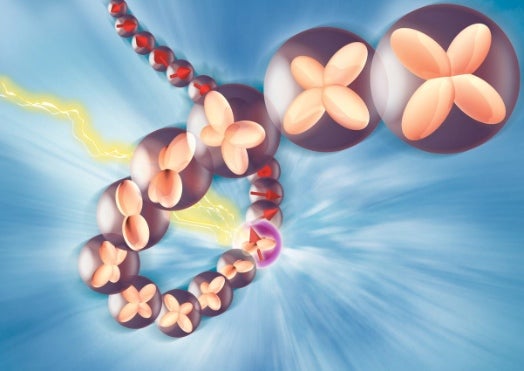
For about 60 years, we’ve defined the amp–the power of an electrical current–by using mechanical processes, i.e., processes not defined in nature. And for the most part that works just fine. But now we’re approaching a better way: scientists from the National Physical Laboratory and University of Cambridge have found a process to move 1 billion individual electrons per second, and measure them accurately.
By slowly manipulating the voltage while trapping electrons, then ejecting them quickly, scientists could send the electrons through an “electron pump” (itself not a new technology) at 300 times the previous record–and they were able to do it without losing measurement accuracy.
At 10 billion times less than the current it takes to boil a kettle, it wasn’t a whole lot of energy, but the measurements were accurate to about 1 part per million. Even better, the process is completely based on the charge of electrons–a constant in nature.
The amp is already a surprisingly controversial unit of measurement, so a move toward an electron-based unit could be something we all agree on.