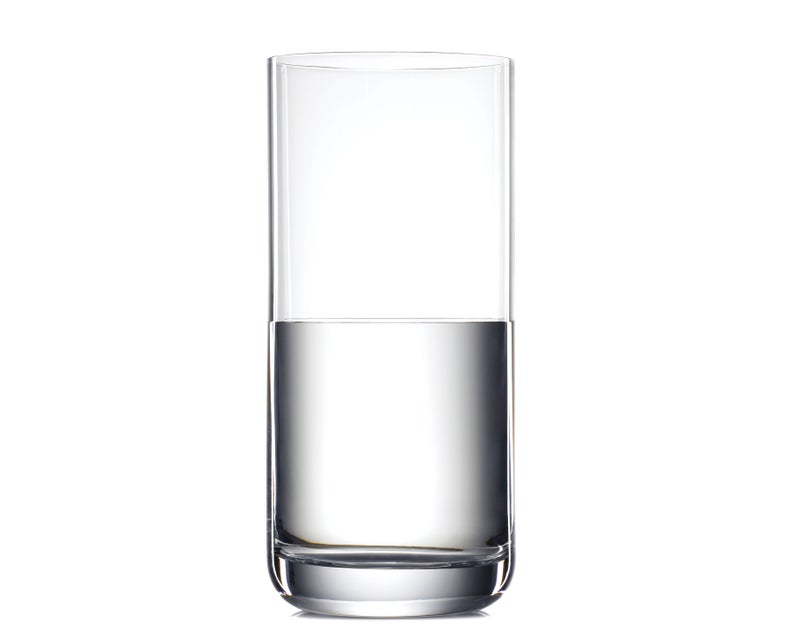
No one is entirely sure. Water has high surface tension, yet the molecules at its surface are unstable, which makes the air-surface interface mysterious and difficult to describe. Satoshi Nihonyanagi, a researcher at a molecular-spectroscopy lab in Japan, studies water and its surface—“specifically probing the interface,” he calls it—using isotopically diluted H2O, which doesn’t vibrate and is easier to observe. He’s found that some water molecules are bound to others by a single hydrogen bond. “Occasionally,” he says, “this hydrogen bond can break, and the water at the surface escapes into the air.” Hydrogen’s breaking and re-forming happens trillions of times a second. The hydrogen atoms “point” to their neighbors, inching toward them. But water molecules don’t pair up for long. They are swingers, constantly coupling and uncoupling.
In saltwater, the separation between surface and air is even more complex. Michael Cunliffe, a microbiologist at the Marine Biological Association of the United Kingdom, studies the sea’s microlayer, which is about the width of a human hair yet covers 71 percent of the planet. And until about six years ago, it was an entirely overlooked ecosystem. Gelatinous polysaccharides (“little gel blobs,” Cunliffe says) are covered in bacteria, which are in turn grazed on by amoebas. “Imagine having a bath and throwing ping-pong balls on the surface.” Where does the surface end and the subsurface begin? “We just don’t know,” Cunliffe says. “Waves slosh, bubbles burst—and the layer re-forms, again and again.”
Have a burning science question you'd like to see answered in our FYI section? Email it to fyi@popsci.com.
Five amazing, clean technologies that will set us free, in this month's energy-focused issue. Also: how to build a better bomb detector, the robotic toys that are raising your children, a human catapult, the world's smallest arcade, and much more.


Online Content Director: Suzanne LaBarre | Email
Senior Editor: Paul Adams | Email
Associate Editor: Dan Nosowitz | Email
Assistant Editor: Colin Lecher | Email
Assistant Editor: Rose Pastore | Email
Contributing Writers:
Kelsey D. Atherton | Email
Francie Diep | Email
Shaunacy Ferro | Email
How can we submit questions?
a glass is never half-full except in a vacuum.
Otherwise it's half-full of water, and half-full of air.
But even in a vacuum--it's not half-full because space is defined too, so it's half-full of water, and half-full of space or 'nothingness'.
can we get some real new please, not these shit.
@gizmowiz, in a vacuum wouldn't it be full of just space due to the water boiling away in a vacuum...
It's not half full or half empty. It's at 50% capacity.
I see the cup is full, since this is all the amount off water I wish to drink at this moment. The rest of the upper part of the glass is just lip.
So isn't really about your goal with the water and does it meet this goal, hmm...
......Facepalm
Clearly the glass is neither half full or half empty... its twice as big as it needs to be.
@StarsShinBright
Your model of water-in-the-glass makes the most sense. I will now adopt it.
-Spouting a fountain of nonsense since 1995-
The real question is is it half full of what? Half full of air, water, etc.?
Perhaps it is a glass with a really deep bottom and no water inside at all?
.............................
Science sees no further than what it can sense, i.e. facts.
Religion sees beyond the senses, i.e. faith.
Open your mind and see!
Oh, I forget to tell you. I am not thirsty at this moment.
When somebody tells me they have "isotopically diluted H2O" without explaining what that is, it makes me think they are trying to sell me something.
HBillyRufus,
Can I sell you some hydrogen oxide instead?
.............................
Science sees no further than what it can sense, i.e. facts.
Religion sees beyond the senses, i.e. faith.
Open your mind and see!
Wouldn't how the water got to the half way mark dictate Half full and Half Empty? If i filled it with water, it's half full... If I poured it out, it's half empty
Loopi,
You almost make my point exactly. Often as I go to the water facet, I fill my cup upon my need and so whatever quantity the cup is, at that moment it fulfills my need and so the cup is full. The cup itself is not alive so it does not care to call itself half full, half empty, or ¼, etc. I human make the decision of how the cup fills my needs.
Perhaps on some very hot and thirsty days, I fill the cup a couple of times to quench my thirst.
Then filling the cup to the top the first time, is in fact half full.
My needs of filling the cup are part of my reality of how I see the cup.
Half full, half empty. Maybe the glass is the wrong size.