Are baby birds' brains hard-wired for 3-D perception?
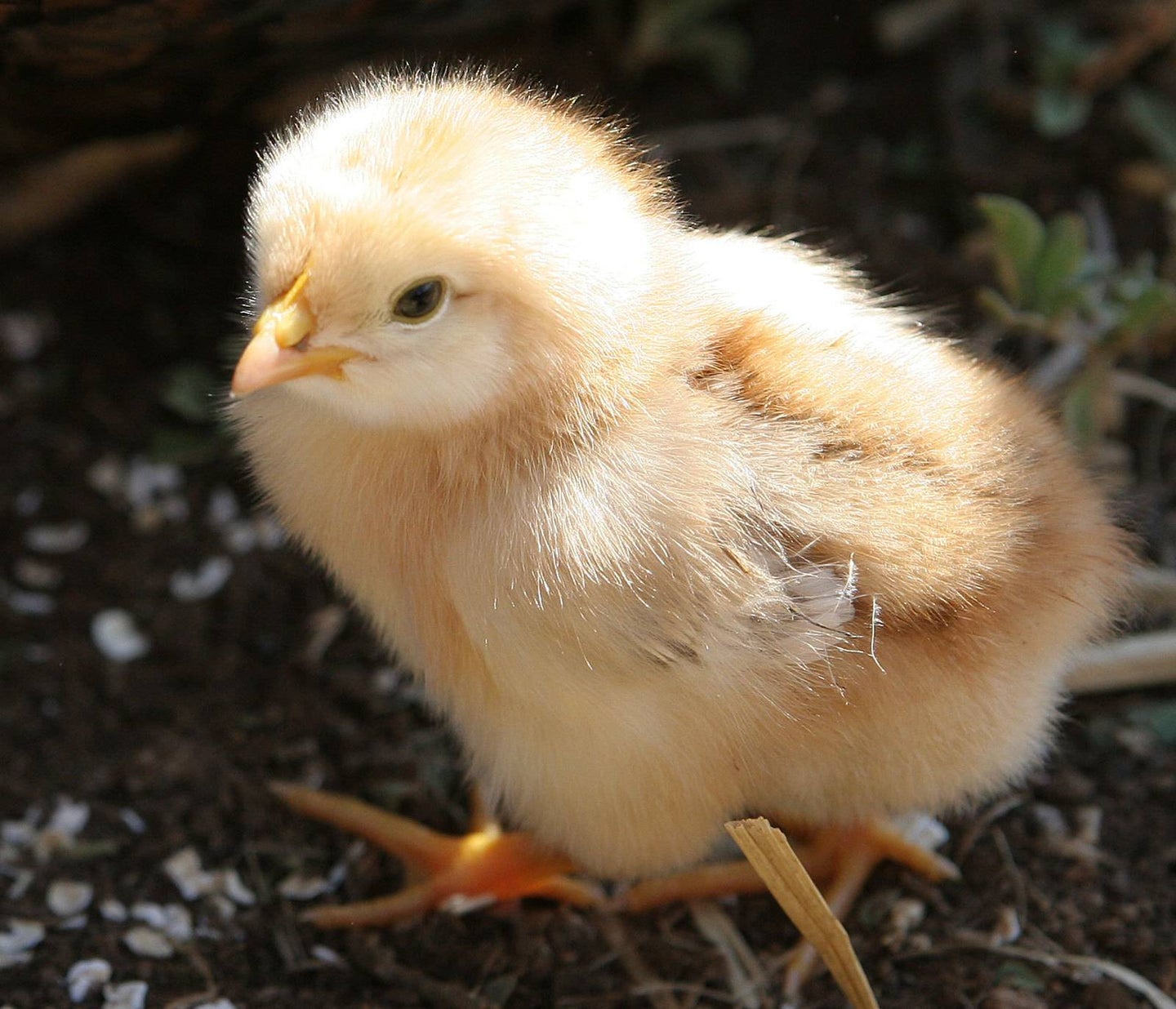
Baby Chick Wikimedia Commons

Understanding the difference between what’s right and what’s wrong — at least when it comes to the three-dimensional structure of objects — may be hard-wired from birth, researchers say. It might not be the result of seeing the world through binocular vision.

In a new study, newborn chicks were confused by an M.C Escher-style drawing of an impossible object, with the majority of the birds choosing an accurate 2-D depiction of a 3-D cube.

A group of Italian researchers kept 66 chicks in the dark for their first 24 hours of life, ensuring they had no visual stimulus, New Scientist reports. They put them in an enclosure and showed them two drawings, one depicting a normal cube and one depicting an “impossible” Escher-esque drawing, wherein the cube’s front and back corners overlapped.

Two-thirds of the chicks went toward the normal shape, the researchers said.

“These findings suggest that the vertebrate brain can be biologically predisposed towards approaching a two-dimensional image representing a view of a structurally possible three-dimensional object,” the researchers write. Their study is reported in the early online edition of the British journal Biology Letters.

Previous studies have shown 4-month-old infants can distinguish between possible and impossible objects. But the babies were able to see for four months before the experiment, possibly giving reality an unfair advantage over the impossible. The chick study suggests that even before a vertebrate animal sees anything, it understands the rules governing three-dimensional structures.

To follow up on their observations, perhaps the researchers should repeat the experiment using chicks gestated in a four-dimensional space. Or, even better, incubate the chicks inside the Large Hadron Collider, where they might be able to visit the other dimensions before hatching.

[New Scientist]

4 Comments

This is some F**ed up S** to test on baby chicks, seriously wtf when are we going to stop this animal testing crap!

How is that "f**ed up"? Because they were in darkness for 24 hours? As if being enclosed inside of an egg means your exposed to light. Or would you rather they had taken new born human babies from their parents, still covered in blood, and left them inside of a room in total darkness. I'm sure that would have been a great idea.

1) Keeping chicks in the dark for the first 24 hours is perfectly normal (for the first 2-3 days a chick does not need food, water, or light - only warmth and dryness).

2) You are worried about chicks choosing between pictures? Not the fact that they were probably recieved for practically free and destroyed soon afterwards - as is the common fate of almost all male Leghorn (egg-laying) chicks at birth?

So... How does walking to one picture as apposed to another determine that the chicks thought one was possible? I mean, two-thirds went to one shape over the other, but only 66 were studied. Was there some other factors that we don't know about, like maybe the square shape was slightly warmer?


138 years of Popular Science at your fingertips.


Popular Science+ For iPad

Each issue has been completely reimagined for your iPad. See our amazing new vision for magazines that goes far beyond the printed page


Download Our App

Stay up to date on the latest news of the future of science and technology from your iPhone or Android phone with full articles, images and offline viewing


Follow Us On Twitter

Featuring every article from the magazine and website, plus links from around the Web. Also see our PopSci DIY feed


March 2012: The Future of Medicine

A 10,000-rpm, no-pulse heart is completely revolutionizing how we think about transplants. Plus: rapid-response virus hunters, a shocking cure for migraines, the world's youngest person to have achieved nuclear fusion (in his parents' garage!), and much more.


circ-top-header.gif
circ-cover.gif