But the long-term effects of prolonged cellphone use require further study—and will spark fresh controversy
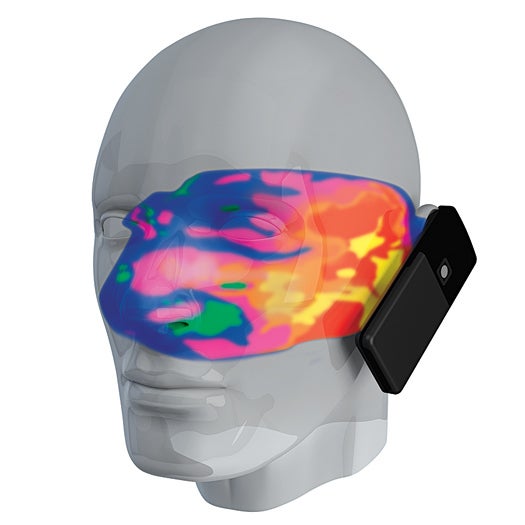
Electro-Magnetic Model Electro-magnetic waves from the phone’s antenna penetrate the brain several centimeters deep. Paul Wootton

When I was reporting my March 2010 PopSci feature story on the possible health effects of cell phone radiation, I was particularly interested in learning about the Interphone project, a collection of 13 different national studies coordinated by the International Agency for Research on Cancer (IARC), part of the World Health Organization.

Interphone is the largest completed analysis to date of brain tumor (glioma and meningioma) risk in relation to mobile phone use. When I was writing my piece, none of the scientists I interviewed could or would say much about the study, since it had yet to be published. So not much about Interphone ended up in my story. But when I asked one source familiar with the study’s progress what we would learn once the results appeared, this person said: “We’ll learn how to do better studies.”

Well, the Interphone study has finally appeared and, unfortunately, my source was right.

The paper, published this week in the International Journal of Epidemiology, concludes: “Overall, no increase in risk of either glioma or meningioma was observed in association with use of mobile phones. There were suggestions of an increased risk of glioma, and much less so meningioma, at the highest exposure levels … However, biases and errors limit the strength of the conclusions we can draw from these analyses and prevent a causal interpretation.”

This result is in line with the majority of other published studies, which also observed no increased risk of brain tumors in association with cell phone radiation and cite biases and errors in those studies that do show a correlation. But the publication of the Interphone results does not address the two main concerns of those who believe cell phone radiation may have an impact on human health: namely, that the effect of long-term exposure, especially on children, is still unknown and that brain tumor rates alone are not the proper metric by which to measure risk.

Methodological failings—especially recall bias; i.e. people incorrectly remembering past cell phone use—have long plagued research on this topic. The Interphone authors once again cite bias as preventing any firm conclusions about the effects of long-term use: “The possible effects of long-term heavy use of mobile phones on risk of brain tumors require further investigation,” the paper states, “given increasing mobile phone use, its extension to children and its penetration world-wide.” To that end, the IARC will carry out a comprehensive review of all published epidemiological and experimental evidence and the European Union will fund MobiKids to investigate the risk of brain tumors in childhood and adolescence.

Studies like Interphone and MobiKids take a long time to conduct and, of course, by the time they are finished the technology has already moved on, which raises doubts about the usefulness of the results. Since Interphone was launched, for example, cell phone usage has increased dramatically but radiation levels from cell phones have decreased.

Plus, the scientists who believe there could be a risk from cell phone radiation believe that risk could involve the immune system as a whole rather than a direct cause-and-effect relationship between radiation and brain tumors. So many of these scientists suspect studies like Interphone don’t give the full picture.

One thing is clear, though: After Interphone, opinion will be just as polarized and passions will run just as high as before Interphone.

Browse through some of the comments posted to my original story for a taste of the debate. Many people ridiculed the very idea of risk from cell phone radiation, and accused Per Segerbäck, a Swedish former telecoms engineer who suffers from electro-hypersensitivity (EHS) and whom I profiled in the piece, of inventing his condition. Several EHS sufferers wrote back, explaining their condition and citing studies that suggest it’s real.

Segerbäck’s daughter even responded with a comment of her own: “Maybe you never heard anyone say anything bad about your dad, but … reading you comments made me cry … I'm sorry if you don’t understand the illness, but I promise you that a lot of people has it. But please do not think that he is just making this up. That breaks my heart.”

I do not believe Segerbäck invented his condition, but I am not able to cite a study that provides a scientific explanation for it either. There is evidence to suggest possible mechanisms for a health effect from cell phone radiation; these are outlined in my story. None of the scientists who did this research and whom I interviewed for my story said their work ‘proved’ that cell phones have an impact on human health. They all did say, however, that the evidence merited further research—which is exactly what the IARC is saying.

Research into the potential health effects, if any, of cell phone radiation is so hotly contested in part because the technology is relatively young, but also because the research itself is so difficult to carry out.

I don’t know if cell phone radiation has an effect on human health, but I do know it’s not good science to dismiss the unproven as impossible. In fact, we could do a lot worse than to take Segerbäck’s own advice: “Be careful, weigh the evidence, and make your own decision.”

6 Comments

I would like to correct a statement from this article. The author writes that this result "is in line with the majority of other published studies, which also observed no increased risk of brain tumors" associated with cell phone radiation. In reality, most/all studies funded by the wireless industry found no risk. The vast majority of studies which had independent research funding, concluded that cell phone radiation is associated with serious and severe health effects. It is not by mere chance that most countries worldwide are taking steps to prevent children under 16 from using cell phones, since it is already widely known from peer-reviewed studies that cell phone radiation affects children more severely than adults, and children absorb more of the emitted radiation. The Interphone study received a vast amount of funding from the wireless industry, including (but not only) mobile phone licensing fees. One has to seriously consider whether a study that is heavily funded by the wireless industry would be able to reveal any harmful effects of the wireless devices. We need independent studies, which are able to objectively address and examine science, not propaganda studies that are heavily biased due to competing financial interests. The Interphone study has several major design flaws, one of which is the fact that it did not even examine exposure in children, who are one of the most sensitive segments of the population. As it stands now, many independent peer reviewed studies reveal serious adverse effects from radiofrequency exposure, and the press should cover this aspect too, because it is the scientific truth - even though, for many, the inconvenient one.

I read about similar studies in the past. The first question I always ask - who paid for it? Once I read about a study that didn't find any link between cancer and mobile phone phone use that was funded my Motorola....

"Free-mind", thank you for your post, you are absolutely right. The funding source is one of the most important aspects to think about, when reading the study. It was reported that the Interphone received over 5 million Euro from the industry. I don't remember the exact numbers, but approximately 80-90% of the studies funded by the wireless industry are extremely reassuring, and conclude that cell phone radiation causes no harm. In contrast, 80-90% of the studies that did *not* accept wireless industry, found very serious adverse health effects, including, but not limited, to cancer. That speaks for itself and does not need more explanations.

At the basic sciences level, the mechanism of action of radiofrequency radiation (the type emitted by cell phones) on biological systems started already to be a little understood, and is available in many studies. It includes changes in heat shock proteins (a class of proteins that are increasingly implicated in cancer initiation and progression), changes in cell cycle progression (which is central to carcinogenesis), and changes in ion channels (which are present in all organs and tissues in the body). The effects of cell phone radiation on heat shock proteins was many times shown, by several independent investigators, and it was also shown to occur at very low exposure levels.

Interestingly, heat shock proteins started to find important applications in vaccines, to boost the immune response. The fact that radiofrequency radiation affects heat shock proteins, should make people do some thinking of their own. It is not a game, it is serious perturbation that is inflicted on biological systems.

never fails. for every article siting a carefully controlled, wide based study with X results, there will be people who dispute X, claim it is biased, and contradicts with carefully controlled, wide based study Y.

which leaves people to believe... what ever it is they WANT to believe. i am personally weary of people giving me s**t because i wear a bluetooth headset all day everyday. i don't care what your "feelings" are about this. i want the SCIENCE. which to this point, finds no clear, quantifiable, definite co-relation between cel phone use and brain tumors etc.

*everything* is dangerous. *everything* has consequences. if you think cel phones are cause brain tumors, don't use one. and leave the rest of us alone.

of course there are anomalies. a few people who are sensitive to electromagnetic radiation does not make case against electromagnetic exposure. you can find people whose bodies will react with the simplest, most common things. look up " xeroderma pigmentosum " are you going to start telling us to never go out in the sun?

--
if you must know what happened: you need observation
if you must know how it happened: you need science
if you must know why it happened: you need religion

When I was in the US Navy, I used hand held Motorola Radios. This type of radio has a whip antenna, that transmits a signal in 1 watt, 5 watt or 15 watts. There is a large variety of this type radios that are use throughout the military and government, and business. Cell phones transmit in the microwatts by comparison. The world seems to be focus on cell phone. Their is a definite omission in public information and its affects of high power portable radio and its radio transmission on the human body and brain. I never read studies on these; where are they?
Imagine responsibility of the US Government it would have to take for those using these portable hand held radios in the government, military and business. Why is no one talking about this or publishing studies about it???
These radios transmit much more power. The cause and effect of these radios on the human body would be more obvious and YES the US government would have to take responsibility for the use of these radios.... hence, the silence...... I did mention Motorola in my comments, simply because I am familiar with them. But, there are a large variety of different types of hand held portable radios, that transmit at high power near the human body and head. I did not single out Motorola in particular. I am just concern with these types of radios and why no Official US Government Agency is making public the effects of these radios on the human body and brain; why????

For now they find no increase wait about 5 years and it will be the opposite
www.cheats4clubpenguin.com/club-penguin-codes


138 years of Popular Science at your fingertips.

Innovation Challenges


Popular Science+ For iPad

Each issue has been completely reimagined for your iPad. See our amazing new vision for magazines that goes far beyond the printed page


Download Our App

Stay up to date on the latest news of the future of science and technology from your iPhone or Android phone with full articles, images and offline viewing


Follow Us On Twitter

Featuring every article from the magazine and website, plus links from around the Web. Also see our PopSci DIY feed


February 2012: The Future of Fun

Science is reinventing play, from extreme sports to gamification to ridiculous roller coasters to the playgrounds of tomorrow, and this issue is chock full of fun. Also, on a less fun note: Did global warming destroy my hometown?


circ-top-header.gif
circ-cover.gif