A Top Gun Weekend
See photos and video from Lakeland, Florida, where the world's best radio-controlled jet builders square off
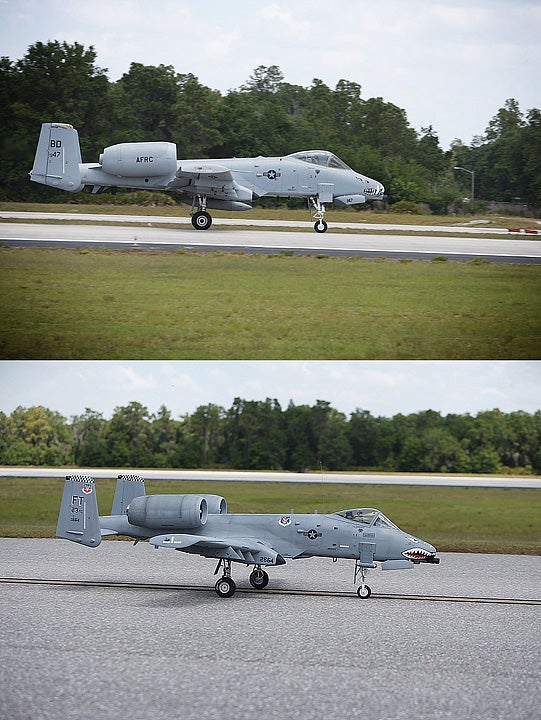
Last weekend, PopSci traveled to Lakeland, Florida, to watch Mike Selby’s 5.5-to-1 scale model A-10 Warthog—star of our recent feature story— compete in Top Gun, an invitation-only event that is effectively the world championship of experimental radio-controlled aircraft.
Selby’s team includes pilot Raymond Johns, an Air Force test pilot and three-star general; pit crew/logistician Bill Davidson, who is the Administrative Assistant to the Secretary of the US Air Force; and Bangkok jet-engine builder Pornchai “Hard Porn” Saechour.
The A-10—built from scratch over 500 hours in Selby’s 1,500-square-foot workshop in Thailand—would be the first Warthog scale model to fly in competition. It arrived in Lakeland as the odds-on favorite to win the Team class. But the competition looked tough at Top Gun’s 20th anniversary event, which featured an amazing array of highly detailed, large aircraft models, built by the most sophisticated and dedicated RC-jet makers in the world. Up to 10,000 spectators—many of whom had learned about the event through PopSci‘s coverage–were on hand to see about 120 airplanes. The models included everything from WWI Fokkers to WWII Zeros to latest generation fighter jets and many of the classics of civil aviation—the most stunning collection of remote-control aircraft in the world.
In the team event, competitors replicate a particular aircraft, rather than a type. Selby chose to replicate an A-10 with the shark mouth/flying tiger color scheme that was built in the late 1980s and flown by Capt. P.J. Johnson in the first Iraq war, in 1991. Johnson, who is now a colonel with an office down the hallway from Johns, received the Air Force Cross after his plane’s wing was partially blown off in combat. Miraculously, he managed to bring it down safely.
A real-life A-10 Warthog weighs in at 30,000 lbs, and its engines produce 18,000 pounds of thrust. True to its nickname, the fighter isn’t among the sleekest-looking things in the air. Rather, it’s built to take—and inflict—a beating. Within a cockpit protected by a titanium “bathtub,” a pilot can drop up to eight tons of bombs or fire a 30mm Gatling gun at 4,000 rounds a minute. With both wings attached, Selby’s 5.5-to-1 scale model—constructed mainly of fiberglass, Kevlar, carbon, and aircraft-grade aluminum—stretches 10 feet across and weighs about 65 lbs dry. That made it among the largest models competing at Top Gun 2008.
The Top Gun competition was broken into two parts: a “static” contest, in which a team of judges meticulously checked the A-10’s lines, markings and weathering against photos and schematics of the actual plane, right down to the scratches and dings, and a four-round “flight” competition.
During Friday’s static event, the A-10 apparently stunned the judges as much as the crowd, receiving the highest score in Top Gun history. Selby’s team also took home trophies for Best Military Aircraft, Best Jet, Best Cockpit Interior, and the coveted Critics’ Choice Award, bestowed by the judges and a panel of “guest artists” for exceptional craftsmanship.
Saturday’s flight competition opened with beautiful blue skies and an unprecedented surprise: As the National Anthem climaxed, Colonel P.J. Johnson stunned the crowd with a fly-by in a real A-10, which he landed on a runway parallel to the models amidst crowds of autograph-seekers and well-wishers.
The winds had picked up by the time Selby’s team started the A-10’s engines. Pilot Johns taxied the plane onto the runway, turned it around, and throttled up, and the jet screamed down the runway and bounded into the air. On its first competition flight, the A-10 performed flawlessly. Johns had his own surprise ready for the crowd as he came in for the bombing run, following the bomb drop with a burst of blank-fire from the A-10’s working Gatling gun. As the A-10 landed a cheer went up from the crowd; as it pulled off the runway, photographers swarmed around it like paparazzi at a royal wedding.
Among the other crowd- and judge-pleasers was David Shulman and Graeme Mears’s F16C Thunderbird which flew flawlessly through all four of its competition flights. In the A-10’s second competition flight, the landing gear failed to retract, the result of a pinhole that had developed in gear’s pneumatic system. The leak was easily fixed, but the setback proved difficult to overcome.
At the end of the day Sunday, the F16C had 194.712 points, compared to the A-10’s 193.858 points. The F-16C had won the Team Class by less than one point. “Had we not lost the points for the mechanical problem with the gear,” said Bill Davidson, “it could have gone either way. But we went home with eight trophies, and we’re extremely satisfied with our jet and our flying.”
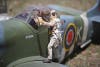
Ich bein Berliner
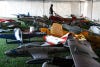
Planes at Rest
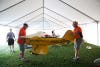
The Day Breaks
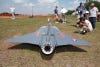
Laying in Wait
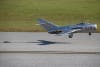
Take Off

Man in Command
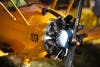
Devil in the . . .
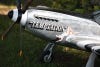
Up Close
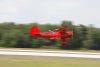
Freedom for a Mini Man
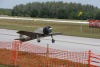
Perfection
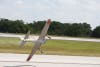
Perfection
Perfection
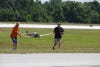
Perfection
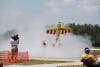
Keeping Cool
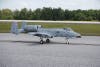
Model A-10
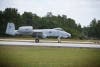
Real A-10
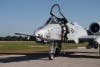
Stepping Out
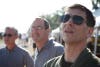
Meeting of the Minds
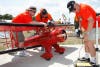
Make it Work
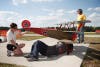
Work
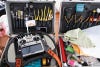
Tools of the Trade
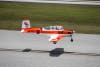
Landing
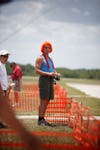
Pilots
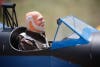
Mini Me
Fly By
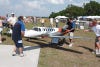
Tiny Careerists
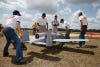
Last Minute
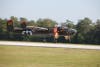
Smooth

Fandamonium
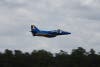
On High
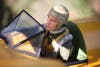
Scared Witless?
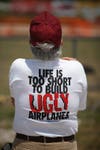
So Very True
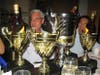
Leader of the Pack
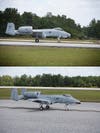
Real vs. Model