Converted manned aircraft with mounted sensor balls will imitate Predators and Reapers during military exercises
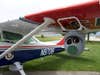
Surrogate Predator: A Cessna 182 wears the sensor ball of a Predator  Lon Carlson, L-3 Communications

A high demand for Predators and Reapers on the front lines has led the U.S. Air Force to take an unusual step: asking human pilots to mimic the drones for training purposes back in the States.

Cessna 182 aircraft have become converted "Surrogate Predators" with the installation of a "Predator ball" that typically serves as the surveillance and tracking eyes for drone operators. Such Predator balls give the manned Cessnas the ability to lock onto targets and track them.

"We're using a manned aircraft to simulate an unmanned aircraft," said CAP-U.S. Air Force Commander Col. Bill Ward. A group of 18 pilots from the Civil Air Patrol have volunteered for initial training to learn the same tactics and procedures of Predator operators on combat missions. All CAP pilots have prior military experience.

The retrained Cessna cadre will then take part in Green Flag military exercises, in which they play out hunter-killer scenarios by identifying targets and providing video to an Army or Marine brigade. The only difference between the Cessnas and the real thing is that pilots won't shoot Hellfire missiles themselves.

PopSci has previously examined how the Air Force wants to reinvent itself by training thousands of drone pilots overnight. Reaper and Predator drones have already launched countless strikes on enemy targets from up high, as seen in this exclusive PopSci gun camera footage narrated by a Predator instructor pilot.

Still, the manned Surrogate Predators hold at least one advantage over the real thing -- they probably won't escape the control of human handlers so easily based on an internal malfunction or communications glitch.

[via Aviation Weekly]

Want to read more articles on the military, aviation, and space? Subscribe to Popular Science today, for less than $1 per issue!

8 Comments

I read the headline and thought, I bet they could get Civil Air Patrol to help on that, then I saw the plane closer. What a cost effective way to adapt, Big Blue! That you sold the U.S. down the river on the tanker contract is real regular, though.

This is the ultimate in back seat piloting?

Go CAP! Always ready to help.

I agree. A good CAP cadet program would be to build kit drones and then craft a mobile flight center for airborne surveillance of fire, flood, and tornado emergency coordination. Looks like some good thinking is going on in USAF these days.

Ya, go CAP! ;)

The only thing is that the sensor ball might off set the center of gravity, and this could make the cessna go in circles, unless it gets balenced out, or made up for it some how! It would be better if it was mounted in under the belly of the aircraft!

P.S.: (I'm in CAP!) ;)

As am I. I did some research, and they put a ballast weight onto the wing to prevent center of gravity problems. Also, CAP has recently been approved to start limited use of these modified airraft in SAR operations.

good job Air Force!!

amazing, some good person got this idea through to some beurocrats tiny brain :)

go cap!!! im in cap and ii will tell my comander about the kit and fly itarround but what would be better is we use a lot smaller version of the ball so we could use them on raidio controled aircraft for monitering


June 2013: American Energy Independence

Five amazing, clean technologies that will set us free, in this month's energy-focused issue. Also: how to build a better bomb detector, the robotic toys that are raising your children, a human catapult, the world's smallest arcade, and much more.


Online Content Director: Suzanne LaBarre | Email
Senior Editor: Paul Adams | Email
Associate Editor: Dan Nosowitz | Email
Assistant Editor: Colin Lecher | Email
Assistant Editor: Rose Pastore | Email

Contributing Writers:
Rebecca Boyle | Email
Kelsey D. Atherton | Email
Francie Diep | Email
Shaunacy Ferro | Email

circ-top-header.gif
circ-cover.gif
bmxmag-ps