DARPA-funded nanotech drug automatically regulates its morphine dose on the battlefield
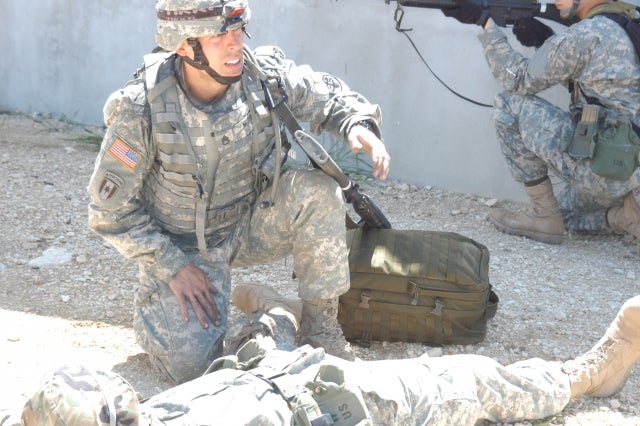
Safer Pain Relief Wounded soldiers could soon administer their own morphine without watchful medics U.S. Army

Medics still use morphine to relieve the pain of wounded soldiers on the modern battlefield, but have to watch out for morphine reducing breathing and blood pressure to dangerous levels. That may all change with a DARPA-backed combination drug that has successfully limited morphine delivery when it detects low blood oxygen levels.

The drug relies upon nanotech particles that carry both morphine and its antagonist, known as Naloxone. That creates a self-regulating feedback system where Naxolone only activates to suppress morphine when blood oxygen levels drop too low. The antagonist then goes inactive when oxygen blood levels return to normal, and allows more morphine to become available.

Such a drug could prove a boon for medics and individual soldiers to self-administer morphine using an auto-injector. It would provide for safer pain relief anywhere on the battlefield, even without the usual monitoring equipment available in hospitals. Medics currently must administer a short-acting drug to improve respiration and heart beat, but in small enough doses to allow morphine to continue its work.

Researchers at the University of Michigan in Ann Arbor had to screen several compounds to find a compound that would activate or inactivate Naloxone as needed. They finally came across one such drug which successfully passed laboratory tests that used human plasma.

Other nanotech has proven promising when it comes to highly controlled and specific drug delivery. But the future debut of this application could prove a particularly sweet day for science, not to mention those far out dreamers at the Pentagon's mad science lab.

Want to read more articles on the military, aviation, and space? Subscribe to Popular Science and enter to win $5,000!

5 Comments

This seems like a perfect opportunity to make a joke about Half-Life's HEV suit.

"Major fracture detected. Morphine administered."

We could see the end of opiod overdose as we know it. I like it.

@Twerve, high five :D

@twerv

With the different tech being developed (power assist exoskeleton, nano material suits, this) the HEV suit is coming close to reality.

You combine it with enhanced Lan warrior tech and you even have a fully functional HUD to go with it.

Now I want one :D

I love it when science make Sci-Fi real.

While this does help to deal with overdose related death, unless you want to knock them cold to death's door, then careful administration is still a must. If blood Oxy is going down, then they are already deeper than you likely want them. For most wounds, dosing will stop far short of this.


Download Our iPhone App

Stay up to date on the latest news of the future of science and technology from your iPhone with full articles, images and offline viewing


Follow Us On Twitter

Featuring every article from the magazine and website, plus links from around the Web. Also see our PopSci DIY feed


Become a Fan On Facebook

Share links with friends, comment on stories and more


December 2009: Best of What's New

In our December issue, Popular Science names the 100 best innovations of the year: bombproof wallpaper, self-parking cars, the fastest helicopter, and 97 more. Plus inventor profiles and videos.

Check out the best of what's new here.

Popular Science Photo Pool


Share your photos in the Pop Sci pool at www.flickr.com!
tags_sprite.png
POP_embeddedForm_cover_May09.jpg