HD Video From the Edge of Space:  BEAR
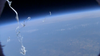
In the continuing saga of curious humans sending high-altitude balloons to the edge of space with cameras strapped to them, a group hailing from Edmonton have one-upped those thrifty MIT kids and their $150 space photo rig, albeit at greater expense: their Canon Vixia HD camcorder sent up on a hydrogen balloon has captured what is probably the world's first amateur HD video from near-space.


Before the balloon burst at an altitude of 107,145 feet (sending the camera on a nauseating free-fall), the camera dutifully recorded over four hours of HD footage, with the memory filling up just 53 seconds after the package parachuted to safety.

The craft, BEAR-4 (Balloon Experiments with Amateur Radio) pinged back the team via an APRS transmitter, which enabled them to tracks its GPS coordinates in real time; you can even see their car awaiting its landing toward the end of the video. Great stuff.

[BEAR via Gizmodo]

Want to read more articles on the military, aviation, and space? Subscribe to Popular Science today, for less than $1 per issue!

8 Comments

nicely done.

I don't understand where are all of the stars and satellite?

Stars would be blocked out by the sunlight even in space.

Yes your right, unless you release the ballon when the sun is on the opposite side of the earth. Then the stars and space debris would be incredibly visible. Am I rigth?

Ray C

Yes, the stars would very visible especially since you would be viewing them through very thin atmosphere. Space debris and satellites typically orbit around 220-300 miles above the Earth. This ballon reached an altitude of 107,000 feet which is approximately 32 miles above the Earth. Very high for a balloon, but still way to low for satellites to orbit.

Debris and satellites would still be at least 200 miles above this balloon, but if you were incredibly lucky you might be able to spy the Space Station or Hubble as a bright speck in the distance.

Correction to my previous comment: 107,000 feet is approximately 20 miles, not 32 miles. Sorry.

This is really cool. I only got to watch it in parts because my computer hates me, but it was interesting.

It's amazing. From it, we can see a totally different picture of space. http://www.amerisleep.com/


138 years of Popular Science at your fingertips.

Innovation Challenges


Popular Science+ For iPad

Each issue has been completely reimagined for your iPad. See our amazing new vision for magazines that goes far beyond the printed page


Download Our App

Stay up to date on the latest news of the future of science and technology from your iPhone or Android phone with full articles, images and offline viewing


Follow Us On Twitter

Featuring every article from the magazine and website, plus links from around the Web. Also see our PopSci DIY feed


February 2012: The Future of Fun

Science is reinventing play, from extreme sports to gamification to ridiculous roller coasters to the playgrounds of tomorrow, and this issue is chock full of fun. Also, on a less fun note: Did global warming destroy my hometown?


circ-top-header.gif
circ-cover.gif
bmxmag-ps