Rover to Retrace Apollo’s Footsteps
Sun-powered robot will examine lunar junk after four decades
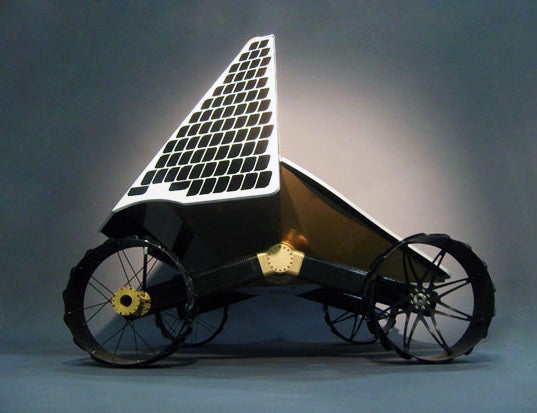
Boiling noons and cryogenic nights will prove two of the hells inflicted upon a sun-fueled rover when it retraces Neil Armstrong’s first steps across the moon in 2011, beaming home high-definition footage along the way.
The solar-powered robot, designed by Pittsburg-based Astrobotic Technology, is competing for Google’s Lunar X-Prize of $25 million. Victory or no, the rover will visit Apollo 11’s landing site along the desolate equator, where it intends to study the affects of a lunar environment upon materials the mission left behind. Understanding how four decades of radiation and bombardment by minute meteorites impact earthly technology could help space agencies like NASA plan for future moon expeditions, the company says.
A half-cone of solar cells powers the pyramid-shaped rover while a sky-facing radiator keeps temperatures in check. Composite structures of carbon-fiber tape and resin ensure strength and lightness, and a pair of vacuum-tested motors on each side of its four wheels turns a bicycle-like drive chain. To help the rover endure the bi-weekly cycles of extreme cold, the team is currently striving to develop special packaging for its lithium-ion batteries.
[via Inhabitat]

Solar Rover Side View
Solar Rover Illustration
Solar Rover and Sponsors
Solar Rover Top View
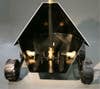
Solar Rover, Internal View
Solar Rover Technology
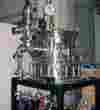
Solar Rover Vacuum Test