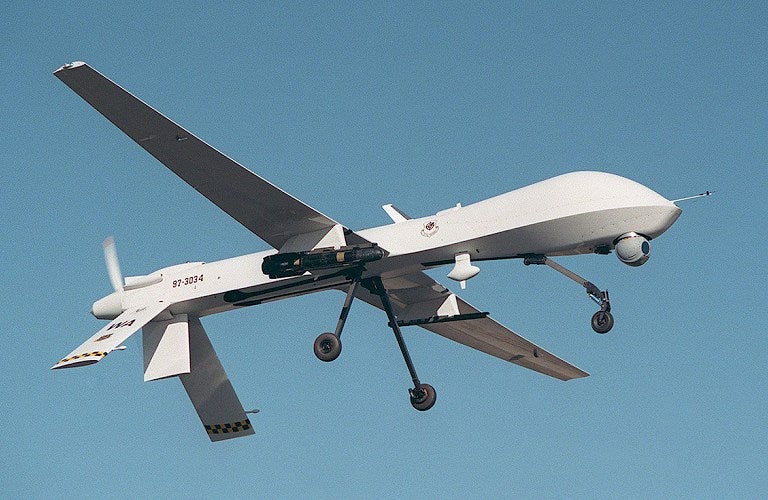
New information is coming to light about how the US military has been directing their bombing attacks by unmanned drone aircrafts via small microchip beacons. These microchips, planted by hand by spies around the homes or meeting places of Al-Qaeda agents, send signals identifying targets for destruction, much like laser designators for smart bombs.
One of the most difficult aspects in the war being conducted in Pakistan is obtaining accurate, real-time intelligence, accessing the region, and ultimately attacking the threat. However, in the remote and mountainous regions of Waziristan and the Swat Valley in Pakistan, populated by factious tribes that may or may not be housing Al-Qaeda operatives, this has proven difficult. Over the past several years the US military has launched many missile attacks by the drone aircrafts, which have solved the problem of the access and the attack. The microchips, called “parthai” by locals, meaning “metal device” in Pashto, have solved the issue of intelligence. The chips are placed by local tribesmen, who are paid by the CIA and who have a more intimate knowledge of the community and targets.
The chips have certainly caused a commotion in the region. Locals are reportedly trying to avoid Taliban fighters so as not to be near future attacks. The Taliban has also started cracking down on people they feel may be chip-carrying spies. A video released by the Taliban in April shows the killing of a man who claims to have been paid by the CIA for planting a chip. The video may be in response to the fact that the drones have supposedly claimed the lives of nine of the top twenty Al-Qaeda leaders in the past 18 months.
Stay up to date on the latest news of the future of science and technology from your iPhone with full articles, images and offline viewing
Featuring every article from the magazine and website, plus links from around the Web. Also see our PopSci DIY feed
Share links with friends, comment on stories and more
In our December issue, Popular Science names the 100 best innovations of the year: bombproof wallpaper, self-parking cars, the fastest helicopter, and 97 more. Plus inventor profiles and videos.
Check out the best of what's new here.
relaying on stupid tribe's man who sell there mothers and sisters for less than 100 bucks for this job is totaly stupid they can just put it any where for the money if they had some sense they wold have placed in some nato camps for revenage.
Ammar, your statements rely on the assumption that everyone in their community is supportive of the Al-Qaeda. Somehow I doubt an outside organization seizing control from local tribal communities will garner universal support.
from coral gables, fl
Ya Ammar you are sounding crazy. I mean what you say about tribesmen is just completely ignorant - most of those tribesmen probably know a lot more about the world than you'll ever know in your shallow facade of a life.
When I compare the dangers of this kind of chip in a propelled device (say a compressed gas powered dart gun) verses holding a lazer to paint a target, and I am very impressed at the life-saving potential.
From an ethical standpoint, however, there is an issue with the "tribesman" issue stated so crudely by previous posters. In giving them this device, we are, in essence, giving them the weapon that will be discharged at that target. If this is not a person whom morally or legally we would give a missile, then they should not be given this device. Obviously, planting it in a NATO camp would result in the UAV not firing on the target. A high civilian risk, PR nightmare, false target, however, might be targeted.
For many, this likely feels a lot like recruiting our own exsplosive vest wearing locals to bomb enemy targets for us. Not a true slippery slope, but still uncomfortable.
Scary technology...if you're a bad guy. FYI, it's "home in" not "hone in." You hone your knife blade and your skills. You home in on a target.
great use of technology. Once the beacon is planted, it reduces the chance of the friendly being in harms way holding a laser to target the drone.
The biggest vulnerability would be the fact that the beacon could be moved if discovered.
http://beecherbowers.com
Why would the pilot or weapons operator for the UAV pull the trigger if the chip was somewhere on a NATO base????
These UAVs are not autonomous, mindless killing machines. They've got human operators who would know if they were looking at video of a NATO base versus a Taliban base camp. Hello...they've got CAMERAS to look at the target...duh!
laurenra7;
Actually, it's both. I thought the same as you, but I looked it up. :)
As for targeting, remember that the drones have video, too, so it's unlikely that they would hit friendly targets even if someone "tagged" them.