Megapixels!
In each issue, PopSci features the month's most astounding photos in the magazine's opening pages. Here, see the most recent additions to our collection of the best sci-tech images around.
Click “View Photos” to launch the gallery.
![This millipede [magnified 7.5 times] is the leggiest of 12 specimens plucked from the California soil.](https://www.popsci.com/uploads/2019/03/18/ESLRKW66ZWWR6K4RW2MT3HKVEA.jpg?auto=webp&optimize=high&width=100)
The Macro View
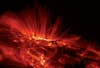
Sun Burn
New satellites will help us predict where and when Spewing billions of tons of plasma millions of miles into space, the sun´s eruptions, like this explosion captured by NASA´s SOHO probe, can be strikingly beautiful. But when they result in what scientists call coronal mass ejections-think seething bubbles of flung-off plasma-they can short-circuit satellites and trigger powerful magnetic shock waves that result in electrical power failures on Earth. NASA´s $540-million STEREO mission, whose two satellites were scheduled to launch in late August, is designed to capture 3-D images that identify Earth-bound solar storms days before their effects reach us. Positioned at points ahead of and behind the Earth in its orbit, the satellites will work like a pair of eyes to more precisely measure a storm´s size and location-and let us identify it in time to take action and prevent damage.
The First Wave