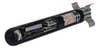
Well, 2011 is almost over. And it’s been a great year in science and tech, as our annual Best of What’s New awards have shown–from portable destroyers to portable 3-D TVs, from revolutions in private aerospace to revolutions in digital photography, this year’s awards are chock full of amazing stuff. So, thoughtful folk that we are, we’ve combined all the winners into an easy-to-navigate roundup. This is…the Best of What’s New.
Check out the best, most innovative, and most futuristic products of 2011.
Auto Tech: Ecomotors Opoc Engine
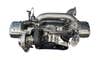
Three decades ago, Volkswagen engineer Peter Hofbauer found himself staring at a Beetle engine’s cylinder heada€”that awkward slab of metal sitting on the combustion chambera€”and wondering, Can’t we just replace that thing with more pistons? The answer turned out to be yes, so he eventually started a company, EcoMotors, to do just that. The company’s product is the opposed-piston, opposed-cylinder engine: OPOC. Each OPOC engine consists of two horizontal cylinders, each contain- ing two opposite-facing pistons. Twice the pistons per cylinder equals almost twice the power. OPOC weighs 30 percent less than the most efficient turbodiesel engines, and it has the highest thermal efficiency of any automotive engine in the world, converting as much as 50 percent of the energy in gasoline or diesel fuel into propulsion. A small OPOC-powered car could approach 100 mpg. In 2010, Bill Gates and venture capitalist Vinod Khosla invested $23 million in EcoMotors, and this year the company signed development deals with a Chinese automotive supplier and the commercial truck manufacturer Navistar. Next it will demo a 1.2-liter, 160-horsepower OPOC in a compact sedan. Hofbauer says the engine is five to seven years away from commercialization, which would put it on the market well before federal fuel-economy standards rise to 54.5 mpg. Jump to another Best of What’s New category:
Auto Tech: Mazda Skyactiv Technology
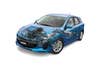
Before building hybrids and plug-ins, Mazda has decided to improve the fuel economy of its conventional gas-powered cars. With the Skyactiv initiative, the company aims to make every car in its fleet 30 percent more fuel-efficient by 2015. Starting with the 2012 Mazda3, fuel-saving improvements include a new, low-friction six-speed transmission and the highest-compression gas engine outside of a high-performance sports cara€”a new four-cylinder that gets 40 mpg and generates 155 horsepower. Next up is the 2013 CX-5, which will use a Skyactiv engine and transmission in addition to a new lightweight body that will cut the weight of the crossover SUV by 8 percent. Jump to the beginning of the Auto Tech section. Jump to another Best of What’s New category:
Auto Tech: Ferrari FF
All-wheel drive is helpful on slick surfaces, but it can sap a car’s performance. The 4RM system on the new 208mph, 650-horsepower Ferrari FF is the first to employ two separate, electronically controlled front- and rear-wheel-drive units, which eliminates the heavy secondary driveshaft, thereby reducing weight and allowing the FF to drive like a true sports car. Normally the rear wheels do the driving, but when the car’s predictive algorithms sense that the rear wheels are about to slide, it sends a fraction of the 6.3-liter V12 engine’s power to the front, keeping this rarity (only 800 were made this year) out of the body shop. $295,000 Jump to the beginning of the Auto Tech section. Jump to another Best of What’s New category:
Auto Tech: Audi Connect
The Audi A7 is the world’s first fully Web-connected car. A built-in cellular data connection allows drivers to pull high-resolution 3-D aerial images from Google Maps into the navigation screen, dispatching with current cartoonish maps. Using voice commands or controls on the center console, drivers can also search phone numbers, weather maps, real-time gas prices from nearby stations, or Google acoffee shopa to look for a spot in the neighborhood. For safety reasons, drivers can’t pull up fantasy-football scores at a stoplightabut because the A7 generates a Wi-Fi signal, any passenger with a laptop can check them for you. Jump to the beginning of the Auto Tech section. Jump to another Best of What’s New category:
Auto Tech: Brammo Empulse
With a 100mph top speed and 100 miles of driving range, the Brammo Empulse 10.0 is the fastest and farthest-driving consumer electric motorcycle ever made. The speed comes from the 57-horsepower motor; the range comes from the hefty 10-kilowatt-hour lithium-ion battery. The Empulse 10.0 recharges in 10 hours from a 110-volt household outlet. Brammo also sells two less-expensive variations on this bikea€”the 6.0 and the 8.0, which come with smaller battery packs. $14,000 Jump to the beginning of the Auto Tech section. Jump to another Best of What’s New category:
Auto Tech: Porsche Cayenne S Hybrid
The hybrid version of Porsche’s popular Cayenne SUV proves that performance and efficiency aren’t mutually exclusive. Powered by a 333-horsepower supercharged V6 and a 47-horsepower electric motor mated to an eight-speed transmission, the Cayenne is as nearly as fast as the V8 version, yet it delivers 20 mpg in the city and 24 mpg on the highwaya€”up from 13 mpg city and 19 mpg highway. It also includes a smart feature that gasoline versions do not: On a downhill, the Cayenne shuts off the engine and decouples it from the transmission, so the car coasts fuel-free at highway speeds while recharging the battery. $69,000 Jump to the beginning of the Auto Tech section. Jump to another Best of What’s New category:
Auto Tech: McLaren MP4-12C
In 1992, when the Formula Onea€”focused engineering shop McLaren Automotive built the first street-legal carbon-fiber supercar, the body took 3,000 hours to mold and the car cost $1 million. The new McLaren MP4-12C took only four hours to mold and costs $229,000. The high cost of carbon fiber is largely a function of the molding process, which occurs in expensive-to-run, power-sucking ovens. By streamlining that process, McLaren dramatically reduced its costsa€”and that has implications beyond making supercars less expensive. Cutting the cost of carbon fiber even further could make the material economical for use in mass-market cars, improving performance and fuel efficiency for people other than just exotic-car collectors. Jump to the beginning of the Auto Tech section. Jump to another Best of What’s New category:
Auto Tech: Ford Focus
The 2012 Ford Focus isn’t just the most elegantly designed and best-performing small car to come out of Detroit in decades; it also represents a new way forward for the American auto industry. This year, Ford finished retooling a former SUV factory in Detroit so workers can produce both gas- and battery-powered versions of the Focusa€”along with, starting next year, hybrid and plug-in versions of the Prius-fighting C-Maxa€”all on the same assembly line. Like the gas-powered Focus, the electric version will one-up its competition, using a 6.6-kilowatt onboard charger to fill its lithium-ion battery twice as fast as the Nissan Leaf. Jump to the beginning of the Auto Tech section. Jump to another Best of What’s New category:
Auto Tech: BMW Twinpower Turbo Four-Cylinder
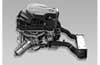
Prompted by high oil prices and tight new fuel-economy regulations, automakers are replacing six-cylinder engines with more-economical but less-powerful four-cylinders throughout their lineups. BMW resisted this trend until it developed a four-cylinder that actually outperforms its six. A pricey twin-scroll turbocharger and high-pressure electronic fuel injectors increase compression and wring more power from each drop of fuel. As a result, the TwinPower four-cylinder produces 240 horsepower and 260 pound-feet of torquea€”40 pound-feet more than the 3.0-liter six it replacesa€”while consuming up to 23 percent less fuel. The engine first goes into the 2012 528i sedan and Z4 sDrive 28i convertible. Jump to the beginning of the Auto Tech section. Jump to another Best of What’s New category:
Auto Tech: Buick eAssist
Hybrids are expensive, which is why they still represent less than 3 percent of new cars sold. Buick helped remove that barrier by pricing the 2012 LaCrosse with e-Assist at the same level as the conventional V6-powered version. Primarily, e-Assist takes advantage of the dropping cost of lithium-ion batteries; the car’s tiny 0.5-kilowatt-hour battery is affordable but delivers a 25 percent boost in highway mileage, pushing this full-size sedan to 36 mpg. And instead of adding a large electric motor and complicated transmission to match, Buick opted for a cheaper, simpler option, replacing the alternator with a small electric motor. $29,960 Jump to the beginning of the Auto Tech section. Jump to another Best of What’s New category:
Auto Tech: Mercedes Spotlight
Most automotive night-vision systems, which spot pedestrians and then flash a warning on the car’s console, suffer from a metaphorical blind spot: Drivers are safest when looking at the road, not a screen. The Mercedes Spotlight function, part of the optional Night View Assist Plus system, solves the puzzle. A windshield-mounted night-vision camera continuously scans the road up to 260 feet ahead for human shapes. If the computer detects a potential pedestrian, it signals the high beams to flash at the object four times and triggers an alarm to warn a driver of the hazard ahead. Mercedes says the system detects pedestrians 1.3 seconds earlier than a driver can. Jump to the beginning of the Auto Tech section. Jump to another Best of What’s New category:
Aviation and Space: SpaceX Dragon
The end of the shuttle program left the U.S. with two options for getting to space: paying for a seat on a foreign rocket or hiring a ride from a commercial space company. The commercial option became viable last December, when the SpaceX Dragon became the first privately built vehicle to orbit the Earth and return home safely. During Dragon’s unmanned flight, the 13,700-pound reusable capsule rode on top of a SpaceX-built Falcon 9 rocket from Kennedy Space Center into orbit and circled the planet twice before splashing down 500 miles off the Pacific coast of Mexico. If subsequent test flights succeed, NASA could begin using the Dragona€”Falcon 9 combination to deliver food and equipment to the International Space Station next year. Eventually, astronauts could fly on Dragon to the moon, Mars or beyonda€”SpaceX designed the capsule to accommodate seven passengers, and a planned upgrade will allow it to land on any rocky plane. Jump to another Best of What’s New category:
Aviation and Space: NASA Mars Science Laboratory Curiosity
At twice the length and five times the weight of any of its predecessors, Curiosity is the brawniest and best-equipped rover ever sent to another planet. A plutonium-powered thermoelectric generator will give the SUV-size six-wheeler an anticipated life span of some 700 Earth-days, about eight times as long as its solar-powered predecessors were expected to last. Curiosity will cover up to 660 rugged feet a day, carrying a payload of scientific instruments 10 times as heavy as that of previous rovers. Among other things, it will be able to vaporize rocks using a laser, analyze the resulting gases, and bring the most interesting specimens on board for further study. Curiosity is set to launch in November and to arrive next August in the Gale Crater. Jump to the beginning of the Aviation & Space section. Jump to another Best of What’s New category:
Aviation and Space: Northrop Grumman X-47
Today’s arobot planesa are pilotless, not autonomous; a joystick-equipped human on the ground still does the flying. Northrop Grumman’s X-47B will be the first aircraft to handle all maneuvers, including aerial refuelings and aircraft-carrier landings, with no human assistance. The tailless, fighter-sized jet, which flew for the first time in February, makes decisions using 3.4 million lines of onboard code, which the company refined using 10,000 hours of simulated flight time. The X-47B is scheduled to demonstrate takeoffs and landings from an aircraft-carrier deck by 2013. Jump to the beginning of the Aviation & Space section. Jump to another Best of What’s New category:
Aviation and Space: NASA Dawn
In July, NASA’s Dawn probe became the first spacecraft to orbit an object in the asteroid belt. Its target: Vesta, the second-most-massive asteroid in the solar system, a rock big enough that it’s home to a mountain three times as high as Everest. Since 2007 the craft had traveled 1.7 billion miles, propelled by a trickle of charged xenon atoms from an ion-propulsion engine. Now Dawn is gathering information that will help NASA decide whether to one day send humans to asteroids for exploration or mining. Jump to the beginning of the Aviation & Space section. Jump to another Best of What’s New category:
Aviation and Space: U.S. Air Force/Mav6 Blue Devil Airship
The drones watching over Afghanistan and Pakistan overwhelm human analysts with terabytes of video, radar, infrared and hyperspectral data. Ideally, aircraft gathering raw information over the battlefield would filter, tag, organize, and route. that data for quick, efficient analysis on the ground. That’s what Blue Devil Block II is designed to do. The 370-foot airship, which can hover at 20,000 feet for five days, functions as a network hub for drones and ground sensors and as a surveillance craft in its own right. Built for the Air Force by the defense start-up Mav6, the blimp carries a 2,000-core supercomputer. It is scheduled to fly in Afghanistan next year. Jump to the beginning of the Aviation & Space section. Jump to another Best of What’s New category:
Aviation and Space: Pipistrel Taurus G4
This year the Slovenian company Pipistrel put the world’s first four-seat electric plane in the air. Built for competition in the 2011 NASA/Google Green Flight Challenge, the aircraft is composed of two smaller Pipistrel Taurus G2 gliders connected by a horizontal spar. With a 450-pound lithium-ion battery pack, a six-foot twin-blade propeller and a 75-foot wingspan, the G4 can take off under its own power and cruise 200 miles on a single charge. Jump to the beginning of the Aviation & Space section. Jump to another Best of What’s New category:
Aviation and Space: Bombardier Global 8,000
With a range of 9,000 miles, roughly the distance from New York to Hong Kong, the Bombardier Global 8,000 flies farther than any other private jeta€”1,000 miles more than its closest competitor. General Electric developed engines for the craft that use carbon-fiber casing and other weight-saving tricks to improve efficiency by 8 percent over previous designs. The plane’s design includes a thinner, lighter swept-wing and cuts fuel use by another 6 percent. Jump to the beginning of the Aviation & Space section. Jump to another Best of What’s New category:
Aviation and Space: Astro Space Center RadioAstron
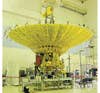
The Russian space agency’s RadioAstron satellite, launched in July, is the final piece of the biggest radio-telescope array ever assembled. The satellite’s 33-foot carbon-fiber dish antenna is small, but it connects it to a worldwide network of terrestrial telescopes. Using a technique called very long baseline interferometry, the satellite completes a virtual dish that is 30 times the size of Earth and has a resolution 10,000 times that of Hubble. Scientists will use it to study dark matter and black holes, and maybe even to determine whether the center of our galaxy contains a wormhole. Jump to the beginning of the Aviation & Space section. Jump to another Best of What’s New category:
Aviation and Space: NASA/Johns Hopkins University Applied Physics Lab Messenger
In March, NASA’s Messenger probe became the first spacecraft to enter Mercury’s orbit. Using seven scientific instruments, including a spectrometer and a laser altimeter, the probe is measuring the composition of the atmosphere, mapping the planet’s surface, and helping scientists better understand Mercury’s unusual density, active magnetic field and ultra-thin atmosphere. Almost immediately on arrival, the probe sent back the first close-up photos taken of the planet since Mariner 10 passed by en route to the sun in 1975. Since its launch in 2004, Messenger has traveled a circuitous 5.47 billion miles, performing multiple flybys of Earth, Venus and its destination planet. Jump to the beginning of the Aviation & Space section. Jump to another Best of What’s New category:
Aviation and Space: Carnegie Mellon Astrobotic Red Rover
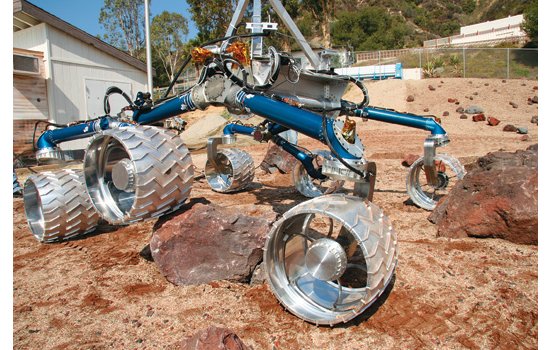
To win the $20-million Google Lunar X Prize, a team must build a rover, land it on the moon, and send footage back to Earth. Team Astrobotic, headed by Carnegie Mellon professor William aReda Whittaker, took the lead this year over 26 competitors when its solar-powered rover completed an unassisted 0.6-mile simulated lunar traverse at the university’s proving ground. The 173-pound rover is designed to take 3-D, high-definition images of the moon’s surfaceaand in February the team signed a deal with SpaceX to send it to the moon to do just that. Jump to the beginning of the Aviation & Space section. Jump to another Best of What’s New category:
Computing: Apple OS X
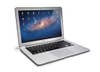
A deft merger of features in OS X Lion, the latest iteration of Apple’s desktop operating system, is beginning to close the gap between computers and gadgets. As mobile devices get faster, they become more capable of taking on tasks normally left to computers, such as photo editing and high-def streaming. Yet the groups remain divided by their operating systemsa€”unless that OS is Lion. Through a trackpad or multitouch mouse, a Lion user navigates a desktop as if it were an iPada€”with gestures. Beyond pinching-to-zoom, swiping sideways moves between programs, and reversed scrolling mimics mobile (flick up to go down, and pull down to go up). The OS and much of its software are no longer loaded from CD-ROMs but downloaded from a central app store. All told, OS X Lion is the first step toward a computing landscape in which one interface can serve all purposes. $30 Jump to another Best of What’s New category:
Computing: Intel Sandy Bridge
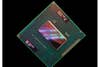
Most processor upgrades are incremental, touting small speed boosts and slight bumps to a computer’s battery life. The new generation of Intel chips takes a more substantial leap. The iSeries chips, code-named Sandy Bridge, run at up to twice the speed of their predecessors and clock up to 10 hours of battery life. Intel combined the CPU and the graphics processor onto a single 0.6-inch piece of silicon. Such a formation reduces data’s travel time from component to component by replacing lengths of wire with nearly a billion close-knit microscopic transistors. Laptops from $500 Jump to the beginning of the Computing section. Jump to another Best of What’s New category:
Computing: Intel Thunderbolt
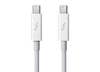
Thunderbolt’s wires are the first to combine the languages that handle data and display in one channel, making it faster and more versatile than any other connection. Because Thunderbolt sends data in two directions at 10 gigabits per second, users could copy a one-terabyte hard drive in three hours while still piping a movie to a monitor. And because it can talk to any device, users can link a series of peripheralsa€”think a monitor, printer and hard drivea€”to a single USB-sized plug. Thunderbolt ports are already on all Apple laptops, and peripherals are expected from Canon and other companies. Jump to the beginning of the Computing section. Jump to another Best of What’s New category:
Computing: Toshiba Qosmio F755-3D290
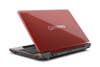
Glasses-free 3-D screens allow viewers to ditch the dorky shades, but with a trade-off: Images are sharp only in a narrow sweet spot; move, and the picture distorts. The Qosmio F755 adjusts its sweet spot as the viewer shifts. The 15.6-inch LCD directs left and right images to the corresponding eyes using a thinly striped overlay, known as a parallax barrier. A built-in webcam tracks the viewer’s eyes and tells the graphics processor to shift the barrier microscopically to match any ticks in head position. $1,700 Jump to the beginning of the Computing section. Jump to another Best of What’s New category:
Computing: Memjet Technologies
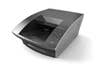
A Memjet printer cranks out photo-quality pages at four times the rate of the average laser model and much more quickly than your standard inkjet. The nine-inch fixed print head covers the width of a letter-size sheet of paper. As the paper passes underneath, 70,400 nozzlesa€”17 times as many as in an inkjeta€”deposit 774 million dots of ink per second. Although the technology was introduced in 2009, this year Lenovo launched the first consumer Memjet printer in China, and a handful of other companies, including LG, have licensed the design to use in photo printers in the next year. From $600 (est.) Jump to the beginning of the Computing section. Jump to another Best of What’s New category:
Computing: Seagate GoFlex Satellite
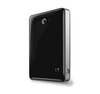
The run-of-the-mill external hard drive isn’t particularly road-trip-friendlya€”it doesn’t work without a computer and can’t pipe movies to more than one person at a time. The 500-gigabyte GoFlex Satellite, on the other hand, facilitates mobile movie watching. An internal Wi-Fi radio broadcasts a hotspot that can serve up to three devices (iPads, smartphones, laptops) through a dedicated app or a Web browser. The drive accesses data quickly enough for each user to stream his own high-def movie, and an internal battery provides five hours of untethered viewing time. $200 Jump to the beginning of the Computing section. Jump to another Best of What’s New category:
Computing: iTwin
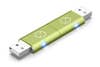
When it comes to the most personal files, it can be hard to trust the cloud. The iTwin USB dongle provides secure access to a computer’s hard drive from any machine with a Web connection. Users plug half of the iTwin into a primary computer and set a password. Connecting the other half to another machine opens a direct link between the two. As files move between the pair, they are encrypted in 256-bit AES, the same standard used for military documents. If either half goes missing, both can be remotely deactivated. $100 Jump to the beginning of the Computing section. Jump to another Best of What’s New category:
Computing: PrintDreams PrintBrush 4×6
The handheld PrintBrush prints 4×6 images onto nearly any material, be it wood, fabric or paper. Users hold the 8.8-ounce device over the surface and slowly swipe it back and forth, while sensors on the bottom reflect infrared beams off the surface. A processor uses the infrared data to determine the speed and direction of the nozzle movement and to keep track of which pixels have already been printed so that each dot lands in the right spot. $200 Jump to the beginning of the Computing section. Jump to another Best of What’s New category:
Engineering: Versabar VB10000
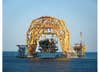
Salvaging a downed oil platform takes months, as a team of divers cuts apart the rig and a derrick hauls each piece to the surface. The VB10000 can remove an entire rig in a few hours, for a quarter of the price. Last fall, Versabar‘s $100-million monster completed its first lift off the coast of Louisiana. Divers connected hooks to the platform trusses, cut the platform legs away, and four hoists picked the whole thing up. About as wide as a football field and as tall as a 25-story building, the VB10000 is desperately neededa€”U.S. regulators have identified 1,800 rigs that must be removed within 10 years. Read more about the Versabar and the company’s founder, Jon Khachaturian, in our profile. Jump to another Best of What’s New category:
Engineering: Knickerbocker Bridge
The 540-foot Knickerbocker Bridge in Boothbay, Maine, is the longest fiber-reinforced bridge ever constructed. Its lightweight hybrid-composite beams, designed by John Hillman of the HC Bridge Company and built by Harbor Technologies, are made of a corrosion-resistant fiber-reinforced polymer shell filled with reinforced concrete. The shell is one third the weight of steel and one tenth the weight of concrete, allowing for quicker construction (it takes just one backhoe to place the beams), and each beam lasts 100 years longer than ordinary concrete and steel, at a similar cost. Jump to the beginning of the Engineering section. Jump to another Best of What’s New category:
Engineering: 1500SJ Ultra Boom
The 1500SJ, the tallest self-propelled aerial lift, replaces custom-installed, permit-mandatory cranes. A driver can park the 1500SJ in front of a 15-story building, climb into the basket, and lift 1,000 pounds of material to the roof. It’s just over eight feet long when retracted, yet it has an 80-foot horizontal span and can reach anything within a 2.1-million-cubic-foot envelope. In an increasingly urban world, this is the tool that will get windows cleaned, pianos delivered, and roof gardens installed. Jump to the beginning of the Engineering section. Jump to another Best of What’s New category:
Engineering: Zenith Towers
Residents of Busan, South Korea, clamor for the status of living in high-rise condos even though they complain of meolmi (motion sickness) when typhoons strike each year. The three Zenith towers top out at 988 feet, but their wide stance and butterfly-shaped core walls shrug off blasts from storms over the China Sea. Engineers subjected 1:400-scale models of the trio to automotive-style wind-tunnel testing based on 30 years of weather data, and the architects designed smooth and rounded faces to cut through sustained winds of 100 mph, so the building doesn’t whistle, sway, or shake in that nauseating, you’re-about-to-die sort of way. Jump to the beginning of the Engineering section. Jump to another Best of What’s New category:
Engineering: Gotthard Base Tunnel
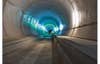
The Swiss have solved one of Europe’s great problems: The Alps make shipping freight expensive. A decade ago, miners began digging outward from two 2,600-foot vertical shafts in Sedrun, Switzerland. They’ve since moved 31 million tons of rock to connect Italy to Germany via high-speed rail through the world’s longest train tunnel, 35.4 miles long. Manufacturer Herrenknecht built four 3,000-ton boring machines for the project, and after one of them encountered a zone of dangerous soft rock, crews began using a unique system of deformable steel rings to hold the tunnel open. The Gotthard will double freight capacity through one of Europe’s most vital trade corridors and will cut an hour from the four-hour trip between Zurich and Milan. Jump to the beginning of the Engineering section. Jump to another Best of What’s New category:
Engineering: Inner Harbor Navigation Canal Surge Barrier
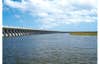
Built in the soft mud of Lake Borgne, a lagoon off the Louisiana coast, the Inner Harbor Navigation Canal surge barrier is the nation’s largest storm wall. It’s 1.8 miles long, made of 144-foot steel-reinforced concrete piles 12 stories deep, and extends 24 feet above the water at high tide. Shaw Group started construction in 2009 (while Tetra Tech INCA and Gerwick were still designing it) in order to deliver the IHNC barrier ahead of the 2011 hurricane season. Expected to protect New Orleans from a Katrina-size 100-year storm, the barrier should survive even if a larger storm manages to get over the top. Jump to the beginning of the Engineering section. Jump to another Best of What’s New category:
Engineering: East Span, San Francisco-Oakland Bay Bridge
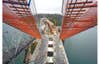
The 75-year-old Bay Bridge is still in daily use by 280,000 commuters even though a section of its upper deck fell to the lower during the 1989 earthquake. But the east span will soon be replaced by the world’s longest single-tower, self-anchored suspension bridge. Crews raised 16 pieces, some weighing 1,000 tons, to build the 525-foot tower. Now teams are draping a single, mile-long steel cable made of more than 17,000 wires across the 2,047-foot span. Replaceable steel beams between the tower’s four legs can absorb the energy of an earthquake, and drivers will have open views of the San Francisco Bay from five lanes. Total cost: $6.3 billion. Jump to the beginning of the Engineering section. Jump to another Best of What’s New category:
Engineering: Simplicio Hydroelectric Complex
Rio needs 30 percent more power for the upcoming Summer Olympics and World Cup. Hydroelectricity supplies 90 percent of Brazil’s fledgling 1,500-mile grid, but tapping the city’s nearest source of water would have required building a dam that would have flooded a city of 130,000. Instead, the state utility created the world’s largest construction project. It rerouted 780 billion gallons of water through a 15-mile landscape of seven mountains and 13 man-made channels. Jump to the beginning of the Engineering section. Jump to another Best of What’s New category:
Gadgets: Lytro Light-Field Cameras
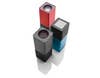
Digital cameras have consistently and dramatically improved since they first went on sale in the early ’90s, thanks largely to the introduction of ever smaller, ever more-powerful sensors and processors. But those changes have been incremental compared with the leap taken in Lytro’s light-field camera. Lytro reverses how we take pictures, moving the act of focusing from pre-shutter-click to post-. Using an array of micro lenses between its primary 8x zoom lens and its image sensor, the camera fractures shots into thousands of discrete light paths, and the sensor saves the data in a single light-field picture (.LFP) file. Photographers open files in Lytro’s software to make any number of previously impossible edits. Most immediately useful is the ability to move the focal point, from as close as 3.5 inches all the way to infinity. Users can also create moving images that shift the focus from point to point or select a parallax option, which pulls two askew paths and converts images to 3-D. Decide on a final shot, and the software saves the 12-megabyte LFP file as a three-megapixel JPEG. Jump to another Best of What’s New category:
Gadgets: Eye-Fi Direct Mode
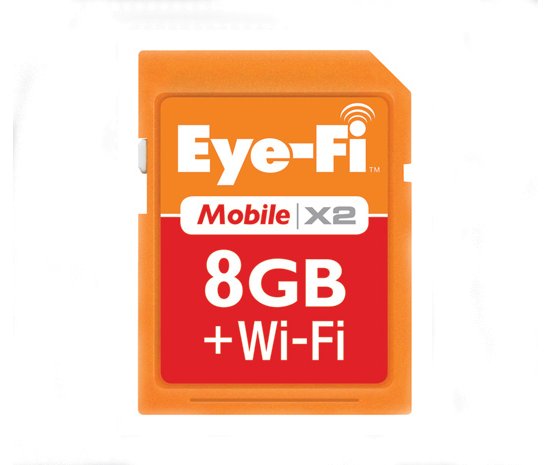
Until now, using an Eye-Fi SD card to share photos and video from a camera on the Web was impossible without a Wi-Fi network. With the new X2-series cards, users can upload and e-mail shots anywhere there’s cell service. The cards establish a secure, wireless device-to-device connection between any digital camera and a supported Android or iOS handset. Photographers use a dedicated app to access the photos on the card and download them to their phone to upload to Facebook or share over e-mail. Cards from $80 Jump to the beginning of the Gadgets section. Jump to another Best of What’s New category:
Gadgets: Verizon Wireless 4G LTE
Verizon’s Long-Term Evolution (LTE) network already reaches half the country with towers that transmit data 10 times as fast as other cellular systems. The network has sufficient bandwidth to transmit large packets of data in solid chunks on pathways dedicated to specific types of informationadata has its own alane,a and so on. For consumers, this means that starting a video stream on any LTE-ready phone or modem takes half the time of most 3G networks. But the implications can be even broader: LTE-enabled broadcast cameras, for example, can send live feeds back to the studio without a satellite hookup. Jump to the beginning of the Gadgets section. Jump to another Best of What’s New category:
Gadgets: Kyocera Echo
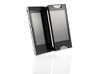
The Echo is an Android phone that can mimic a tablet. Kyocera added a second 3.5-inch touchscreen that snaps into place alongside the primary one; together the screens have a total resolution of 960 by 800 pixels, only slightly fewer than a seven-inch tablet. By default, the pair of screens share one image, be it the NYTimes or Hulu. App creators are using the developers’ kit to code games that play on both panesa€”for example, an overhead view of a pool table up top and a first-person view on the bottom. Free (with contract) Jump to the beginning of the Gadgets section. Jump to another Best of What’s New category:
Gadgets: Looxcie Live
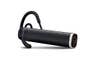
Looxcie Live is the first app to make sharing real-time video hands-free. The app pulls a continuous video stream from one of the company’s one-ounce, ear-mounted Bluetooth camcorders. Depending on the strength of the network connection, the app dynamically adjusts the video resolution to make sure it plays back smoothly. Family and friends can view the feed through a browser or Looxcie’s app, and even send audio comments back to the shooter. Camcorders from $150 Jump to the beginning of the Gadgets section. Jump to another Best of What’s New category:
Nvidia Tegra 2
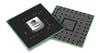
The dual-core Tegra 2 chip has one purpose: to give Android tablets and phones more battery life (up to an entire day) without sacrificing power. The processor draws just a tenth the juice used by its predecessors while still smoothly rendering high-def video. To save power, the chip divides tasksa€”video encode and decode, image processing and audioa€”among groups of transistors, and it activates those areas only when it needs them. Tablets from $330 Jump to the beginning of the Computing section. Jump to another Best of What’s New category:
Gadgets: Sony Alpha SLT-A77
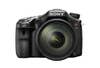
Sony made a DSLR that could continuously refocus high-speed bursts last year, but that camera’s slow-to-refresh LCD viewfinder often displayed a delayed view of subjects. So on the 24.3-megapixel A77, the company swapped the LCD for a 2.3-million-dot OLED that responds to changes millions of times a seconda€”fast enough to keep up with a sprinting quarterback. For continuous focus, a two-way mirror bounces light up to the autofocus sensor at the same time that the previous shot hits the image sensor. $2,000 Jump to the beginning of the Computing section. Jump to another Best of What’s New category:
Gadgets: Google Wallet
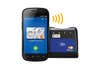
Google’s payment app replaces a wallet full of credit cards, coupons and even cash. At checkout, a near-field-communication, or NFC, chip in the handset creates a four-inch-wide magnetic field that can be recognized by any of MasterCard’s 300,000-plus PayPass terminals. Payment data is accessible only when the screen is on and users have logged into the Wallet app using a PIN. Right now, Wallet works only with MasterCard, but it will eventually be compatible with any major credit card, and even keep a tally of store-loyalty points. Jump to the beginning of the Computing section. Jump to another Best of What’s New category:
Gadgets: Wacom Inkling
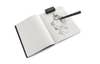
Wacom’s scribble-capture system has two parts: a sensor that clips to the top of any writing surface and a pen. As the pen moves, it emits a sonar-like pulse that is picked up by two microphones in the clip; the clip’s processor continuously triangulates and stores the pen’s location. The pen also sends pressure data to the clip, which allows the system to adjust the thickness of the lines. When connected to a computer via USB, the Inkling exports drawings as simple JPEGs or PDFs or sends edit-able files directly to Adobe Illustrator and others. $200 Jump to the beginning of the Computing section. Jump to another Best of What’s New category:
Gadgets: Orbotix Sphero
The smartphone-controlled Sphero combines two age-old favorites: the ball and the remote-control car. The three-inch orb rolls with consistent speed (about three feet per second) in any direction as a pair of motorized wheels in the ball push it forward or backward. When the driver signals a change in direction, the wheels rotate around an axis to shift course. Sphero communicates via Bluetooth with several iOS and Android apps, including a driving game and virtual golf. In development: freeze-tag and other multiplayer games for Sphero-on-Sphero combat. $130 Jump to the beginning of the Computing section. Jump to another Best of What’s New category:
Gadgets: Sifteo Cubes
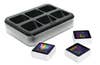
Equipped with 1.5-inch screens, the Sifteo Cubes are the first interactive blocks. Each cube emits its own wireless signal, so they can aseea where the others are, and accelerometers sense when the cubes tilt, rotate, or turn upside down. From these blocks come many complex games. One, for instance, has players roll a marble around an obstacle course that reveals itself as the cubes move. Currently users can download any of 14 games, which load through a wireless link to a computer, but anyone can use the freely available open-source code to create more. $150 Jump to the beginning of the Computing section. Jump to another Best of What’s New category:
Green Tech: Bio Soil Enhancers Forage Boost
Farmers and ranchers worldwide use about 180 million tons of nitrogen fertilizer every year, much of which eventually runs into waterways and oceans, causing algae blooms that kill aquatic life. The mix of more than 30 microbes in Forage Boost could eliminate all other fertilizer use on the planet’s eight billion acres of pasture grass. Forage Boost’s microbes replace naturally occurring ones that are lost in overfarmed soil, increasing productivity by locking nitrogen in the soil and breaking down organic waste into useful nutrients. The treatment increases grass yield by some 20 percent over standard fertilizer. And because microbes create micro-channels in the soil structure, water runoff decreases by about half, reducing watering needs. From $40/gallon Jump to another Best of What’s New category:
PURETi
Titanium dioxide, typically used as a pigment in toothpaste and an active ingredient in sunscreen, can also, in ultraviolet light, act as a catalyst to break down air pollutants. After 10 years of research, PURETi produced a titanium dioxide nanoparticle spray that dries into a clear coating on almost any surface, including rooftops, fabric, windows and roadways. In tests, coating asphalt roads with PURETi decreased smog-causing pollutants by about 50 percent. Jump to the beginning of the Green Tech section. Jump to another Best of What’s New category:
Green Tech: Windtronics Honeywell Wind Turbine
Most wind turbines use blades to spin a central generator. The WindTronics turbinea€”the most efficient in its size classa€”instead collects power from the faster-moving blade tips. Its magnetic blades sweep through copper coils in an outer frame to induce current. The six-foot-diameter turbine produces up to 1,500 kilowatt-hours a year, about 15 percent of an average home’s energy needs. From $5,795 (plus installation) Jump to the beginning of the Green Tech section. Jump to another Best of What’s New category:
Green Tech: Wysips
Wysips, the first transparent solar film, turns almost anything into a power source, without turning it ugly. The film’s thin strips of solar cells alternate with transparent areas. Lenses sit above the solar cells, hiding them from the viewer, while the transparent strips show what’s beneath the film. Wysips can be added during manufacturing to many materials, including glass, plastic and fabric. It will appear on a commercial cellphone screen next fall, powering 30 minutes of use from an hour of light, and should be on billboards by 2013. Jump to the beginning of the Green Tech section. Jump to another Best of What’s New category:
Green Tech: Cromation Cryomator
A person’s carbon footprint keeps growing after death. Burial uses arable land, and cremation releases a body’s carbon into the atmosphere. The Cryomator instead chills the body with liquid nitrogen until it breaks apart and then freeze-dries the remains to remove water and kill microbes. The powder retains the body’s carbon, making the entire carbon impact of the process about 75 percent less than that of cremation. The company is currently building its first commercial unit, which should be in operation before the end of 2012. Jump to the beginning of the Green Tech section. Jump to another Best of What’s New category:
Green Tech: ThinkEco Modlet
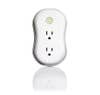
ThinkEco’s smart socket is one of the easiest ways to cut down on avampire powera consumption by devices in off or standby modes. Once plugged into a standard outlet, the Modlet starts tracking the electricity needs of hooked-up devices, using a built-in wireless connection to communicate via website or app. After a week or two, it suggests a schedule of when it should cut off power, which users can modify at any time. $50 Jump to the beginning of the Green Tech section. Jump to another Best of What’s New category:
Pasteurization Technology Group Wastewater System
Most communities in the U.S. treat their wastewater just enough to legally dump it, but not reuse it. Pasteurization Technology Group has developed an inexpensive treatment system that yields water clean enough to be returned to aquifers. Instead of using chlorine, the system pasteurizes wastewater by heating it to 180ºF. The warmth comes from the waste heat of a nearby electricity generator running on either natural gas or biogas produced by an associated sewage digester. A PTG water plant opening next year in California expects to make a $160,000 annual profit by selling its extra biogas-generated electricity. Even if the turbine is fueled with natural gas, the pasteurization is energy-efficient enough to be about half the cost of chlorine treatment. Jump to the beginning of the Green Tech section. Jump to another Best of What’s New category:
Health: Diagnostics For All Liver-Function Test
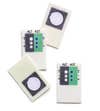
A quarter of the 13 million patients worldwide who are undergoing treatment for HIV/AIDS or tuberculosis will die not from their diseases, but from liver complications caused by the treatment itself. In many cases, all it would take to prevent their death is access to a regular screening process that would tell doctors when to back off on treatment, but until now that process has required $1,000 plastic pumps, $100 computer chips and $30,000 microscopesaresources entirely unavailable to millions of patients in the developing world. Diagnostics for All’s alab-on-a-chip,a on the other hand, costs less than a penny to make. Drop a blood sample onto the stamp-size paper chip, and 15 minutes later it changes color to indicate liver health. The company shipped its first batch of chips to India this year. $0.05/chip (est.) Jump to another Best of What’s New category:
Health: Argo Med Tech/ReWalk
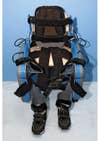
The ReWalk could help some of the five million wheelchair users worldwide plagued by lost bone mass and decreased blood flow by allowing them to walk, even up and down stairs. The first exoskeleton designed for people with severe walking impairments, its backpack computer monitors user movements and sends signals to the joints, where motors stand in for muscle. $40,000 Jump to the beginning of the Health section. Jump to another Best of What’s New category:
Health: UCSF Medical Center
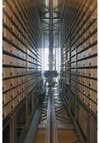
Medication errors add at least $3.5 billion to heath-care costs and harm 1.5 million patients in the U.S. every year. To bring down the error rate, the pharmacists at the University of California at San Francisco’s UCSF Medical Center put robots in charge of identifying, sorting, packaging, and dispensing medication for the entire hospital. The robots have administered 1.7 million doses (and counting) with 100 percent accuracy. Jump to the beginning of the Health section. Jump to another Best of What’s New category:
Health:3M Kind Removal Silicone Tape
The adhesive in most medical tape gets its stickiness from a compound called acrylate, which seeps into skin and sets, making for painful removal. Tape treated with 3M’s non-setting silicone adhesive comes off easily and stays sticky for reuse. Simon Fung, the tape’s developer, calls it aa Post-it note for your body.a $7/roll Jump to the beginning of the Health section. Jump to another Best of What’s New category:
Health: Avita/ReCell Spray-On Skin
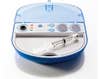
A bad burn needs new skin to heal, but that skin has to come from somewhere. ReCell Spray-On-Skin solution grows cells quickly. Surgeons take a healthy sample from a patient and place it in ReCell’s liquid suspension. After 20 minutes, the cells will have multiplied enough to spray onto an area that’s 80 times the sample size where the cells can attach and heal. $1,200/kit Jump to the beginning of the Health section. Jump to another Best of What’s New category:
Health: Sanofi Pasteur Fluzone Intradermal
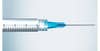
Since fear of needles is the primary reason people avoid flu shots, making them less painful could save lives. The needle on the Fluzone Intradermal microinjection system is much thinner than that of a regular syringe, so it goes in with barely a prick. It’s also much shorter; it releases flu vaccine into skin, not muscle, which prevents lingering soreness. $15.50/dose Jump to the beginning of the Health section. Jump to another Best of What’s New category:
Health: Jawbone Up
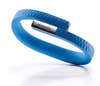
The UP squeezes a battery, two LEDs, an accelerometer, a processor, a force-feedback mechanism and a 3.5-millimeter jack into a single bracelet. It senses steps, monitors sleep patterns, and stores a month’s activity data for smartphone upload. With one simple device, users can analyze (and share) nearly every move they make. $100 Jump to the beginning of the Health section. Jump to another Best of What’s New category:
Massachusetts Institute of Technology Catra
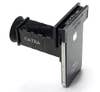
Nearly 10 million people worldwide go blind from cataracts, a clouding of the eye’s lens. CATRA, a smartphone attachment, helps those without access to an ophthalmologist screen for the disease. A patient stares through the eyepiece at an image on the phone’s screen, and the eyepiece sends a beam of light into his eye. When the image appears to dim, indicating that the beam has encountered a cataract, the patient presses a button. The app maps the location of each cataract and presents a diagnosis. $2 Jump to the beginning of the Health section. Jump to another Best of What’s New category:
Health: Massachusetts Institute of Technology Medik
JosÃ(C) Gomez-Marquez, who heads the Innovations in International Health program at MIT, calls the MEDIK a amedical Erector set.a The kit, designed for doctors trying to treat people in places where electricity and other basic services are unavailable, contains dozens of parts that can be combined into hundreds of devices, including a cauterizing pen powered by a solar cell and a nebulizer (for inhalation therapy) that fits a bike pump. $50/kit Jump to the beginning of the Health section. Jump to another Best of What’s New category:
Health: Verisante Aura
Detecting melanoma early greatly increases a patient’s chances of survival, but visual inspections can be time-consuming and imprecise. Doctors using the Raman-spectroscopy-based Aura can scan every mole on a patient’s body in 15 minutes, for far speedier and more accurate results. The laser in the device excites and measures vibrations in skin molecules, which vibrate differently when cancerous. Price not set Jump to the beginning of the Health section. Jump to another Best of What’s New category:
Health: TransMedics Organ Care System
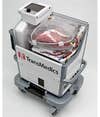
Before surgery, most surgeons keep heart replacements on ice and the organs degrade within just a few hours. TransMedics’s Organ Care System keeps hearts bathed in blood and pumping, so they remain useable for up to eight hoursalong enough to travel cross country. Abbas Ardehali, one surgeon who now uses the system, says it acan expand the donor pool. Fewer patients will die waiting for a new heart.a $40,000 Jump to the beginning of the Health section. Jump to another Best of What’s New category:
Home Entertainment: Sony HMZ-T1 Personal 3-D Viewer
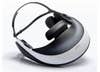
3-D in theaters looks more realistic than 3-D at home for two reasons: The screen is huge, and the projector’s resolution surpasses that of any HDTV. Sony’s personal viewer is the first to bring theater-quality 3-D to your living room. Inside the HDMI-connected visor, twin 0.7-inch OLEDs sit about one inch from a user’s eyes, taking up the entire field of view; the sensation is equivalent to sitting 65 feet from a 62.5-foot movie screen. The OLEDs can turn on and off every few millionths of a second (about 1,000 times as fast as an LCD), a rate that all but eliminates the aghostinga during fast-moving action, live sports and SOCOM 4 shootouts. And because every one of the screen’s 921,600 pixels is its own light source, no light can bleed between dots and spoil the crispness of a color, a common problem on many displays. Lest viewers not feel immersed enough, onboard earphones use time-shifting effects to produce virtual five-channel surround sound. $800 Jump to another Best of What’s New category:
Home Entertainment: Bose Videowave
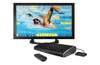
Surround-sound systems typically require their subwoofer and five speakers to be strategically placed around a room. For the first time, Bose packed that entire setup into an HDTV. Inside the six-inch-thick cabinet, six speaker cones sit back-to-back in two rows and fire in opposing directions, canceling out any shaking, and a curved bell directs bass out of the bottom of the set. Seven speakers near the top of the set steer location-specific sounds, like voices and gunshots, to the corners of the room, while two narrow radiators disperse ambient sounds. A single tweeter near the bottom of the screen handles high frequencies. $5,350 Jump to the beginning of the Home Entertainment section. Jump to another Best of What’s New category:
Home Entertainment: Jawbone Jambox
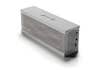
The six-inch Jambox has better sound than any other comparably sized, portable Bluetooth speaker. Its two midrange drivers have two magnets per bell, a system that generates more sound for every watt of power drawn from the battery. Meanwhile, the battery itself doubles as the weight inside the Jambox’s passive radiator, vibrating to produce deep rumbles. Altogether the box pumps out up to 85 decibelsa€”as much noise as some guitar ampsa€”and is a significant upgrade to the tinny speakers on most phones and MP3 players. $200 Jump to the beginning of the Home Entertainment section. Jump to another Best of What’s New category:
Home Entertainment: Samsung SUR40 for Microsoft Surface
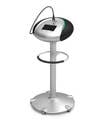
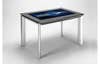
The 40-inch SUR40, co-created by Samsung and Microsoft, is a thin tabletop computer that sees and responds to whatever is placed on it. Each of the table’s LCD pixels emits an infrared beam that reflects off an object back to a sensor. The processor synthesizes the sensor data to create an eight-bit image from which it can pick out shapes and large text, such as product names and numbers. Once the object is identified, the table displays related YouTube videos and other product information. Right now most apps are on the simpler side, but developers are free to program custom games and more, depending on what bar or store the table winds up in. $8,400 Jump to the beginning of the Home Entertainment section. Jump to another Best of What’s New category:
Home Entertainment: Vision Research Phantom Flex v1610
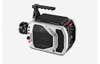
Even the fastest cameras struggle to slow time enough to capture the detail of an action-flick-caliber explosion, but the new Phantom Flex v1610 can handle it. The commercial camcorder nearly triples the frame rate of its older cousin (a 2008 Best of What’s New winner) to 16,000 frames per second, while maintaining a final resolution of 1,280 by 800 pixels, nearly full high-def. To keep the huge files (one second of footage can balloon to 3.6 gigabytes) from bogging down the camera, its processor encodes and transmits 16 gigabits of video data every second. $139,000 Jump to the beginning of the Home Entertainment section. Jump to another Best of What’s New category:
Home Entertainment: Vizio Theater 3D
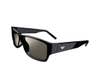
This year, several HDTV manufacturers scrapped clunky, expensive active-shutter 3-D glasses for lighter, more affordable passive ones. Vizio pioneered the switch. The company was the first to adopt the polarizing standard used by RealD, the largest maker of big-screen 3-D. Left and right images sit on alternating lines on the screen, and those lines are each polarized to match up with either the left or right lens in pairs of polarized glasses. The glasses have another advantage: Viewers can wear them at the movies instead of wasting yet another pair of throwaway theater shades. Sets from $550 Jump to the beginning of the Home Entertainment section. Jump to another Best of What’s New category:
Home Entertainment: Sony Playstation 3D Display
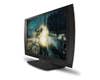
Gaming shootouts aren’t nearly as thrilling when your opponent can see exactly where you are just by glancing at your side of the screen. The new PlayStation 3D display forgoes split-screen gaming in favor of two independent viewpoints. The 24-inch display alternates between perspectives at 120 frames per second. Wearing active-shutter glasses synced to the display, the two gamers each see only their own scene. Even though the frame rate is cut in half, to 60 frames per second, the individual views are still equivalent to any basic HDTV. Currently four games, including Motorstorm Apocalypse, take advantage of the dual-viewpoint feature, but all PlayStation3 3-D titles can play on it, too. $500 Jump to the beginning of the Home Entertainment section. Jump to another Best of What’s New category:
Home Tech: Stanley LaBounty F16
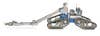
Stanley LaBounty designed its remote-controlled robot for a single purpose: to destroy everything in its path. The F16 cuts metal pipes, tears down stairwells, and hammers through concrete floors. Its 16.4-foot telescopic arm can rotate 360 degrees and operate grapples, shears, a giant drop hammer, and more than 120 different tools, including a chipping hammer and a diamond chainsaw, all powered by a hydraulic circuit. A 25-horsepower electric motor drives the robot, which rolls on tank-like treads. Once the F16 is positioned on the job site, four automatic footpads continuously adjust their positions to keep the 3,417-pound beast (which is still less than 20 percent the weight of any comparable machine) stable. $135,000 Jump to another Best of What’s New category:
Home Tech: Dyson Hot
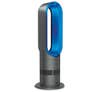
Space heaters cause nearly 20,000 home fires in the U.S. every year. The Dyson Hot stays safe while heating rooms faster than any other heater. An insulating sheath separates the Hot’s ceramic heating elements from the device’s outer walls to keep them cooler. The increased safety doesn’t come at the expense of efficiency, though. Rather than letting hot air rise to the ceiling, the Hot pushes the air through a thin oval-shaped slit, creating a strong current that jets across the entire room. $400 Jump to the beginning of the Home Tech section. Jump to another Best of What’s New category:
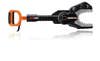
Home Tech: Worx JawSaw
The electric JawSaw is a terror for wood but safe for the operator. Its metal jaws leave only a small amount of the chain exposed, minimizing the risk of contact with the user’s body as well as preventing kickback and chain damage when it’s sawing branches on the ground. The steel teeth can lock onto a piece of wood of up to four inches in diameter to increase stability while the chain rips through it. And unlike other chainsaws, the JawSaw doesn’t require any additional tools to replace the chain or set the tension. $120 Jump to the beginning of the Home Tech section. Jump to another Best of What’s New category:
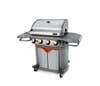
Home Tech: STOK Quattro
In a perfect world, every meal of the day would be cooked on a grill. The four-burner, 48,000-BTU Quattro lets users realize that utopian vision with the option of replacing the standard single grate with individual insertsa€”including a griddle, a vegetable tray and a pizza stonea€”that can cook a variety of foods. It also comes with a tool to remove the inserts without turning off the burner, so as soon as the burgers are finished grilling, you can start cooking the apple pie for dessert. $349 Jump to the beginning of the Home Tech section. Jump to another Best of What’s New category:
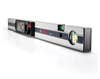
Home Tech: Bosch GLM 80 Laser Distance Measurer
The GLM 80 takes most of the time and thought out of measuring distances for home-construction projects. Just point the handheld unit at a spot up to 265 feet away, press a button, and the display shows how far it is. An internal two-axis tilt sensor allows the device to take angle readings when it’s not level, whether it’s held horizontally or vertically. By taking an angle measurement and a secondary distance reading and doing some clever math, it can calculate distances indirectly from any position. $249 Jump to the beginning of the Home Tech section. Jump to another Best of What’s New category:
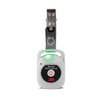
Home Tech: 3M Noise Indicator NI-100
The NI-100 is a small, inexpensive and intuitive way to avoid the hearing loss that can plague everyone from professional construction workers to weekend garage tinkerers. Instead of a decibel meter that leaves the user to decide whether the ambient noise is dangerous, the device simply has an LED. When the noise reaches the potentially harmful level of 85 dBA, the light begins to flash red to alert the user to put on hearing protection. The 2-by-1.4-by-0.5-inch unit clips unobtrusively to a shirt and runs on a battery that lasts 200 hours between charges. $41 Jump to the beginning of the Home Tech section. Jump to another Best of What’s New category:
Home Tech: 4moms Origami Power-Folding Stroller
Baby strollers are notoriously difficult to fold up to store or load into the back of a car. The Origami saves time and trouble by collapsing and unfolding itself at the touch of a button. (Onboard sensors ensure that it won’t fold up while a baby is in the seat.) It also comes equipped with other features not typically found on a stroller, including daytime running lights, an LCD screen with a speedometer and odometer on the handlebar, and a generator that charges the batteries whenever the wheels spin. $850 Jump to the beginning of the Home Tech section. Jump to another Best of What’s New category:
Home Tech: InterfaceFLOR Raw
Some 4.6 billion pounds of used carpeting wound up in landfills last year. Raw carpet tile puts the waste to good use. It’s made from a new yarn composed of a combination of reclaimed carpet fiber, salvaged fishing nets and postindustrial waste. The tiles look no different from regular carpeting, but each contains up to 29 percent post-consumer recycled content and 79 percent recycled content overall. $31 per square yard Jump to the beginning of the Home Tech section. Jump to another Best of What’s New category:
Home Tech: DeWalt 15-Ounce MIG Weld Framing Hammer
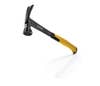
Dewalt’s framing hammer is strong and lightweight, as the best titanium hammers area€”except that it’s not titanium. With a head made from pieces of custom-tempered steel and attached to the handle using a new MIG welding process, it packs the same wallop as regular steel hammers that are nearly twice as heavy, without causing arm fatigue from extended use. Even better, it’s about a third of the price of comparable titanium models. $60 Jump to the beginning of the Home Tech section. Jump to another Best of What’s New category:
Home Tech: Craftsman NEXTEC QuickBoost Charger
Anyone who’s ever used a power tool knows the frustration that comes when batteries die in the middle of a project. The QuickBoost recharges batteries on power tools faster than any other charger on the market. In just three minutes, the device can restore compatible Craftsman Nextec drills, sanders and other equipment to 25 percent of full capacity. The device also works as a conventional charger, capable of fully powering Nextec tools in 30 minutes. $40 Jump to the beginning of the Home Tech section. Jump to another Best of What’s New category:
Home Tech: Wallboarder’s Buddy
Cutting a whole room’s worth of drywall is usually a long, slow, multiple-step process requiring a different tool for each step. The Wallboarder’s Buddy saves time and effort by combining a drywall T-square that precisely measures the length and width of the cut with utility knives (located inside the pivoting head) that do the scoring. The compact device contains storage for up to six extra blades, which can be changed without using any tools. $60 Jump to the beginning of the Home Tech section. Jump to another Best of What’s New category:
Recreation: Billabong V1
Several big-wave surfers have been killed while attempting to conquer giant swells. Billabong’s V1 wetsuit significantly reduces that risk. After a wipeout, the surfer pulls an attached ripcord, puncturing a carbon dioxide cartridge that inflates a bladder in the back of the suit. The submerged surfer then rises to the water’s surface in just a few seconds. Billabong teamed up with professional surfer Shane Dorian to develop the suit and commissioned a company that makes military survival gear to create the inflation system [see a€œKeeping Heads above Water”]. Price not set Jump to another Best of What’s New category:
Recreation: Katal Landing Pad
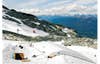
Co-designed by a former snowboarder who was paralyzed while attempting a trick, the 50-by-80-foot Katal pad eliminates much of the danger of learning skiing and snowboarding tricks. When a rider touches down on the pad after going off a jump, a small amount of air is displaced in one of two internal chambers. The mechanism keeps the pad firm enough to allow an upright landing but ensures a soft, safe cushion in case of a fall. Price not set Jump to the beginning of the Recreation section. Jump to another Best of What’s New category:
Recreation: Black Diamond Magnetron Technology
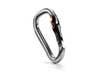
The simple, sturdy carabiner seems like a tough product to improve, but Black Diamond found a way: by replacing the conventional spring-latching gate in its RockLock and GridLock models with a magnetic locking system. When the gate is open, strong magnets in the opposed locking arms repel each other; when it’s closed, the magnets securely lock onto the steel nose between them. And unlike on most other carabiners, the locking mechanism on Magnetron-equipped models is symmetrical, making it easy to operate with either hand. From $25 Jump to the beginning of the Recreation section. Jump to another Best of What’s New category:
Recreation: WaveJet Personal Propulsion (PWP) Pod
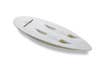
Whoever said that it’s the journey, not the destination, never had to paddle against the current to get to a good surfing spot. WaveJet’s PWP pod cuts the labor, speeding surfers to the swells at 8 to 12 mph for up to 60 minutes. The 15-pound propulsion system, which is powered by a twin-lithium battery pack, is now available in surfboards, bellyboards, rescue boards and stand-up paddleboards, and expect to see it integrated into other equipment in the near future. $4,500 (pod and surfboard) Jump to the beginning of the Recreation section. Jump to another Best of What’s New category:
Recreation: GoPro 3D Hero System
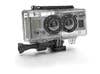
Watching video of yourself bombing down a mountain trail on your bike is fun, but watching it in 3-D is even better. GoPro’s HERO system combines two 1080p cameras inside a mountable 5-by-2.5-inch waterproof plastic housing to make the world’s smallest high-definition 3-D camera. The cameras connect by a synchronization cable, which allows the user to operate both as a single camera with one set of control buttons. $100 (cameras, $260 each) Jump to the beginning of the Recreation section. Jump to another Best of What’s New category:
Recreation: DeLorme inReach
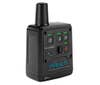
Cell towers and landlines cover only 10 percent of the Earth, but satellite networks reach pretty much everywhere. The inReach communicator relies on iridium and GPS satellite signals so users can send preloaded messages and allow designated contacts to track their travels. Pair it with an Android smartphone using the free DeLorme Earthmate app to compose and receive texts as well. $250, plus $10/month subscription Jump to the beginning of the Recreation section. Jump to another Best of What’s New category:
Recreation: Alpinestars Tech Air Race Suit
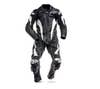
The Alpinestars suit can reduce the impact of a motorcycle crash to one tenth of what a racer wearing conventional body armor would suffer. The suit continuously monitors the rider’s movements using embedded sensors, which communicate with a computer programmed to differentiate the motion that immediately precedes a crash from normal motion. When the system determines that a crash is imminent, it deploys airbags along the shoulders and collarbone in milliseconds to soften the blow. $8,000 (est.) Jump to the beginning of the Recreation section. Jump to another Best of What’s New category:
Recreation: Uncharted Play sOccket
The sOccket turns on-field energy into usable power. As the ball rolls, magnetic rotors spin inside, inducing a current that charges a 3.6-volt battery. Accessories, including a lamp and eventually a phone charger, plug into a 3.5-millimeter jack. The regulation-size ball’s half-inch foam-rubber shell makes it play like a standard ball, without the need for reinflation. Uncharted Play will sell the new sOccket (prototypes have been in development since 2009) on a buy-one, donate-one basis, so every ball sold will also send power to developing nations. $125a€”$150 Jump to the beginning of the Recreation section. Jump to another Best of What’s New category:
Security: Aerovironment Nano Hummingbird UAV
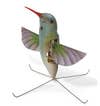
Most flying robots use rotors or propellers, limiting the craft’s ability to maneuver in tight places. The Nano Hummingbird navigates by changing the angle and shape of its paper-thin wingsa€”which beat 20 to 40 times per seconda€”and can hover in place for up to 11 minutes. It is also small enough to fly through windows or other small openings, strong enough to carry a microphone or camera, and stable enough to maintain a highly controlled hover, even in gusts of wind. Once the design, which is still in prototype, matures and goes into production, operators could use the Hummingbird on reconnaissance missions in environments where maneuverability inside buildings or around near-ground obstacles, such as huts or tents, is essential. Jump to another Best of What’s New category:
Security: Qinetiq Blackfish
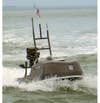
Of all the threats naval vessels face when operating close to shore or in the harbor, swimmers, divers and small boats are among the most difficult to detect. The best methods of finding such threatsahuman divers and trained dolphinsacan’t work nonstop, nor can they carry sufficient weapons to stop an attack. The Blackfish Unmanned Maritime Security Vehicle is built on a Yamaha WaveRunner chassis modified with robotic steering and control components. Options include an underwater camera, nonlethal acoustic ascreamers,a and laser dazzlers that can blind a foe. Jump to the beginning of the Security section. Jump to another Best of What’s New category:
Security: Cobham teleMAX EOD/NB
Hazmat robots, especially those that can test for more than just chemical threats, are large and clumsy. The Cobham teleMAX EOD/NBC robot is small enough to fit into the back of an SUVa€”or drive down the aisle of an airplanea€”yet has an 8.5-foot reach and a full tool kit to detect chemical, biological and radiological hazards. Its dexterous arm can deploy tweezers, swabs, scoops and other devices, to retrieve samples for testing or store them in one of five canisters. The 12 integrated nuclear-biological-chemical sensors beam data directly back to the operator. Jump to the beginning of the Security section. Jump to another Best of What’s New category:
Security: Faro Focus 3D
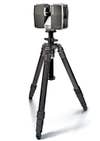
The Faro Focus 3D brings accurate forensic laserscanning to small police departments that wouldn’t otherwise be able to afford the advanced crime-scene mapping tool. In-house design and manufacture of all the processing and optical components means that the scanner is more compact and brings down the final price significantly. The improved optics yield a scan radius of up to 394 feet, and thanks to better signal-processing chips, the Focus can scan and store the details of a room in less than five minutes. $30,000 Jump to the beginning of the Security section. Jump to another Best of What’s New category:
Security: SecuraSeal Sliding Patio Door
Anyone who has ever had a sliding patio door knows the drill: The lock latches at a single, easily jimmied point, so real security requires keeping a broomstick or dowel rod stowed in the track of the door. The SecuraSeal Sliding Patio Door turns the entire 76-inch floor-to-ceiling edge of the door into a single, sturdy locking mechanism. The groove along the door’s edge surrounds an expandable flange in the doorjamb. A switch on the jamb (rather than the door handle) engages the lock, further thwarting any attempt to disengage the lock from the outside. $1,900 Jump to the beginning of the Security section. Jump to another Best of What’s New category:
Security: Local Motors XC2V
Local Motors worked with the Pentagon’s R&D agency to create specs for a new combat-support vehiclea€”360-degree-visibility from the cockpit, up to five-passenger capacity, less than 6,000 pounds fully loadeda€”and then crowdsourced the design in a competition and built a working version of the winning design in just four months. If the XC2V survives validation testing by the Army’s Asymmetric Warfare Group, it may eventually end up in combat, moving supplies to the front lines and carrying wounded soldiers back to the base. Jump to the beginning of the Security section. Jump to another Best of What’s New category:
Security: Checklight Tox-Spot
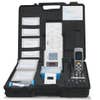
Water utilities and public-health agencies field-testing drinking water must wait about 72 hours to get lab results. Tox-Spot decreases the wait to 15 minutes. Using a briefcase-size portable laboratory kit, a field agent mixes a vial of bioluminescent bacteria with a milliliter of water sampled from any point along the water distribution network, from source to tap. Exposure to even trace amounts of toxins will measurably weaken the intensity of light the bacteria emit. Utilities could be using ToxSpot to test water supplies in the U.S. by next year. Jump to the beginning of the Security section. Jump to another Best of What’s New category:
Security: Recon Scout XT
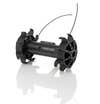
The Scout XT is tough enough to be tossed into any kind of environmenta€”through a window, up a flight of stairs, into a puddle of watera€”and driven around remotely, beaming live video back to its handler. Recon Robotics is even developing an anti-pirate magnetic variant. During maritime emergencies, Navy personnel can launch it at the hull of a hijacked ship, where it will stick to the side with magnetic feet and roll up the hull and onto the deck. $13,000 Jump to the beginning of the Security section. Jump to another Best of What’s New category:
Security: Rocket Lab Instant Eyes
Today’s hand-deployed UAVs can be assembled and launched in minutes, but that’s still too long for a soldier looking for intel to plan an urgent escape. Rocket Lab’s mini UAV reduces the assembly-to-reconnaissance time to 20 seconds. The eight-inch, one-pound, rocket-powered UAV launches with the push of a button and snaps five-megapixel shots throughout the 120 seconds it takes to parachute 2,500 feet back to Earth, transmitting them by encrypted Wi-Fi to the soldier’s phone, tablet or laptop. Once the UAV hits the ground, it self-destructs. Jump to the beginning of the Security section. Jump to another Best of What’s New category:



























![Several big-wave surfers have been killed while attempting to conquer giant swells. Billabong's <a href="http://www.billabong.com/us/blog-post/2640/2011-06-03-shane-dorian-at-jaws/">V1</a> wetsuit significantly reduces that risk. After a wipeout, the surfer pulls an attached ripcord, puncturing a carbon dioxide cartridge that inflates a bladder in the back of the suit. The submerged surfer then rises to the water's surface in just a few seconds. Billabong teamed up with professional surfer Shane Dorian to develop the suit and commissioned a company that makes military survival gear to create the inflation system [see a€œKeeping Heads above Water"]. <strong>Price not set</strong> <strong>Jump to another Best of What's New category:</strong>](https://www.popsci.com/uploads/2019/03/18/LAOQUBOVJ7SNMDNINP5JRVT4WQ.png?auto=webp&optimize=high&width=100)